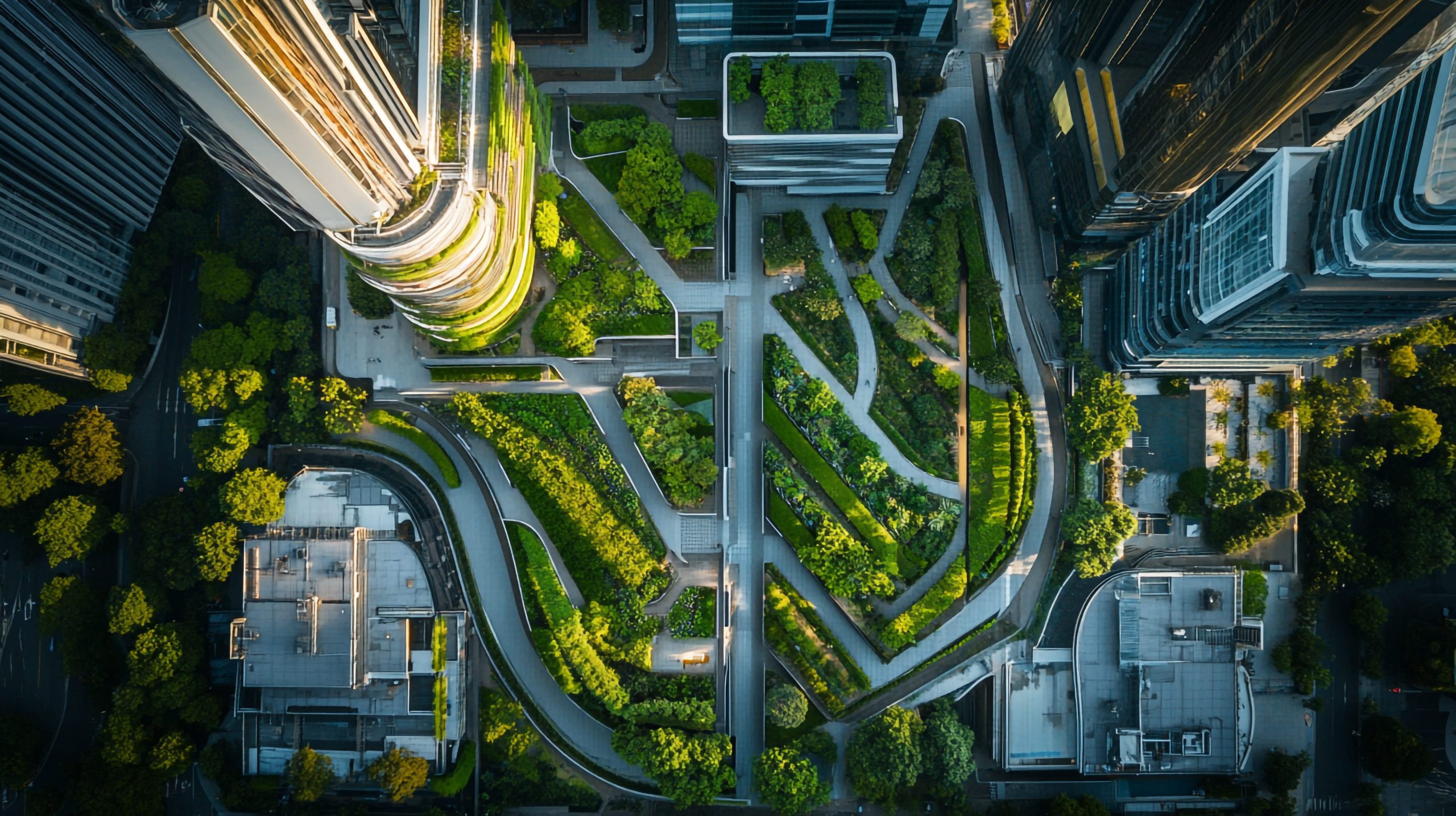
Resilient cities are not the ones with the most expensive technology
By: Yip Wai Fong
Cities, the habitat of 77% of Malaysians according to the World Bank, are at a crossroads. A perfect storm is brewing as population pressure, strains on ageing infrastructure and climate change pose severe threats to safety and long-term survivability. Episodes such as the 2025 gas explosion in Putra Heights, caused primarily by long-term soil subsidence beneath the pipeline, are a wake-up call that cities need an urgent rethink.
The explosion destroyed or damaged over 500 homes and hundreds of vehicles, injured more than 110 people and forced the evacuation of 600 households. But for Gary William Theseira, who chaired Climate Governance Malaysia, it could have been much worse.
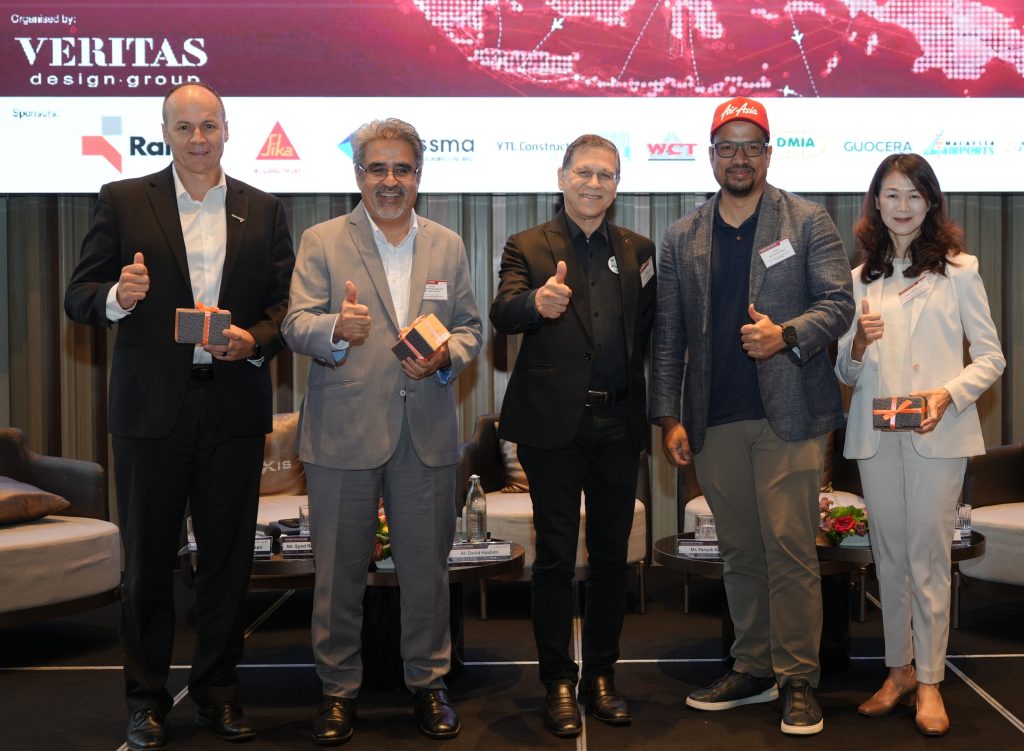
“To me, we were lucky the gas explosion in Putra Heights was ignited before the gas went through the entire neighbourhood – that would be much worse,” he told the audience at the Future Cities Summit 2026, adding that this was a forewarning that in areas that have optical cables and gas lines, a different level of monitoring of cables and pipelines was needed.
“We need to incorporate society’s vast experience and skills and also to include AI, to think about how we live with the new normals.”
Future-proofing cities essentially requires urban planning that adapts and builds resilience for a changing environment. Far from simply trying to prevent or fight against change, Theseira and other speakers at the Summit were unanimous that a resilient city must be an organic, evolving entity capable of absorbing shocks without fracturing.
Climate volatility
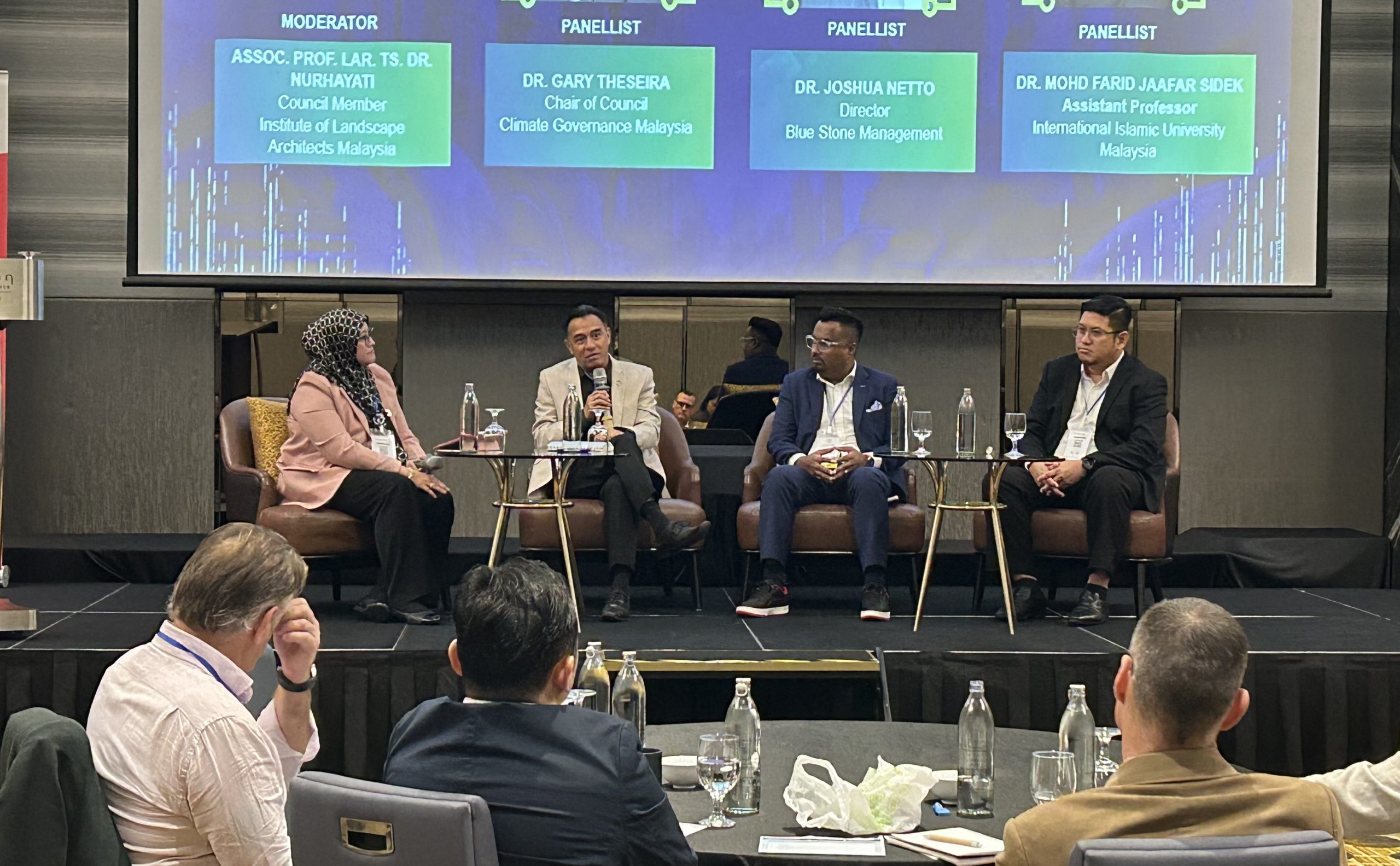
One of the uncomfortable realities to which cities must adapt is extreme weather. Weather events in recent years have shown that climate cycles have compressed rapidly, swinging between opposing extremes. Perlis, Theseira pointed out, suffered a flood in late November last year that cost RM150mil in damages but by March 2026, the state was hit by a severe drought alongside its neighbours Kedah and Perak.
"The lesson from the storm last November is that, not even four months later, we had droughts in Perlis, Kedah and Perak, and there isn’t enough water for rice-planting. The fact that it can go from boom to bust in a matter of months; we are not talking about a water crisis, we are talking about water bankruptcy," he said.
Recent floods also show that urban planners must stop treating historic environmental baselines as reliable safety metrics.
“The days of estimating flood days on elevation and contour lines are over. During intense rainfall, water can easily rise over any obstacles and get to an area that might be at a higher contour just from the momentum of the water alone. Whose fault was it when the water in the emergency spillway spilt into areas that weren’t expected? The events are teaching us in real time and we can make preparations,” he said.
Repurposing infrastructure, building materials and regulation
Theseira called for buildings to be repurposed so that basements can serve as temporary flood water storage, putting an end to the widespread damage inflicted on parked cars during flash floods. The concept is similar to Kuala Lumpur’s SMART Tunnel (Stormwater Management And Road Tunnel) where a motorway tunnel doubles as a stormwater bypass during heavy downpours.
"If we think of the Smart Tunnel, we can also think of every subterranean parking garage as capable of being a water storage," Theseira said. "So if we can foresee in the next 24 hours there will be extreme rainfall, shut the parking garage, turn it into a water storage... if there are four levels of parking, we can devote the bottom two levels for water storage. This can be replicated all around the city,” he explained, adding that this agility requires engineering components such as drainage, lighting and ventilation systems to be entirely submersible.
Existing building codes must also be updated to accommodate these adaptive strategies, he said. Theseira believes that every building should be required to have dedicated storage for rainwater in addition to the tanks for potable water. He also pointed out that, following a recent tornado-like storm in Perak, building regulations should be revamped to allow for the use of lightweight, strong, water-resistant and wind-resilient roofing materials.
Data and decision silos
While the roadmap towards a resilient city is clear, the primary obstacle to execution remains a lack of collaboration between stakeholders. Blue Stone Management director Joshua Netto observed that while cities are inherently the result of multidisciplinary teamwork, decisions are rarely made by a cohesive unit.
"To me, the challenge is fragmentation," Netto observed. "You’ve got a city planner, a transport service provider, developers, utility service providers, each optimising their own piece and doesn’t always come together," he conceded.
“We have no shortage of smart people, no shortage of ideas and master plans. But it is the delivery and execution, oftentimes, where we fail. It is because things change and we start to optimise, value-engineer, remove elements and many years later, we end up in a state where we don’t know how we got there. So delivery and execution need to improve,” he added.
Theseira stated that fragmentation in decision-making occurs because different agencies collect copious amounts of data in isolation, instead of sharing and integrating information across related disciplines. This creates missed opportunities, even though real-time environmental data is plentiful enough to inform immediate actions.
Recalling the November storm in Perlis, Theseira noted that meteorological data revealed Songkla, just 70km away, was lashed by 200mm of rainfall while the Straits of Aceh saw a catastrophic 400mm. Both measurements were strong, early indicators of the perilous weather heading towards Perlis.
“What is future-proofing when we already know that a specific area should be prepared to withstand the (weather) intensity within 24 or 48 hours? A huge amount of information is being collected 24/7, second by second. The information needs defragmentation, integration and analysis so that we can get down to the micro part of foreseeing (the necessary actions),” he said.
“We are not necessarily blind to the solutions but we don’t have the people to address it in an integrated and comprehensive manner," he added.
Good governance
Netto emphasised the critical importance of strong governance, warning that a reluctance to invest in resilience upfront is a deep miscalculation.
"I think the data speaks for itself," Netto asserted. "Unfortunately, the climate doesn’t read our plan, doesn’t go our way. To recover and rescue after something bad has happened will cost more in terms of reputational damage, people displacement, homes, livelihoods and job losses. We will be kicking cans down the road when we spend on recovery instead of investing in resilience upfront."
When decision-makers falter, infrastructure suffers. Netto noted that the leadership setting the vision for a city must maintain the authority and institutional alignment required to see it executed over decades, allowing for flexible phasing when resources are limited. He also opined that good governance should operate seamlessly in the background, making tough choices long before a crisis hits.
“A good decision maker is like a good pilot. He might have made 20 tough decisions during the flight to navigate the weather but he made them in such a way that the passengers are not aware of it," he said.
Similarly, a resilient urban system must feature built-in redundancy that operates quietly and effectively in the background.
"When it comes to utilities, we have to incorporate designed-to-fail for disaster events," Netto explained. "A simple example: this building has a generator... imagine while we are speaking at this moment, the generator has been switched on three times and we aren’t aware. That’s well-designed," he said.
A change of habits
Resilient urban planning will ultimately remain confined to paper if residents do not adopt the habits necessary to support it. The clearest example of this lies in the mobility culture of most Malaysians. International Islamic University Malaysia assistant professor of architecture and environmental design, Dr Mohd Farid Jaafar Sidek, argued that infrastructure delivery, such as transit-oriented developments (TODs), is meaningless without a corresponding shift in public behaviour.
"In Kuala Lumpur, we have TODs but ample parking spaces are also being provided in these developments so we don’t encourage people to walk and cycle from one place to another," Farid observed, noting that few TODs have been properly designed with a strict intent to promote walkability.
"KL Sentral is a good case because it features many types of land use (whereby) you can access building to building in 10 minutes. But for TODs in other parts of the city or in other states, it is challenging (to replicate) in terms of local issues and government commitment," he said.
Comparing Malaysia to its neighbour, Singapore, he noted that thoughtful urban design yields vastly different public habits, despite the two countries sharing identical tropical climates.
"Malaysia is a hot and humid country with frequent rain. We need covered walkways to encourage people to walk under such weather conditions. We have overhead pedestrian walkways but we should also plant more trees for shade, like in Singapore. Both countries have the same physical environments but Singaporeans walk more than Malaysians."
Theseira added that meaningful change boils down to public awareness and community behaviour rather than a reliance on expensive, high-tech solutions. He pointed out that the devastating 2021 floods in the Klang Valley demonstrated how traditional architectural wisdom can prove to be resilient in a disaster.
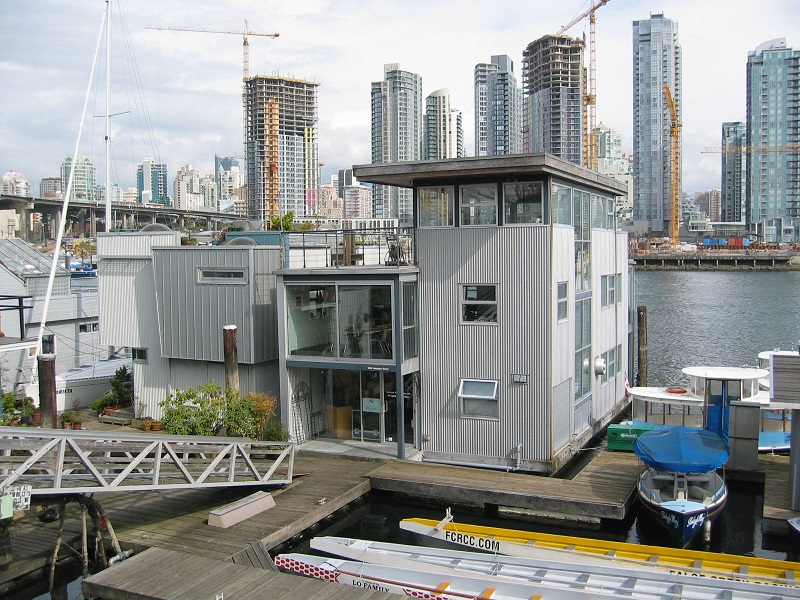
"After the flood in 2021, we clearly saw that houses on stilts are the ones which survived. And these houses do not displace the water to areas that weren’t flooded before. It is not necessarily about high cost, high tech and new tech all the time. We can learn from traditional wisdom," he said, adding that modernising essential services like waste management can also be achieved through simple adjustments to daily habits.
"If we have the correct awareness, a lot of these can be solved through human behaviour. Think of waste management, the idea is to bring in an understanding of circularity. Can we have in every food court a separation of organic and non-organic waste? Has it spread to the pasar malam (night market)? No, unfortunately,” he said.
A collaborative effort
Future-proofing a city cannot be achieved by a single discipline like engineering or architecture, nor can it be successfully imposed top-down by an isolated political administration.
Instead, true urban resilience requires breaking down long-standing institutional barriers. It demands an interconnected network where real-time data is shared transparently across agencies to inform rapid action where leadership resists the temptation to cut safety margins in the name of value-engineering and where public participation is woven directly into urban design. More importantly, citizens must play their part by actively changing their daily habits.
As Farid puts it, referencing the country's rail networks, public infrastructure is only as effective as the community's willingness to adopt it.
"The government has spent billions on MRT and LRT but the public transport ridership rate did not increase by much in the past 15 years," he stated. "So if the people don’t support the initiatives, it means very little. Infrastructure must be designed for the people."
Stay ahead of the crowd and enjoy fresh insights on real estate, property development and lifestyle trends when you subscribe to our newsletter and follow us on social media.