For many renters, a room without windows would normally be a last resort, but in parts of China’s largest cities, it is becoming an increasingly common choice among young people trying to stay close to work and opportunity. Known as micro rooms or youth apartments, these spaces are small, purpose-built units aimed mainly at students, fresh graduates and young professionals. Often tucked within larger residential developments, they are marketed as affordable city accommodation for those who may otherwise struggle to rent conventional housing in prime urban locations.
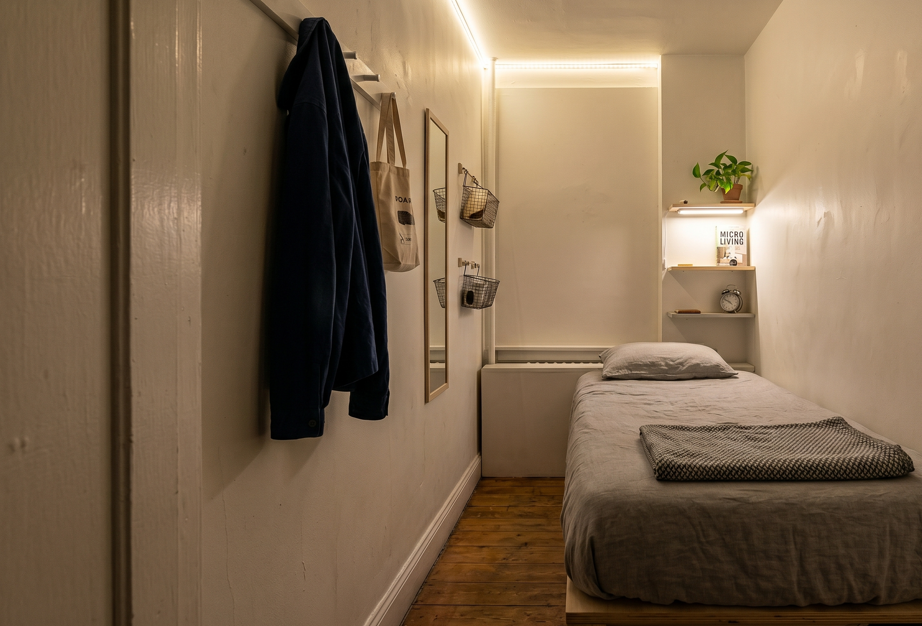
The units are super compact by design. Some are reportedly only large enough to fit a mattress and a small storage area. Larger units may include enough room for a desk or limited personal belongings. But the most attention-grabbing feature is that many are windowless and rely on artificial lighting and ventilation systems. Bathrooms and kitchens are often shared, with private living space kept to a minimum.
The concept is sometimes compared to Hong Kong’s infamous coffin homes, though there are important differences. Rather than makeshift or illegally partitioned spaces, many of China’s micro rooms are intentionally developed and marketed as youth housing. Interiors are often designed to feel modern despite their size, with bright lighting, minimalist furniture and compact storage solutions used to maximise space. As for the prices, it is on the extremely affordable side.
Sacrificing space for cost
But the trade-off is obvious because oftentimes space, privacy and comfort are sacrificed in exchange for affordability and convenience. Yet demand for these units remains strong in cities where rental costs continue to place pressure on younger residents.
In major urban centres such as Beijing, Shanghai and Shenzhen, rents can consume a large portion of monthly income, particularly for those at the beginning of their careers. Living near the workplace is often financially difficult while moving further away can mean long daily commutes and higher transport costs.
For some renters, choosing a micro room is a practical calculation. A small room near work may be seen as a worthwhile compromise if it means saving time, reducing costs and avoiding shared accommodation with strangers. The arrangement is also viewed by many as temporary because, rather than getting locked down into long-term housing and its associated costs, micro rooms are often treated as stepping stones during the early stages of employment, particularly among those seeking greater financial stability before upgrading to larger homes.
Social media has also played a major role in normalising the lifestyle. Across Chinese platforms, renters frequently post videos of compact living arrangements and share tips on how to make limited space more functional. Foldable tables, stackable storage and multipurpose furniture are common features, with some residents showcasing their minimalist lifestyles to adapt to the constraints.
Daily routines also tend to change in small spaces. Beds may double as workstations, meals are often eaten outside the home and belongings are carefully managed to avoid clutter. In some cases, residents spend relatively little time in their rooms beyond sleeping and resting, treating the space more as a functional base than a home.
Still, the growing popularity of micro rooms has reignited wider discussions surrounding housing quality and acceptable living standards. In Hong Kong, authorities recently moved to regulate subdivided flats through the Basic Housing Units ordinance which aims to phase out unsuitable living spaces, including some of the city’s widely criticised coffin homes. Under the framework, rental units are expected to meet minimum standards relating to floor area, ventilation, sanitation and safety. Penalties are also expected for non-compliance.
China does not have a single nationwide equivalent governing micro-room housing. Oversight takes place at the city level instead. Take Beijing and Shanghai, for example. Rental accommodation is subject to minimum space requirements and occupancy limits aimed at preventing overcrowding. Beijing also caps occupancy at two people per room. Authorities periodically cracked down on illegally subdivided units, imposing fines and jail terms on the landlords and owners responsible.
How small is too small?
The contrast highlights a broader question facing cities. When does compact and affordable housing begin to cross into substandard living? Critics argue that staying too long in these highly confined or windowless spaces will affect overall well-being, especially where access to natural light and ventilation is little to none. Questions have also emerged over whether normalising increasingly small living spaces risks lowering expectations for acceptable housing conditions among younger generations.
Yet demand suggests affordability remains the stronger force. For many young renters, especially those entering the workforce, the choice is not necessarily between a spacious apartment and a micro room. More often, it is between a micro room close to work or a much longer commute from the outskirts of the city. That is because all across major cities worldwide, compromises in housing are hardly new. Shared apartments, capsule accommodation and increasingly compact studios have already become part of urban living in many countries. China’s micro-room trend is simply another reflection of how affordability pressures continue to reshape the way younger generations live.
Whether micro rooms stay a lasting feature of city housing is still uncertain. For now, their popularity shows a difficult reality that many young renters are facing every day. In cities where housing costs continue to climb, affordability is increasingly shaping not only where people live but how they live. For some, compact living may be a temporary compromise made in exchange for convenience and proximity to work. For others, it may simply reflect a broader shift in expectations as urban housing becomes harder to afford.
Either way, the rise of micro rooms raises a question that cities may increasingly have to confront. How much living space are people willing to give up before affordability begins to come at the cost of liveability?
Stay ahead of the crowd and enjoy fresh insights on real estate, property development and lifestyle trends when you subscribe to our newsletter and follow us on social media.