

Will Malaysia see robot-enabled townships in the near future?
By Joseph Wong
The concept of the smart home is undergoing a radical upgrade in Malaysia. Beyond simple automated lights, app-controlled locks, and robotic vacuum cleaners, the entry of artificial intelligence (AI) into homes could be the next wave.
While several property developers are starting to incorporate AI into their projects, one has taken the first steps to introduce the nation’s first robot-enabled residential development, powered by AI technology.
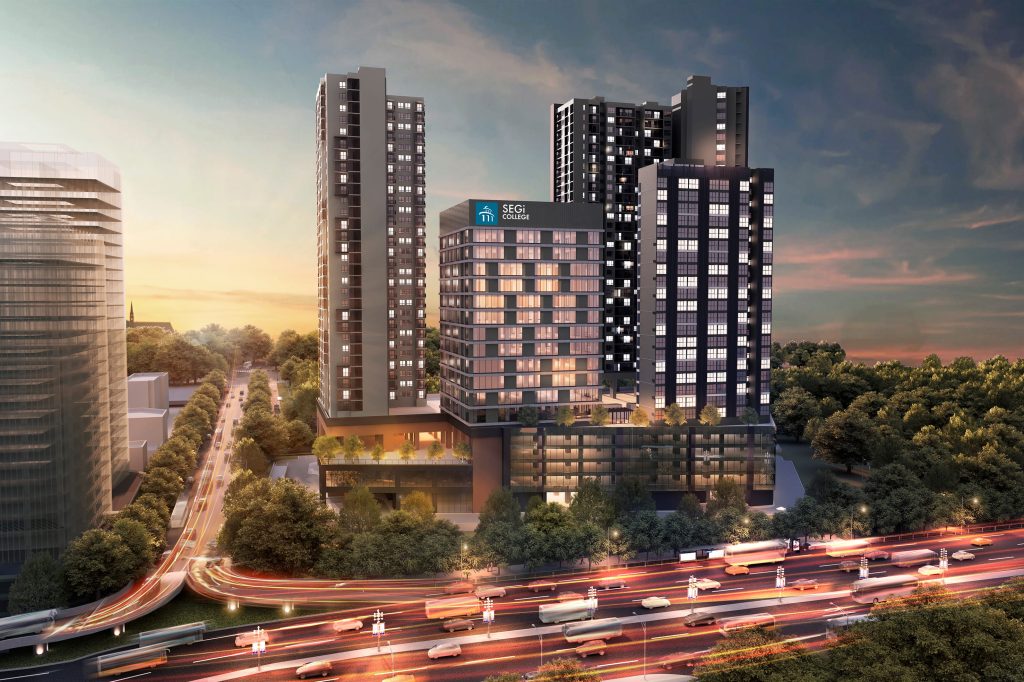
Located within the established i-City ultrapolis, a newly introduced 46-storey tower represents a RM1.2bil bet on the future of urban life. Unlike traditional projects that retrofit smart gadgets as afterthoughts, AI living is being built as an AI-native ecosystem from the ground up.
For I-Bhd founder and group executive chairman Tan Sri Lim Kim Hong, this project is the logical evolution of i-City’s digital heritage. "When i-City was first developed, digital meant connectivity," Lim said. "Today, AI and robotics are becoming the core operating layers of the economy."
While artificial intelligence has become a mainstay in Malaysian offices, its full-scale immersion into the property sector remains in its infancy. According to Stanford University’s AI Index 2026 Annual Report, Malaysia is currently outpacing global competitors in terms of public trust and technological readiness.
Unlike the scepticism often found in Western markets, Malaysians have adopted a uniquely optimistic stance. In fact, while only 59% of the global population views AI favourably, a staggering 70% of Malaysians see the benefits outweighing the risks. This cultural enthusiasm has propelled Malaysia to the top of workplace integration charts. With 90% of the workforce utilising AI, the nation effectively doubles the adoption rates seen in the US and China. This trend is anchored by the youth, as 90% of university students are already AI-literate, signalling a future workforce that views AI not as an add-on but as a foundational tool for innovation.
The new norm?
Unlike the normal smart homes, the concept of AI living offers a dual-layer value proposition. Buyers are not just purchasing a home but acquiring a unit integrated into a township-wide digital backbone. Currently, smart homes offer the following:
- Sensor-rich environments: Integrated wiring and sensors that allow for seamless automation of climate, lighting and appliances via voice or mobile apps.
- Smart scheduling: Systems that learn resident habits to optimise energy use and daily routines.
- Township-level security: A fully interconnected safety net featuring facial recognition, biometric entry and smart surveillance coordinated across lifts and fire protection networks.
But the AI Living concept represents the next frontier of urban evolution. It is a move away from homes that are merely connected toward environments that are truly AI-native. In this paradigm, AI is not an accessory added to a building but the building’s primary nervous system.
By integrating high-speed digital infrastructure with physical robotics, such homes or townships are designed to be alive, capable of sensing, learning and responding to human needs in real-time. The most striking shift in this landscape is the transition of robots from industrial tools to domestic companions.
The most disruptive feature of AI living is the introduction of Robots-as-a-Service (RaaS). This model shifts domestic labour from a personal chore to a subscription-based utility, much like high-speed internet or electricity.
Instead of owning a static appliance, residents can summon specialised robotic units for heavy-duty cleaning, window washing or laundry management. These robots navigate the home autonomously, returning to localised hubs once the task is complete. Because the home is AI-native, the RaaS units can communicate with sensors in the walls and appliances. A robot might be dispatched to clean the air conditioning filters or inspect a minor leak before the resident even notices a problem.
Not without risks
However, this technological leap introduces significant risks regarding privacy, security and long-term autonomy. Because a proactive AI requires constant monitoring to function, residents must navigate a state of persistent surveillance where intimate daily habits are digitally recorded. This interconnectedness also creates cybersecurity vulnerabilities where a system breach could lead to physical hacking of locks, cameras and robotic units. Beyond security, there is the challenge of over-dependence on digital infrastructure. A system failure could render essential home functions useless while the shift toward subscription-based living creates a perpetual financial commitment.
A new era for assisted living
On the flip side, AI Living provides a critical safety net for the silver hair segment and those requiring extra support. Robotics in these environments act as a first line of defence and companionship.
Equipped with contactless sensors and conversational AI, these robots monitor vital signs, detect prolonged coughing or identify irregular movement patterns that might indicate a fall. Beyond medication reminders, humanoid assistants provide physical support for mobility-challenged residents, helping them navigate stairs or manage daily tasks while offering conversational engagement to combat social isolation.
Solving the last mile
The friction of urban logistics, from grocery runs to parcel pickups, is eliminated through autonomous in-building delivery systems. In these townships, the retail hub and the residential tower share a unified logistics layer. Robots manage the last mile of delivery, navigating elevators and hallways to bring parcels or food orders directly to a resident’s doorstep.
The delivery process is secured by facial recognition and biometric entry systems, ensuring that only authorised robots and residents can access private levels, making the logistics chain both invisible and incredibly secure.
A self-contained urban ecosystem
The goal of AI living is to create a Unified AI Operating System that governs the entire live, work and play experience. Security, climate control, energy management and communal amenities are all linked. If you have an important meeting in the integrated office space, your home AI might adjust your wake-up time based on traffic data and coordinate a robotic delivery of your breakfast to save you time.
While still to be realised, such futuristic townships are built with digital piping capable of handling the massive data loads required for AI. This includes edge computing rooms and 6G-ready frameworks that ensure the location remains relevant even as technology advances.
For the modern urban buyer, the message is clear. The future of real estate is not just about a smart lock on the door. It is about living inside a responsive, intelligent ecosystem that prioritises human wellness and productivity.
Stay ahead of the crowd and enjoy fresh insights on real estate, property development and lifestyle trends when you subscribe to our newsletter and follow us on social media.