

Global instability is re-engineering Malaysia’s PropTech landscape
By Joseph Wong
The morning of March 2, 2026, served as a definitive black swan event for the global digital economy. At 3:47am, kinetic drone strikes successfully targeted and damaged three Amazon Web Services (AWS) data centres in the UAE and Bahrain. For the first time in the modern era, the cloud, long perceived as a nebulous, untouchable utility, was proven to be physically vulnerable to regional warfare.
As smoke rose from the wreckage of multi-billion dollar infrastructure in the Gulf, a silent but massive migration of capital began. For hyperscalers like Microsoft, Google and Amazon, the Middle East’s image as a stable, high-tech haven evaporated instantly. In its place, Malaysia has emerged as the primary beneficiary of a geopolitical flight to safety, sitting at a historic crossroads where real estate, digital infrastructure and national security converge.
The destruction of Gulf facilities has introduced a chilling new variable into the risk registers of multinational corporations, AREA Group of Companies executive chairman Datuk Stewart Labrooy pointed out. “For years, hyperscalers treated data centres as neutral, invisible infrastructure. The March attacks sent a clear message: if servers can be targeted in Dubai, they are a legitimate theatre of war anywhere,” he noted.
According to Juwai IQI co-founder and group chief executive officer Kashif Ansari, this realisation is triggering a massive strategic pivot. “When investors realise that billions of dollars of infrastructure could be at risk of being destroyed, they look to shift some of their investment to other locations. Most Gulf investment will proceed because it is driven by sovereign capital and long-term national strategies. But data centre operators are now looking to Malaysia and other locations to diversify and reduce risk.
“For global operators, Malaysia is a route to diversify risk, lower costs and stay close to Asian demand. Even if only a tiny, 0.23% share of data centre development is shifted from the Gulf to Malaysia, that would mean at least RM2.74 billion in new investment beyond the prewar baseline,” he said.
Quantifying the boom
Before the Gulf conflict, Malaysia’s data centre market was already on a high-growth trajectory, with analysts forecasting a 22.4% annual growth rate to reach RM54.8bil by 2030. However, the conflict in the Middle East has moved the goalposts.
Juwai IQI has modelled three new forecast scenarios based on the percentage of planned Gulf investment that might shift to Malaysian shores.
"We asked ourselves what happens to that forecast if Malaysia receives even a fraction of the investment that is now being reconsidered in the Gulf. Our scenarios show the market reaching between RM57.52 billion and RM68.46 billion by 2030, adding between RM2.74 billion and RM13.69 billion above the pre-war forecast. Even the most optimistic of those represents just 1% of the capital currently at risk in the Gulf.
“I want to emphasise that these are reasonable and even conservative estimates. We conservatively forecast Malaysia capturing only a sliver of the more than RM1.2 trillion in planned spending in the Gulf which the war has jeopardised. The current geopolitical disruption has only expanded Malaysia’s opportunities. You might ask yourself why it's important that Malaysia become a global data centre hub,” he reasoned.
In answer, KPMG, a consulting firm, has estimated that by 2030, data centres in Malaysia could support about RM138bil in economic output, RM47.6bil in gross value added and around 30,900 jobs. That is equivalent to roughly 4.1% of national economic output and 3.5% of GVA.
The real estate ripple effect
The impact of this shift extends far beyond server racks. The Malaysian property landscape is facing a trial by fire as residential and industrial sectors grapple with the fallout of the conflict.
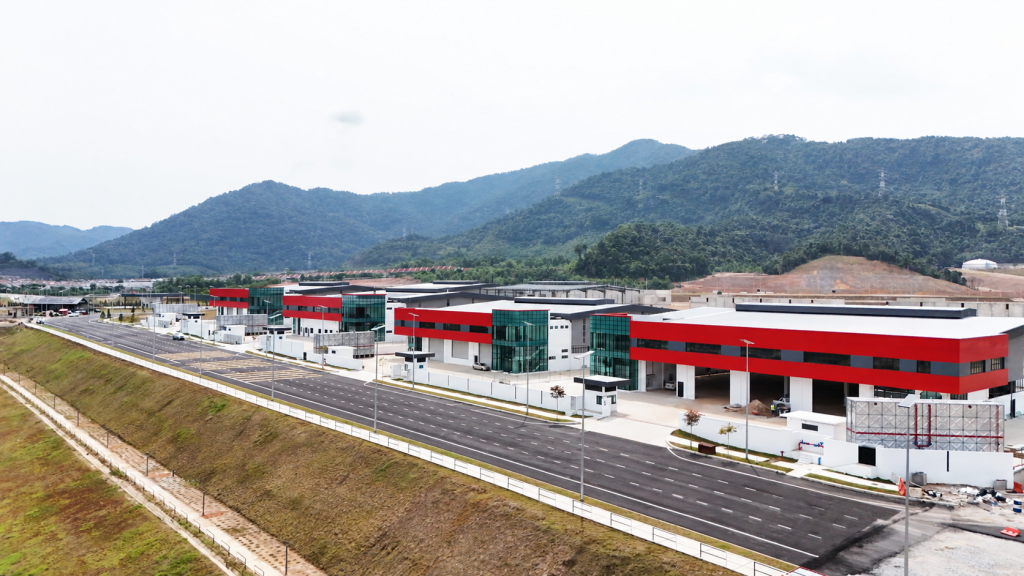
1. The industrial surge: This sector is seeing an unprecedented uptick in inquiries. As Gulf-based companies and international funds seek to diversify portfolios, Malaysia’s established infrastructure, including links to more than 20 international submarine cables, makes it a sweet spot. Johor, in particular, has risen to rival Singapore in capacity, offering the space and power that the island-state lacks, coupled with a security profile the Gulf can no longer guarantee.
2. The residential paradox: While the industrial sector booms, the average Malaysian home buyer faces a stiff issue. Rising global energy prices, driven by the conflict, have inflated the cost of construction materials like steel and bricks.
The oil and subsidy conundrum
Malaysia’s position as a net energy exporter provides a unique but complex buffer. While higher oil prices (staying above US$100 per barrel) boost state coffers through Petronas, they simultaneously strain the national budget through fuel subsidies.
The fiscal arithmetic is brutal. If oil remains at US$100 for just three weeks, the government could face an additional RM3bil to RM5bil in subsidy expenditure within a single quarter. For the data centre industry which is notoriously energy-intensive, the stability of electricity pricing is paramount. Investors fleeing the Gulf are not just looking for safety from drones. They are looking for protection from the price volatility currently crippling Europe and the Middle East.
The consensus among analysts is that Malaysia is where you go when things are going badly elsewhere. To fully capture this fleeing capital, the country must bridge the gap between its potential and its policy, noted Labrooy.
The Gulf conflict has undoubtedly made the world a more dangerous place but it has also forced a global re-evaluation of Malaysia’s value proposition. The country offers diversification without decoupling, hence, a way for global giants to stay close to Asian demand without the direct geopolitical risks of the Middle East or the supply chain complexities of mainland China.
The window of opportunity is real but it is finite. Capital is mobile and currently urgently looking for a new home. Through a tripartite partnership between the government, developers and tech giants, Malaysia can transform from a regional player into a global digital vault.
Stay ahead of the crowd and enjoy fresh insights on real estate, property development and lifestyle trends when you subscribe to our newsletter and follow us on social media.