

The construction industry is being challenged to rethink not just what it builds but how it builds
The vision of future cities is often associated with smart technologies, net-zero developments and ambitious sustainability targets. Yet, as these aspirations continue to shape urban planning around the world, industry experts are increasingly pointing to a more fundamental reality. The cities of tomorrow will not be shaped by ambitious sustainability goals alone but by the thousands of decisions made every day throughout the construction process.
From the materials specified and energy consumed on-site to the way environmental performance is measured and managed, these seemingly routine choices collectively determine the sustainability of the built environment.
In many ways, the future of a city is decided long before its buildings are occupied. It is shaped during the planning, design and construction stages where every decision influences long-term environmental performance, operational efficiency and community resilience.
According to Khalid Ahmad Architects and Associates' AMD QS director Wan Maimun Wan Abdullah, who also serves as president of the Association of Construction Project Managers Malaysia (ACPM), this is where the industry’s approach to Environmental, Social and Governance (ESG) must evolve.
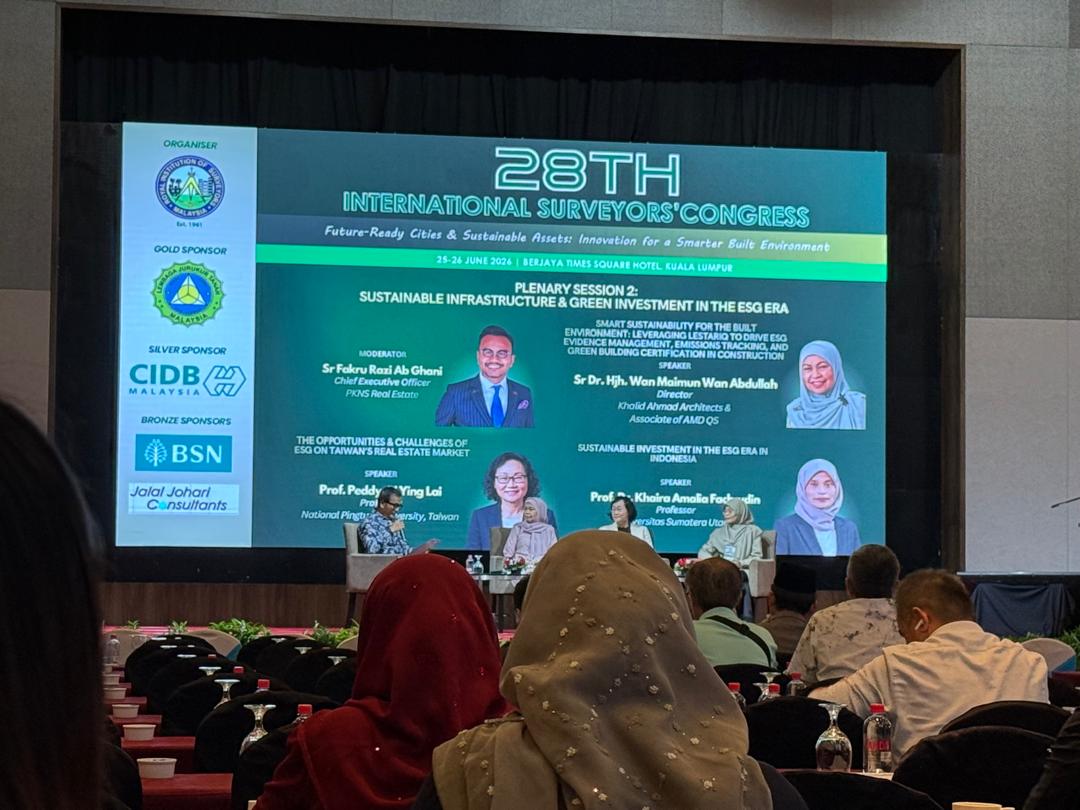
“ESG should be managed the same way we manage cost, quality and safety, throughout the project lifecycle,” she said during the 28th International Surveyors’ Conference 2026 themed Future-Ready Cities and Sustainability Assets: Innovation for a Smarter Built Environment.
Rather than viewing ESG as a reporting exercise completed after construction, Maimun believes that sustainability should be managed alongside cost, quality and safety throughout the project lifecycle. By integrating ESG into everyday project management, environmental considerations can influence decisions from the outset instead of becoming an administrative exercise at project completion.
From boardroom to construction site
The global conversation around ESG has accelerated in recent years, driven by evolving regulations, investor expectations and climate commitments. For the property and construction sector, however, its implications extend far beyond corporate reporting.
Buildings and construction account for a significant share of global carbon emissions. Environmental impacts occur throughout a building’s lifecycle from the extraction of raw materials and manufacturing of construction products to transportation, on-site activities, daily operations and eventual demolition.
As governments strengthen sustainability policies and cities pursue lower-carbon futures, construction professionals are increasingly finding themselves at the centre of this transformation.
As urban populations continue to grow, the quality of these decisions will have lasting implications not only for individual developments but for how future cities consume resources, respond to climate challenges and support healthier communities.
Maimun noted that while the United Nations Sustainable Development Goals (SDGs) may appear removed from day-to-day project delivery, they increasingly influence national policies, industry regulations and project requirements.
“For us as individuals, the SDGs seem distant from us but they are there in the projects that we do every day in the construction industry,” she explained.
Among the 17 SDGs, she highlighted four that are particularly relevant to the built environment: Industry, Innovation and Infrastructure (SDG 9), Sustainable Cities and Communities (SDG 11), Responsible Consumption and Production (SDG 12) and Climate Action (SDG 13). Together, they reinforce the need for construction projects to deliver not only economic value but also measurable environmental and social outcomes.
Managing ESG like every other project discipline
One of Maimun’s key messages challenged the misconception that ESG represents an entirely new way of working. Instead, she emphasised that many of its principles have long existed within construction practice.
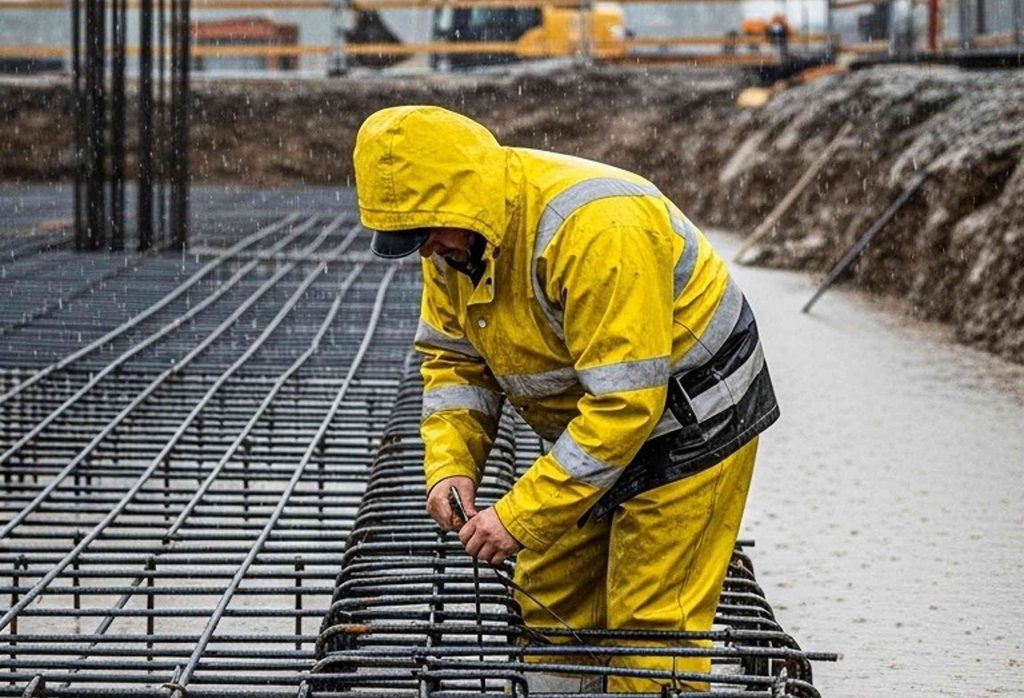
Environmental considerations are reflected in fuel consumption, electricity use, waste management and material selection. Social responsibilities are evident in worker welfare, health and safety and stakeholder engagement while governance underpins project compliance, documentation and ethical decision-making.
“ESG is already happening. It’s just being rebranded from what we have been doing all this while,” she said. For Maimun, the shift is ultimately about project management. Cost, quality and timelines have long been monitored throughout construction. ESG, she argued, should be treated no differently. By managing sustainability continuously rather than retrospectively, project teams are better positioned to reduce emissions, improve accountability and achieve certification more efficiently.
Rather than preparing sustainability documentation only when certification is required, project teams should continuously capture environmental data as projects progress. This not only improves reporting but also enables better decisions while construction is still underway.
As cities pursue net-zero ambitions, this operational approach becomes increasingly important. Decisions made during construction, from material procurement and fuel consumption to energy use and waste management, can have environmental impacts that extend decades beyond a building's completion.
Managing sustainability through better data
Delivering more sustainable cities requires better visibility into how projects perform throughout their lifecycle. During her presentation, she shared how greenhouse gas emissions are generated across multiple stages of construction from fuel used by heavy machinery and electricity consumed on-site to embodied carbon in building materials and transportation. Understanding where these emissions occur enables project teams to identify opportunities to reduce their environmental impact.
As construction projects become increasingly data-driven, digital platforms are emerging as practical tools to support ESG implementation. Maimun cited ACPM’s cloud-based sustainability platform, Lestariq, as one example of how technology can help project teams consolidate fuel consumption, electricity usage and material data to monitor carbon emissions, organise ESG documentation and improve readiness for green building certification.
“We capture data once and use it multiple times,” she said, describing a more integrated approach to sustainability management.
Artificial intelligence is also beginning to support this process by analysing documentation, identifying certification gaps and generating ESG summaries. However, Maimun stressed that technology should complement and not replace the expertise of industry professionals.
“Our ethical judgement, strategic insight and deep understanding of the natural environment, this is our competence that AI cannot replicate as the world evolves.”
More importantly, digitalisation is enabling sustainability to become part of everyday project delivery rather than a separate reporting requirement. For future cities, this means sustainability is no longer measured only by the finished building but by the transparency, accountability and environmental performance demonstrated throughout its delivery.
Evolving the roles of professionals
As sustainability expectations continue to rise, the responsibilities of built environment professionals are evolving alongside them.
Traditionally focused on cost management, procurement and contract administration, quantity surveyors, project managers and consultants are increasingly expected to advise on carbon management, ESG reporting, green procurement and sustainable project delivery.
“The role of quantity surveyors goes beyond cost and contracts to ESG advisory services,” Maimun observed.
This shift reflects broader changes across the property sector where clients, investors and regulators are placing greater emphasis on long-term environmental performance and responsible development.
For professionals, it also presents an opportunity to develop new expertise and deliver greater value beyond traditional technical disciplines. Rather than viewing ESG as another regulatory obligation, firms can position sustainability as an integral part of project planning, risk management and long-term value creation.
As expectations for future-ready developments continue to evolve, built environment professionals will play an increasingly important role in ensuring cities are not only smarter and more connected but also more sustainable, resilient and liveable.
Building the cities of tomorrow starts today
Creating future-ready cities will require more than technological innovation or ambitious sustainability pledges. It will require a shift in how projects are conceived, managed and delivered.
Every decision from selecting lower-carbon materials and reducing energy consumption to strengthening governance and improving data management contributes to the long-term resilience of the built environment.
Wan closed her presentation with a reminder that resonated well beyond the conference hall.
Quoting retired US Admiral William H McRaven, she said: “If you want to change the world, start with making your bed. It’s the little things in life that matter. If you cannot make the little things right, how can you change the world?”
Ultimately, the conversation around future cities is shifting from vision to execution. Smart technologies and ambitious sustainability targets remain important but their success depends on the quality of decisions made every day across the construction lifecycle. By embedding ESG into these everyday processes, the industry has an opportunity to build cities that are not only environmentally responsible but also more resilient, efficient and better equipped to meet the needs of future generations.
As Maimun reminded delegates, “It's the little things in life that matter.” For the construction industry, those little things, from measuring emissions and managing resources to making better project decisions may ultimately define the resilience, sustainability and liveability of tomorrow’s cities.
Among the panel of speakers for the session titled Sustainable Infrastructure and Green Investment in the ESG Era were National Pingtung University, Taiwan’s professor Peddy Pi Ying Lai, Universitas Sumatera Utara’s professor Khaira Amalia Fachrudin and moderated by PKNS Real Estate chief executive officer Fakru Razi Ab Ghani.
Stay ahead of the crowd and enjoy fresh insights on real estate, property development and lifestyle trends when you subscribe to our newsletter and follow us on social media.