Compliance costs, delays and uncertainties bear heavily on industry viability
At the StarProperty Budget 2027 Roundtable, developers discussed how much development work was shaped by the processes they went through with the authorities. From applying for planning permission to obtaining the Certificate of Completion and Compliance (CCC), developers described weathering delays, unexpected requirements and uncertainty, all of which add up to costs passed on to final purchasers.
Bureaucratic delays are compounded by the sheer number of approvals required, as well as the discretionary nature of some of the approvals. That certain local authorities champion fast-track processes suggests that cutting delays is a matter of will, not capacity.
Sime Darby Property Bhd township development chief operating officer Appollo Leong said local authorities in Selayang, Selangor and Kulai, Johor Bahru, have stood out as models for their 100-day policy and fast lane programme respectively. However, in Selangor, he said developers have to pay a premium if they choose to get fast-tracked.
“So the question is that, if you can do that in 100 days, why can’t it be (set as) a standard rather than you have to pay an additional premium?” he asked. “It should not be unique to certain authorities. It should be everywhere and every application should be expedited.”
Sharing that delays were often encountered at the Land Offices, Matrix Concepts Holdings Bhd property development and commercial co-chief executive officer Chai Keng Wai said a federal agency should provide a layer of oversight to local authorities and state agencies. The Housing and Local Government Ministry (KPKT), Chai said, can play a role in ensuring processes do not exceed reasonable timelines.
“Of course, approvals mostly come from the local and state levels. But is there anybody on top to come in if there are things (that went) beyond reasonable timelines or requests that are beyond reasonable…can KPKT come in to mediate the case? I think this is perhaps what we can propose,” he suggested.
While acknowledging that local and state agencies have initiatives to improve timeliness and performance, including KPIs, developers noted that rather than eliminating delays, they were simply being shifted around. The room for improvement still exists.
“(While) the OAC (One Stop Agency/Commitee) has its own charter to approve certain applications within 30 days or 45 days, they want us to go through the pre-submission consultation for months. To ensure that when it’s (submitted) into their system, they can approve it within 30 days or 45 days but we’ve been consulting them for like six months, for example,” Leong shared.
Policy uncertainties
Developers also grapple with uncertainties at the policy and regulatory level and nowhere is this more chronic than the bumiputera quota unit release mechanism. Different requirements and release procedures across states, lack of clear guidelines and transparency in approval criteria and timelines create confusion as well as making planning difficult for developers.
Currently, there is no automatic release mechanism. In most states, such as Perak, Selangor, the Federal Territory of Kuala Lumpur, Malacca, Johor and Pahang, release approvals are progressively granted in stages, tied to construction progress, sales performance of non-bumiputera units and compliance with advertising requirements for the bumiputera units. Developers must submit applications to the state authorities, with approvals granted on a discretionary, case-by-case basis.
According to Rehda Institute, the process is administratively intensive, placing a considerable burden on both developers and state authorities. It increases compliance costs and creates uncertainty in project cash flow planning, as the timing and extent of release approvals are not always predictable.
At the roundtable, UEM Sunrise chief financial officer Hafizzudin Sulaiman said the lack of an automatic release mechanism is a concerning issue affecting developments.
“I think the item that is typically dragging us for UEM Sunrise in Gerbang Nusajaya (in Iskandar Puteri) is actually the bumiputera quota release. And again, this is two parts. Why can't the release be automatic, right? That’s one. Two, personally, I was thinking, rather than paying a penalty to the authorities, why don’t I give it to future home buyers as an additional kicker? This is just my personal thought. This is just something that may push one or two bumiputera home buyers to get a home,” he said.
Hafizzudin was referring to the levies states imposed for the release of unsold bumiputera quota units, based on selling prices exclusive of bumiputera discount (See Table 1). For developers who have to comply with all eligibility and advertising requirements, the levies were often described as a form of penalty, an irony pointed out by Bukit Kiara Properties group managing director Datuk NK Tong.
“At Rehda, we’ve been encouraging the authorities not to call it a penalty. Because once it’s a penalty, then you can’t offset it against your tax. It was meant to be an incentive, now it becomes a punishment,” he remarked.
Lack of cost transparency
With housing delivery costs being pushed up by a spike in construction costs, keeping housing prices affordable is becoming increasingly challenging. Once again, developers have asked to reduce all government-imposed costs, flagging the opacity of some of the costs charged.

Speaking off record, questions were raised about the monies paid by developers for contributions towards the supply of water and electricity to the housing development. Developers felt that they should be informed on how the contribution amount required was derived. On top of it, developers said they also endured delays in their dealings with the relevant utility agencies.
Reducing compliance costs remains a major request by developers at large. It is one of the main wishlist items of Rehda in its submission to the Finance Ministry (MoF) and KPKT. Rehda’s wishlist has called out the introduction of new and ad hoc charges, without considering their cumulative impact on housing affordability. It asks the government to take into account an Affordability Impact Assessment for major new policies, regulations, standards and charges affecting residential development.
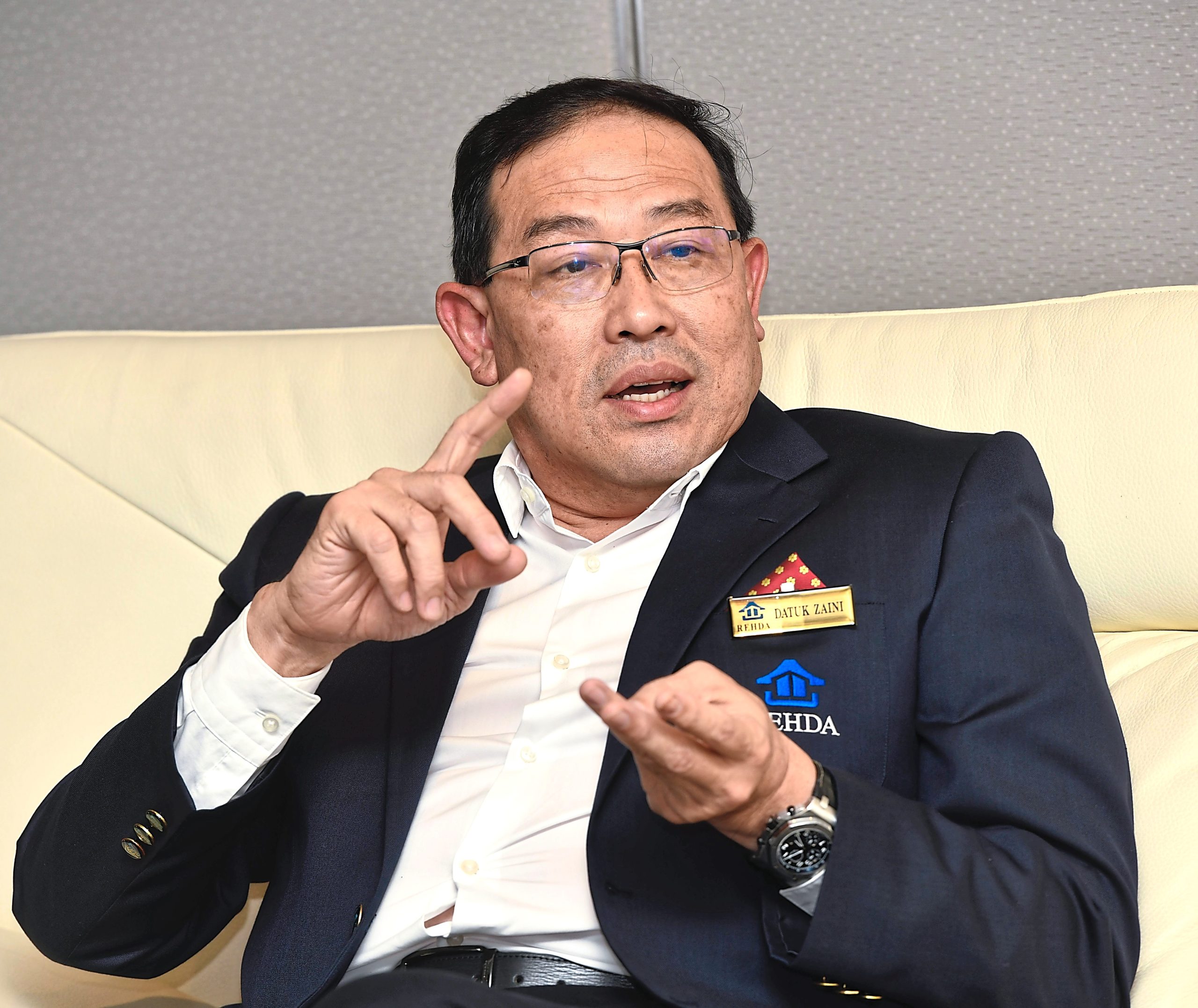
“Certain developments are being imposed additional requirements on top of what the approved plans have required, like upgrading an interchange that is located far from the project,” Zaini told StarProperty at a sit-down after a media briefing recently.
He added that while usually the cost of upgrading is shared among developments in the area, a developer can also end up shouldering the cost of the upgrading alone if there are no other developments nearby which ends up in higher selling prices for the development. He also shared examples of developers being charged 1% on their property value by Indah Water Consortium (IWK) and the requirement to build and surrender the energy facilities to Tenaga Nasional Bhd (TNB) at the developers’ cost.
“To me, TNB is a private company and is charging the homeowners (for electricity). They should be bearing some of the costs too. If developers have to fund all the amount, we would have to channel it to home buyers and this raises home prices,” he said.
For context, agencies that required monies contribution or fees and/or construction of infrastructures for the smooth delivery of various services including TNB, IWK, Malaysian Communications and Multimedia Commission (MCMC), Fire and Rescue Department (Bomba) and state-specific agencies such as Selangor Utility Corridor (KUSEL) and Air Selangor.
Zaini also said that, with the local authorities also requiring the construction and surrender of common facilities such as community halls and suraus, developable land has shrunk at a glaring rate.
“The efficiency rate is now about 40%, meaning that out of 1,000 acres, 600 acres go to roads, drains, public amenities, so developers can only sell about 400 acres (but) developers have to recoup the land cost of the other 600 acres,” he said.
The need to streamline
Developers at the roundtable have agreed on one thing: costs can effectively be reduced if only the approval processes across agencies are streamlined and made transparent.
“All the approvals always involve multiple agencies, extensive documentation and sequential submissions. I’m not sure (but) will there be any way to streamline the requirements and avoid duplications to establish clearer approval pathways to shorten the process,” Ayer Holdings Bhd chief executive officer Joanne Lee suggested. “On the development charges, I would like to request more transparency of calculations. I think that we always don’t know how they calculate (the charges).”
Glomac Bhd group executive director FD Idzham illustrated how high compliance costs, coupled with inefficient bureaucracy, erode the viability of the developer.
“We’ve already paid the contribution and development charges and now you (the authority) are coming back and telling me to upgrade the road for the 33 homes (I’m building). It doesn’t make sense to me. We try to appeal and go through the process but it will eventually eat into our margins. We have shareholders. We’re a publicly listed company…it also causes things like LAD (Liquidated Ascertained Damages). Of course, we try to manage within the timeline but it’s usually out of our control,” he said.
In his concluding remarks, Tong said although the industry has remained resilient, the cost pressure which translates into pressure on developers’ margins, will lead to deterioration of the housing delivery ecosystem in the long term.
“Delays are never okay but delays are worse when inflation is high because what people don’t realise is that there’s a compounding effect. And as we mentioned here, the people that suffer are the home buyers and they suffer in two ways. One is they either end up paying more and/or they end up not getting their unit because of costs…of cash flow problems that the industry will face,” he said.
Table 1: Imposition of levy for release of bumiputera quota units in select states
| State | Levies |
| Kedah | 20% of the unit selling price |
| Penang | 5% of the unit selling price |
| Perak | 5% for unit price RM350,000 and below 7% for unit price RM350,000 and above |
| Selangor | 7% of the unit price (inclusive of low-cost housing units)Another 5% penalty for non-compliance with bumiputera quota requirements will be applied if developers sell bumiputera quota units prior to obtaining approval for their release. |
| Federal Territory of Kuala Lumpur | 5% of the unit selling price A compound of RM50,000 per unit would be imposed if a developer sells bumiputera quota units to non bumiputera buyers without prior release approval. |
| Malacca | 10% of the selling price for units priced at RM400,000 and below 8% of the selling price for units priced above RM400,000 |
| Johor | 7.5% of the non-bumiputera lot’s selling price |
Source: Rehda Institute/Various state bumiputera quota policies.
Stay ahead of the crowd and enjoy fresh insights on real estate, property development and lifestyle trends when you subscribe to our newsletter and follow us on social media.