With housing analytics planned for 2027, Budget support could help developers build residences that buyers want
Before a home is conceptualised, a developer has decisions to make. How many bedrooms should each unit have? What price would buyers consider? Would families want to settle in the area and, most importantly, could they comfortably afford to stay?
Making the right calls requires understanding the people who will live there. As household needs change and development costs rise, having better information in the palm of their hands could help developers judge what to build and how their projects should perform.
The latest figures on completed but unsold housing stock show the importance of understanding demand. The National Property Information Centre’s (Napic) Property Market H1 2026 Snapshots reported 33,094 residential units worth RM17.78bil were still unsold. This is an 8.6% increase in volume from the second half of 2025. Of these, 12,340 units or 37.3% were priced at RM300,000 and below. While the figures alone cannot explain why individual homes remain unsold, they invite closer examination of location, financing, household incomes and the suitability of available properties.
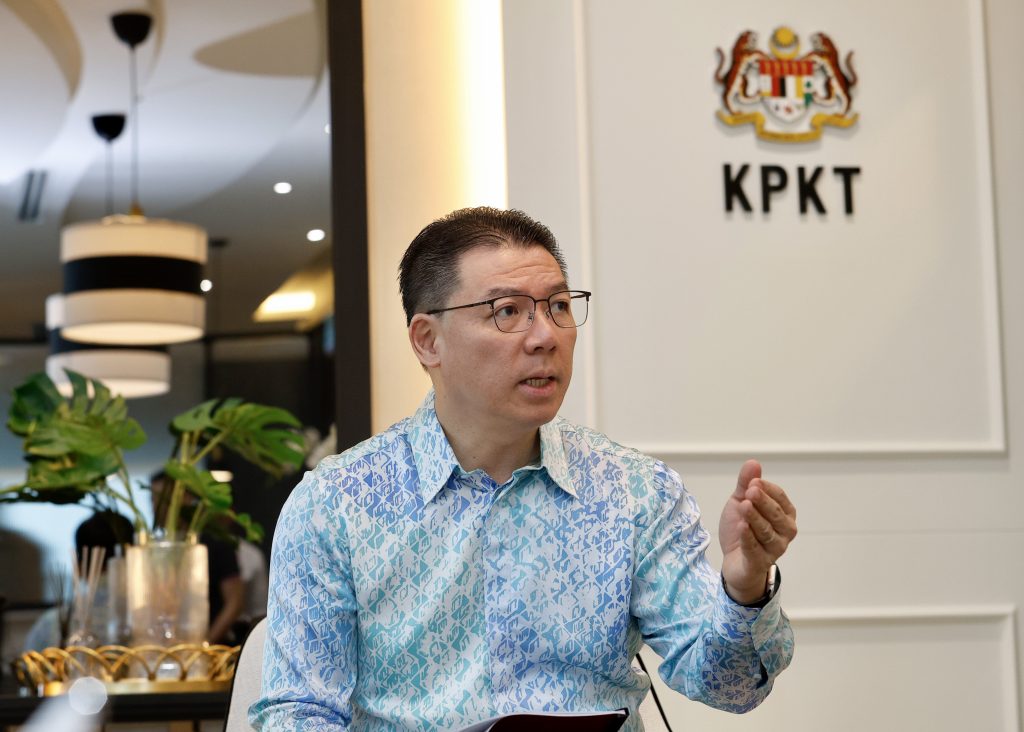
A move towards more detailed housing information is already taking shape. In August, Housing and Local Government Minister Nga Kor Ming announced plans to introduce big data analytics from 2027 to address mismatches between housing supply and demand.
The approach, outlined under the National Housing Policy 2026-2035, would consider local incomes, locations and market needs when assessing housing requirements. Nga said a uniform RM300,000 benchmark for affordable housing did not adequately reflect differences between areas.
With the system planned for 2027, attention turns to how Budget support could help put that information to work. Developers would need data detailed enough to guide their decisions, alongside the skills and tools to interpret it.
Understanding different markets
At the StarProperty Budget 2027 Roundtable, Sabah Housing and Real Estate Developers Association (Shareda) deputy president Benny Ng called for stronger property research in Sabah. He pointed to the absence of platforms such as StarProperty and the Rehda Institute locally, calling for either the public or private sector to build research capacity to address the mismatches.
His comments raise a question for the planned housing analytics system: how well will it capture markets where local research capacity is limited? Better information would need to reflect conditions across different states to help developers assess which households need homes, what they can afford and where they need to live. Glomac Bhd group executive director FD Idzham observed that buyers in established townships were considering accessibility alongside property prices, including journeys to work, schools and nearby amenities.
These concerns are reflected in the StarProperty Budget 2027 memorandum which proposes housing approaches that respond to local incomes and changing life stages. It also calls for closer planning between residential areas, employment centres and transport networks.
Testing what gets built
Understanding the market is one part of delivering a suitable home. The next involves assessing how the proposed building will function and whether developers can justify the tools needed to do so.
At the roundtable, Idzham’s comment that Glomac found upfront costs for industrialised building systems (IBS) unjustifiable led to the memorandum proposing equipment allowances, clearer construction research and development incentives and support to adapt technologies to Malaysian conditions. For Budget 2027, the challenge is to make adoption financially workable while ensuring that the investment produces useful results.
An example of how modelling can support investment decisions is Nanyang Technological University’s EcoCampus in Singapore, discussed during the IES presentation at the Cities Climate Connect 2026 conference by the Malaysian Green Building Council (mGBC).
According to IES’s published case study, detailed models of 21 campus buildings were calibrated using operational data. They were used to test improvements involving building envelopes, lighting and occupancy sensors, equipment use and cooling systems.
The study identified potential average energy savings of 31% if the measures were installed. These were simulated savings, providing a basis for comparing investments before committing funds.
A university campus differs from a housing development, but the example shows how modelling can help assess whether proposed improvements are worth pursuing. If Budget 2027 provides further support for adoption, such assessments could also help policymakers judge its benefits.
Lessons from after handover
Completed homes can provide useful information too. As another example presented in the mGBC session, at Trent Basin in Nottingham, IES technology brings together data on energy consumed, generated and stored within the residential development.
Residents can compare their household energy consumption with the community average and see how much energy the project actually produces and sells to the grid. Making that information accessible helps people understand how the development’s energy systems relate to their own usage.
At the launch of the International Sustainability Week 2026 at Mitec, GreenRE chairman Datuk Seri FD Iskandar emphasised the importance of considering a building’s running costs throughout its lifetime. His remarks connected affordability with the expense of cooling, powering and maintaining a property, alongside its purchase price.
That gives the Budget discussion another consideration. Support for better design and technology could be assessed against the costs residents face after moving in. Evidence of lower energy use, easier maintenance or fewer defects would help establish whether the initial investment delivers lasting value.
Making support count
For Budget 2027, the question extends to how these benefits should be measured. Developers need to understand the returns they can realistically expect while policymakers need evidence of which forms of support are useful.
The memorandum recommends tracking construction duration, labour hours, material waste and defect rates. Such records could help establish whether new methods improve delivery and whether the savings justify wider adoption. Project scale and local conditions also matter. A technology that makes financial sense for a large development may be harder to justify for a smaller one.
With housing analytics planned for 2027, the coming Budget offers an opportunity to support its practical use alongside better design and construction methods. For buyers, the results should be visible in homes that suit their needs and remain manageable to run long after they move in.
Stay ahead of the crowd and enjoy fresh insights on real estate, property development and lifestyle trends when you subscribe to our newsletter and follow us on social media.