

Calls for faster approvals and easier financing are returning ahead of Budget 2027, alongside greater attention to M40 households, upgraders and the realities shaping developers’ decisions.
Easier home financing, stamp duty relief and faster approvals have long featured in discussions about Malaysia’s property market. Ahead of Budget 2027, those requests are returning with a broader question: How well does the housing system serve the people trying to find a place within it?
For a young buyer, the difficulty may be saving enough for a deposit. A middle-income family may need another bedroom but struggle to afford the move. Older home owners may want to downsize somewhere with shops and public transport nearby while residents of ageing flats need their lifts and shared facilities to keep working. Meanwhile, developers are weighing what to build, when to launch and which markets can support their next project. Rising costs and uneven demand are making those decisions harder.
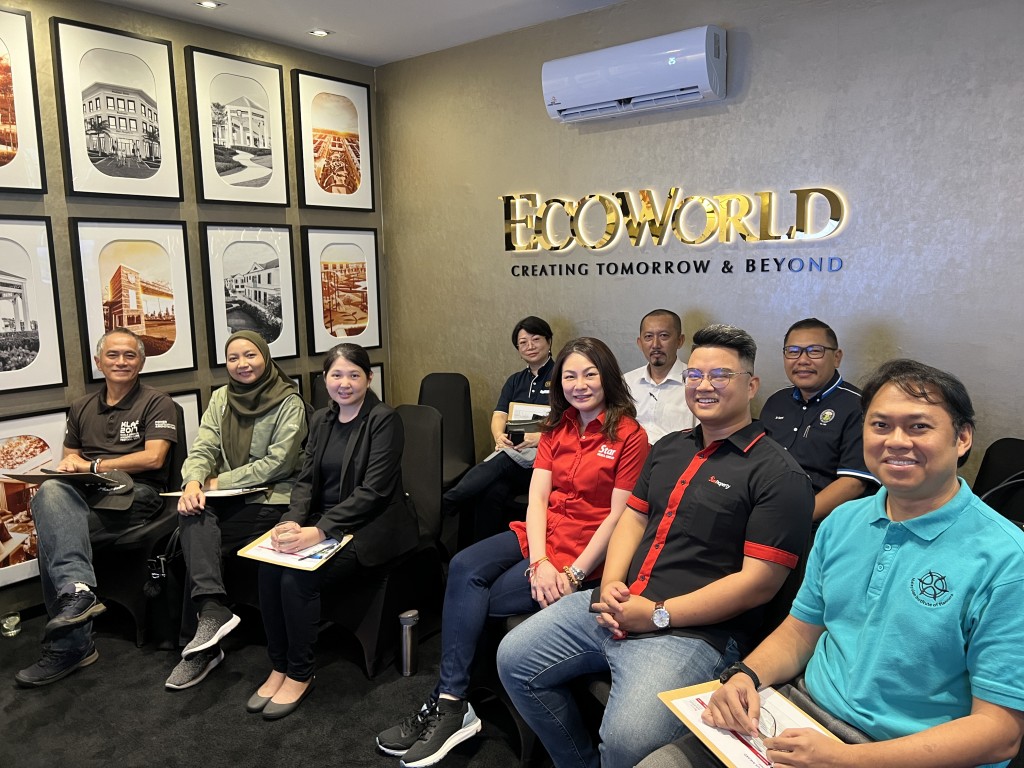
These concerns shaped the StarProperty Budget 2027 Roundtable where developers and representatives from Sabah and Sarawak discussed priorities for the coming Budget. The session highlighted several key issues that are gaining attention among stakeholders. Their views, together with an earlier industry survey, shaped a memorandum covering six focus areas, from housing affordability and financing to planning, approvals and East Malaysia’s infrastructure needs.
During the roundtable session, which was moderated by Real Estate and Housing Developers Association (Rehda) past president and Bukit Kiara Properties group managing director Datuk NK Tong, an interesting shift in emphasis was highlighted. He outlined the importance of more efficient housing delivery, focusing on affordability, livability and targeted financing for genuine homebuyers. Notably, this approach to “delivering the right homes in the right locations for the right people” was driven by insights gathered from the survey.
Increasing support for other buyer groups
Among the priorities raised was the greater attention being placed on middle-income households. A longstanding issue, attention turned sharply back to the M40 group as the government initiated major structural subsidy reforms. This pressure led the government to shift away from rigid classifications like B40 and M40 altogether, using data hubs like Pangkalan Data Utama (Padu) to transition towards a household net disposable income model. Public debate is currently still ongoing as gross income brackets struggle to keep up with the actual cost of living, especially in highly urbanised areas.
One of the participants for the roundtable, AYER Holdings Bhd group chief executive officer Joanne Lee, questioned whether middle-income households could comfortably afford a purchase, calling for more flexible financing options including rent-to-own arrangements. The discussion also sparked discussions about how the initial deposits remain a hurdle that monthly repayment calculations can overlook.
Glomac Bhd group executive director FD Idzham identified the deposit as a recurring difficulty among prospective first-time buyers. “They don’t mind making the monthly payment. The monthly payment is not an issue,” he said, citing deposits of RM50,000 to RM60,000 for homes priced between RM500,000 and RM600,000 as an obstacle for some purchasers.
The memorandum proposes targeted first-time buyer deposit-matching grants alongside an enhanced Home Ownership Campaign (HOC), stamp duty waivers and structured developer discounts. It also calls for financing assessments that better recognise the earnings of gig workers and others without fixed salaries. A wider view of housing support would include households already on the property ladder.
“One group of people we always neglect is the upgraders,” said Matrix Concepts Holdings Bhd property development and commercial co-chief executive officer Chai Keng Wai, highlighting families needing more space as their children grew or ageing parents moved in. Owning a first home does not necessarily mean a household can afford one that meets its next stage of life. Chai also drew attention to empty nesters who may no longer need a large suburban house but would benefit from a smaller, accessible home near public transport. Assistance could therefore respond to changing household needs as well as the circumstances surrounding a first purchase.
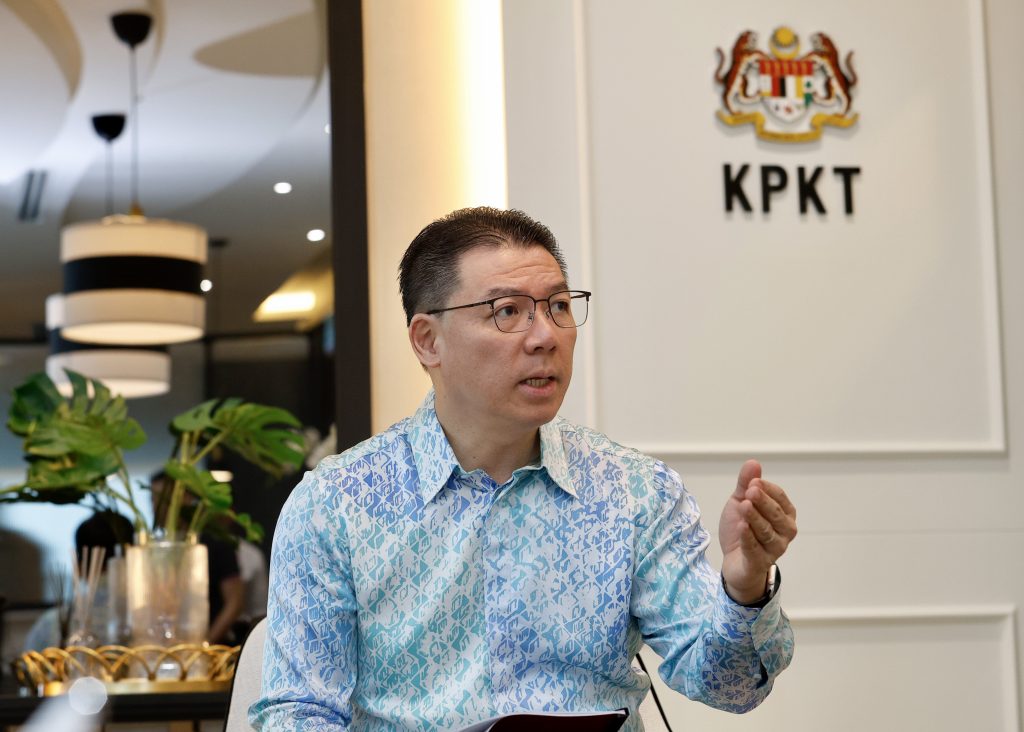
Rehda president Datuk Zaini Yusoff, in a separate interview, said another concern is the number of unsold completed units, particularly those that are in the affordable housing pricing category of RM300,000 and below.
According to the National Property Information Centre (Napic), 37.3% of unsold completed units in 1H 2026 are in the affordable housing pricing category. Zaini voiced concern that the affordable homebuyers’ needs are not being met by the mandatory quota for developers to build affordable housing in their developments. Developers target different segments and project locations may better serve their intended market rather than the affordable housing sector.
He proposed that the government unlock unutilised school lands for affordable housing development, using the experience of SP Setia Bhd where he is the chief executive officer.
“In Setia Alam, we surrendered land parcels for over 20 schools but only five were built. We can propose for developers to build the schools (where the government does not have the budget), in return for the government to unlock the other unutilised school land for us to build affordable housing. Many of these school lands are in good locations (for affordable homebuyers),” he opined.
Affordability varies by location
During the roundtable, the discussion frequently circled the topic of location. It was brought up that a price considered attainable in one district may remain beyond the means of households in another. “Affordability is a much more complex issue than just applying a policy and applying it all across the state,” opined Sime Darby Property Bhd township development chief operating officer Appollo Leong.
Furthering the argument, he used Subang Jaya and Kuala Selangor as an example to illustrate the limits of a uniform framework and called for a more localised assessment of what households can actually afford. As a result, the memorandum developed the suggestion into a proposal for council-level affordability frameworks informed by local median incomes and land costs.
Additionally, pricing only scratches the surface of the household calculation. Idzham highlighted the importance of planning housing alongside transport, employment and schools. With the changing landscape, buyers need to know how easy it is to commute to work and take their children to school while keeping everyday amenities within reach.
Similarly, Leong expanded the suggestion across wider development corridors, because individual projects form part of a larger area whose roads, utilities and employment opportunities need proper coordination.
That is because the scale is about to get bigger. Industrial parks and other economic centres are growing. New investments create new opportunities for the surrounding area but residential areas first need adequate infrastructure and services to fully function as standalone communities.
To address the issue, the memorandum proposes federal matching grants for joint federal-state planning frameworks that connect housing with employment centres and transport networks. This gives the opportunity for developers to plan more integrated townships with commercial amenities and jobs.

Shifting gears
The discussion also revealed how developers have been adjusting to market conditions. Experiences differed across companies and locations, with participants describing both softer demand and pockets of opportunity.
Chai said his company had not seen a slowdown in sales. “But we see a longer period of conversion,” he said, pointing to financing difficulties and buyers’ ability to meet the differential sum.
Leong reported softer residential sales alongside stronger industrial enquiries, including interest linked to data centres and investors from China. However, increased competition was also making industrial properties take longer to sell. “Demand is still there but there is a lot of supply as well,” he said.
For UEM Sunrise chief financial officer Hafizuddin Sulaiman, demand varied by location. He described the opportunities in Johor and continued demand in Mont Kiara while emphasising careful decisions on projects yet to be launched. “Whatever is launched, we have to deliver,” he said.
On that note, the developers also dedicated time to discussing how launch schedules and project phases should be reviewed to manage costs and cash flow. The limitation was made clear by Idzham, who said: “We can’t actually pass the cost onto customers.”
The weight on the collective industry’s shoulders raised the question about the homes themselves being built. Lee reiterated that higher costs could push developers towards maximising density and plot ratio which would potentially contribute to a mismatch between supply and buyers’ requirements.
As a suggestion, she advocated an approach that leans more demand-led, because quality and everyday convenience take precedence. “Purchasing decisions are always driven by affordability, strategic locations and, I would say, public transport is one of the important things,” said Lee.
The wait for approval
Despite the participants acknowledging that compared to previous years, there have been improvements in some approval processes, the ability to deliver properties still depends partly on what happens before construction even begins. They called for greater consistency across authorities and agencies to tighten the process further. Sequential submissions, land matters and utility requirements remain recurring concerns.
As an example, Leong pointed to the time spent in pre-consultation before an application enters an official approval system. “The issue has always been that before they put it in the system, they want us to go through the pre-consultation for months to ensure that when it is on their system, they can approve it within 30 days or 45 days,” he said, referring to how the One Stop Committee has its own charters to approve certain applications within a certain period. “We need to be very specific in terms of what we request.”
A published processing period could appear short while months have already gone into the preliminary requirements. When measuring performance, that distinction matters. An approval target provides a much clearer picture if it captures the full timeline, from initial consultation through to final clearance. Digital single-window platforms, concurrent agency reviews and performance measures were suggested, together with linking digitalisation support and local authority funding to verified processing outcomes.
Additionally, Idzham questioned whether the agencies were sufficiently prepared for digital submissions, because moving a process online requires the capacity to respond to and resolve applications. Tong warned of compounding financial pressures and its consequences for home buyers.
Sabah and Sarawak infrastructure gaps
Sabah Housing and Real Estate Developers Association (Shareda) deputy president Benny Ng and Sarawak Housing and Real Estate Developers’ Association (Sheda) highlighted infrastructure gaps and called for better data to understand the state’s housing needs. “We don’t have a Rehda institute that does research and collects data. At this moment, the mismatch of policy, budget and infrastructure is huge,” he said, also proposing research to examine differences between Sabah and other parts of the country.
There was a push for dedicated support for power, water and road infrastructure in East Malaysia, alongside land-registry digitalisation and technical assistance to improve processing. The discussion extended that attention to different residents. Ng raised elderly-friendly neighbourhoods, accessibility and sensory-friendly environments, arguing for developments that support greater independence and dignity.
Touching back on costs over time, Idzham and Leong said upfront investment and project scale affected the commercial case for adopting industrialised building systems, calling for clearer renewable energy rules.
Reducing housing delivery cost
Compliance costs imposed across all government tiers continue to strain real estate development, prompting Rehda to advocate for Affordability Impact Assessments on new regulations. Speaking to StarProperty, Zaini highlighted how ad-hoc demands disproportionately inflate house prices.
Additionally, extensive statutory land surrenders for roads, drainage and public amenities have reduced land efficiency.
Across these issues, the Budget 2027 discussion places more attention on how housing performs throughout its life. Buyers need financing suited to their circumstances. Developers need workable delivery processes and a clearer understanding of demand. Residents need neighbourhoods and buildings that remain practical to live in.
Familiar incentives still have a place in that effort. The wider task is to help a middle-income family make a necessary move, an older resident find an accessible home and a first-time buyer enter a community they can afford to remain in.
Quotes

“We do think about deferment, yes. But we have to be nimble,” said Hafizuddin.

“Affordability is a much more complex issue than just applying a policy across the state,” said Leong.

“Purchasing decisions are always driven by affordability, strategic locations and, I would say, public transport is one of the important things,” said Lee.
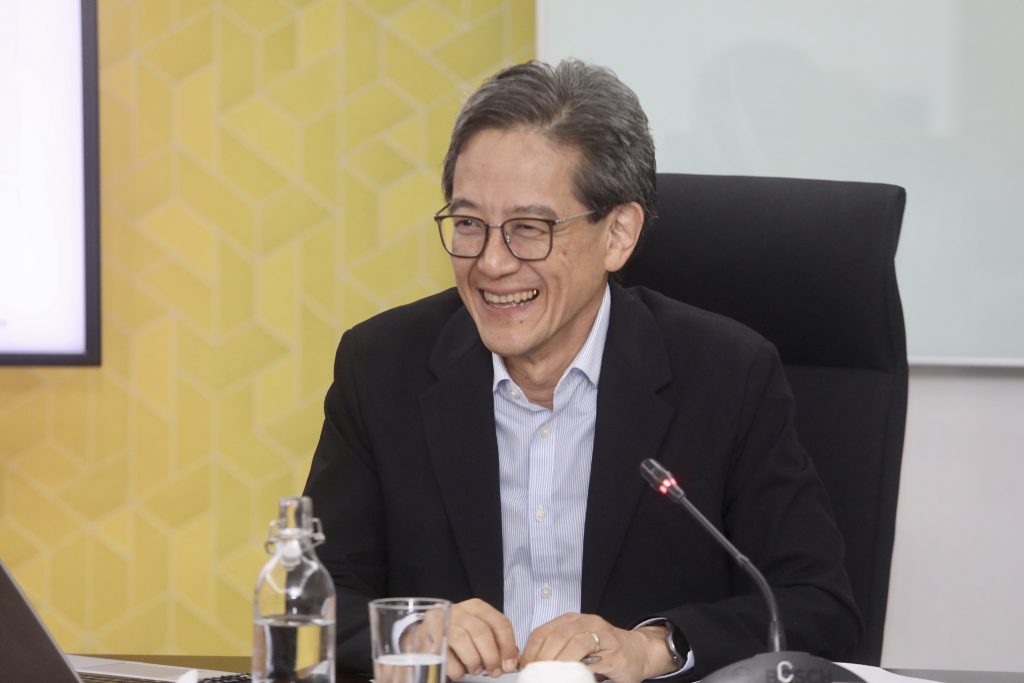
“Delays are never okay but delays are worse when inflation is high, because what people don’t realise is there’s a compounding effect,” said Tong.

“We really need to have better infrastructure connecting different districts and communities,” said Wong.

“We need to put a budget on looking into the differences between Sabah and the rest of the region,” said Ng.

“Purchasing a home is probably one’s biggest investment. So, how can one purchaser actually get to work easily or is school accessible enough for the children?” asked Idzham.

“SJKP is a good scheme and should be expanded beyond first-time home buyers to support people at different stages of their housing journey, including home upgrades and empty nesters with changing housing needs,” said Chai.
Stay ahead of the crowd and enjoy fresh insights on real estate, property development and lifestyle trends when you subscribe to our newsletter and follow us on social media.