StarProperty Budget Roundtable channels recommendations to policymakers
By Joseph Wong
As Malaysia prepares for the tabling of Budget 2027 on Oct 9, the intersection between public policy and private enterprise has taken on renewed importance. While economic indicators reveal a solid foundation, underpinned by a robust 6% GDP growth rate in Q2 2026, manageable inflation and record-high trade levels, the real estate sector faces a complex matrix of operational and macroeconomic challenges. Rising development expenditures, tight end-financing accessibility and a widening disparity between household income growth and property prices continue to test market dynamics.
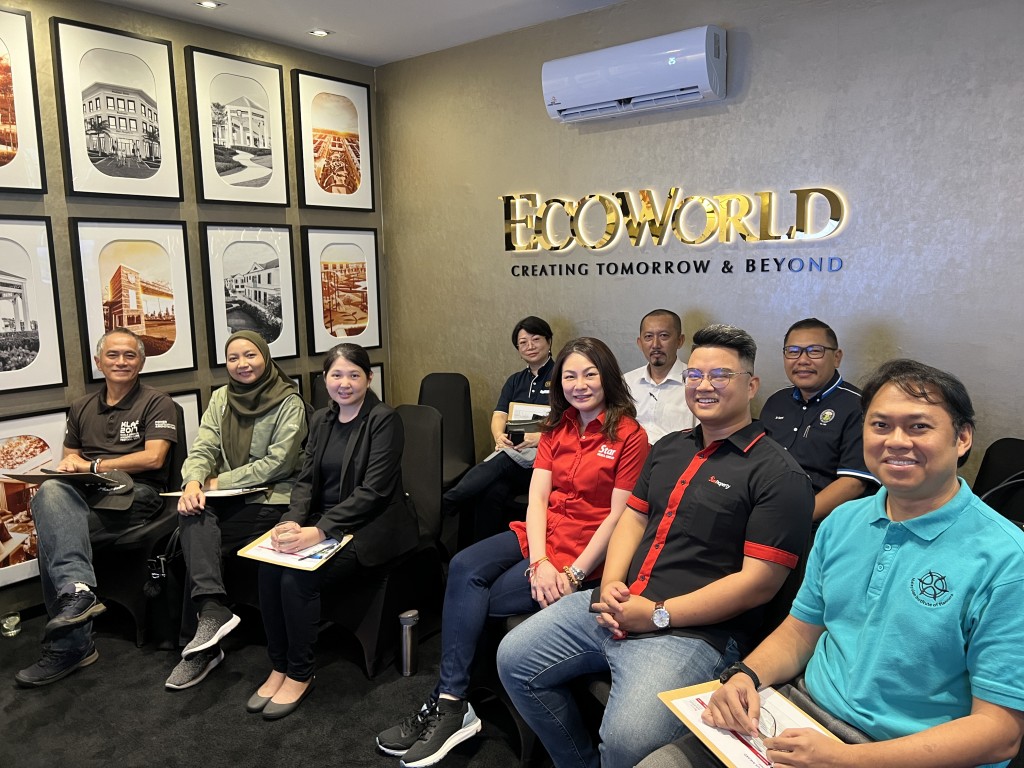
Against this backdrop, Star Media Group (SMG), operating through its real estate portal StarProperty, hosted the StarProperty Budget 2027 Roundtable. Now in its fourth consecutive year, this platform serves as a vital bridge between private sector leaders and key government policymakers, transforming industry challenges into actionable policy solutions.
The strategic intent
While traditional news outlets report on fiscal announcements after the national budget is presented in Parliament, SMG takes a proactive, solution-oriented approach. Through the roundtable, SMG facilitates constructive, data-backed dialogue among the real estate developers ahead of final policy formulation.
By synthesising ground-level market feedback into an executive memorandum presented directly to the Ministry of Finance (MoF) and the Ministry of Housing and Local Government (KPKT), SMG elevates the media’s role from passive reporting to active policy engagement.
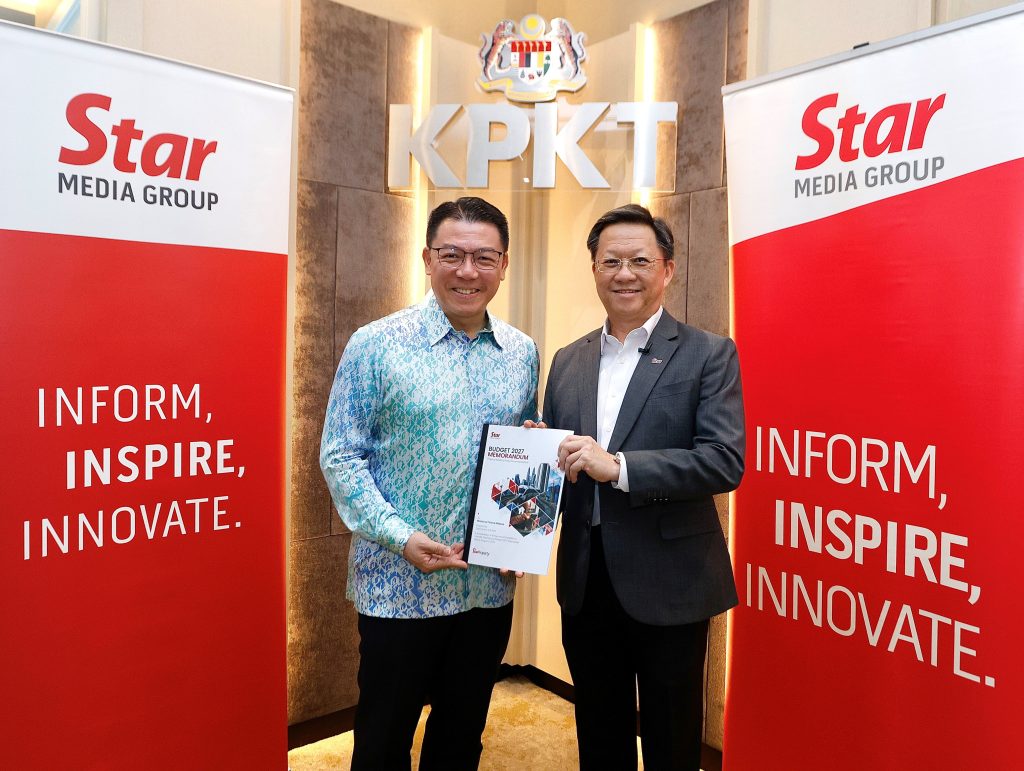
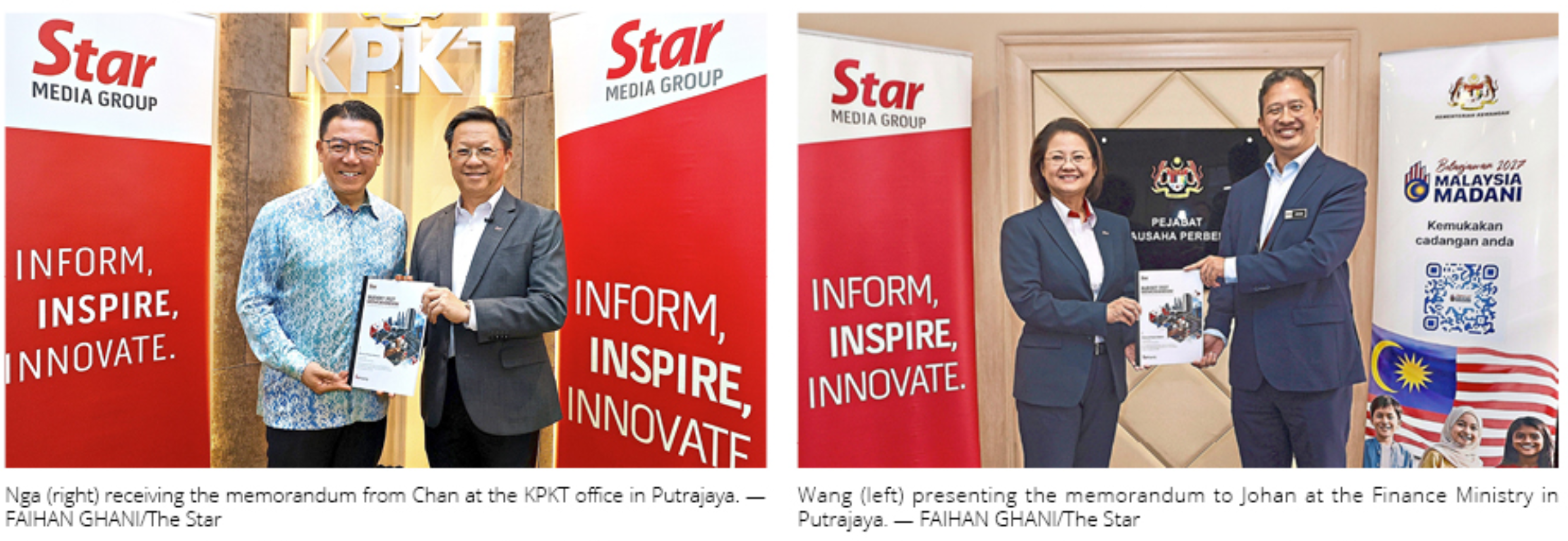
Highlighting the unique value of this platform, Housing and Local Government Minister Nga Kor Ming acknowledged SMG's collaborative role upon receiving the formal report: "I really appreciate that The Star has been consistently helping us with this Budget initiative. I would like to credit The Star as the only media with a formal initiative that not only provides a problem statement but also suggestions and solutions."
This sentiment was reinforced during a high-level briefing with the Ministry of Finance's Treasury Secretary General Tan Sri Johan Mahmood Merican who confirmed that feedback provided through private-sector proposals directly informs annual budget measures:
"I’m very confident that even within this memorandum that you submit, I’m sure we’ll be able to see at least a measure or two which would be relevant for Budget 2027... We’re listening to various groups and trying to understand the pain points whether it’s ordinary citizens or businesses, as we develop the measures."
Data-led approach
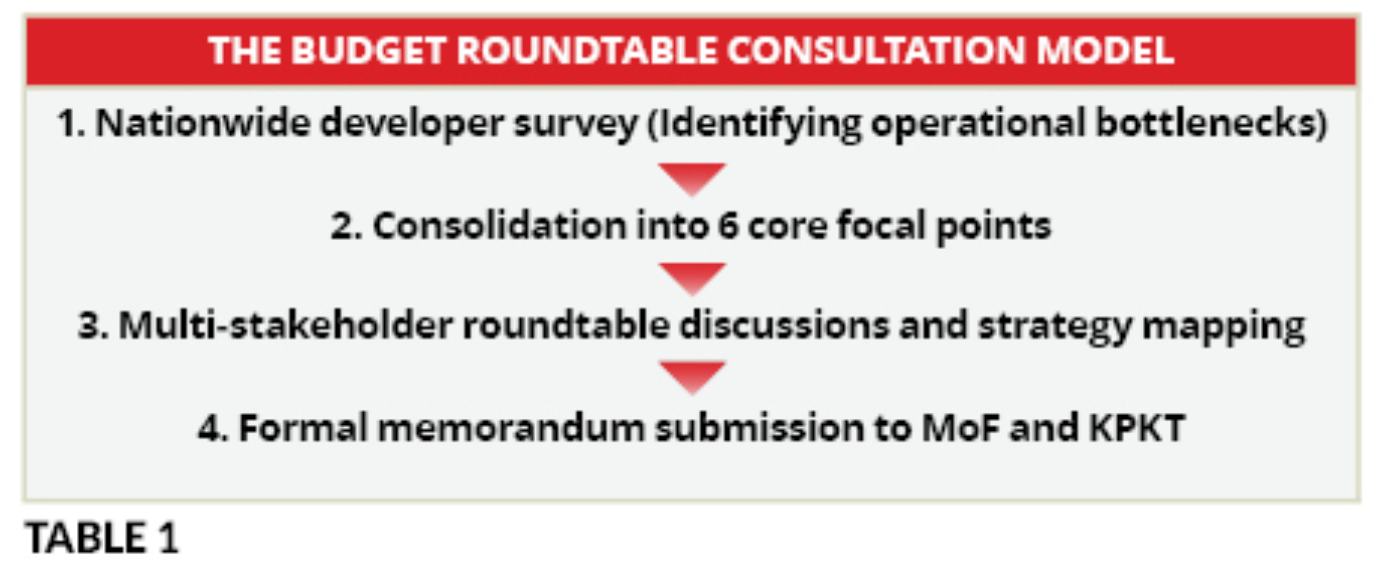
To ensure that the roundtable discussions reflected actual market conditions rather than abstract assumptions, StarProperty conducted an extensive nationwide pre-roundtable survey among property developers (see table 1).
This survey invited industry leaders, including key regional stakeholders such as the Sabah Housing and Real Estate Developers Association (Shareda) and the Sarawak Housing and Real Estate Developers’ Association (Sheda), to voice their operational friction points, cost pressures and regulatory bottlenecks.
The survey data directly shaped the six central themes of the StarProperty Budget 2027 Memorandum, ensuring that every recommendation presented to the Ministry of Finance was grounded in quantitative industry consensus.
The six focal points
Presenting the memorandum to MoF, Star Media Group Chief Operating Officer Lydia Wang emphasised that market stability requires addressing the underlying cost structures, financing frameworks and infrastructure networks that govern project delivery.
"These recommendations are intended to support the MoF in leveraging its policy levers to contain development costs, improve home ownership access and build a property market that actively responds to Malaysia’s evolving demographic and economic needs."
At the KPKT office, SMG group chief executive officer Chan Seng Fatt presented the memorandum to Nga, pointing out that the resulting Budget 2027 Memorandum also outlined solutions across six key policy areas as illustrated in Table 2 below.
| THE 6 BUDGET 2027 FOCUS AREAS | ||
| Core focus area | Operational challenge | Strategic policy objective |
| Housing affordability and market stability | Mismatch between income growth and housing prices | Targeted subsidies, tax breaks, and cost-containment measures on construction inputs |
| Urban liveability and quality of life | Liveability and community standards | Integrating green spaces, transit connectivity and modern amenities |
| Home financing and accessibility | Strict end-loan eligibility rules | Expanding innovative, flexible financing and deposit assistance |
| Demand-Led urban planning | Mismatched unit locations and types | Leveraging granular data to build right products per demographic |
| Regulatory efficiency and approvals | Bureaucratic delays and compliance | Streamlining statutory approvals and digital submission systems |
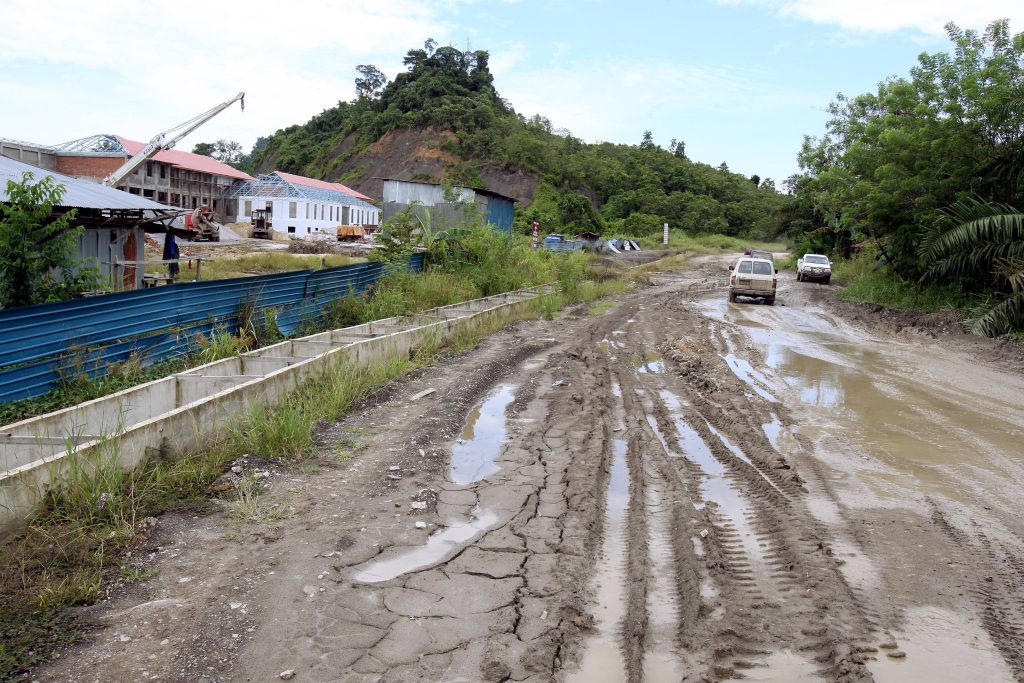
| Infrastructure efficiency in East Malaysia | Infrastructure gaps in Sabah and Sarawak | Addressing regional disparities in utility readiness and land development processes |
The key policy deliverables across the six pillars include:
- Housing affordability and market stability: Mitigating supply-side cost pressures through targeted duty relief on building materials and refined cost-containment frameworks.
- Urban liveability and quality of life: Incentivising sustainable, transit-oriented developments that enhance long-term resident well-being.
- Home financing and accessibility: Expanding rent-to-own schemes, tailored first-time homebuyer guarantees and relaxed loan assessment criteria for young professionals.
- Demand-led urban planning: Utilising localised data analytics to align new launches with local income levels and genuine housing demand.
- Regulatory efficiency and approvals: Fast-tracking agency clearances through unified digital processing platforms to lower holding costs.
- Infrastructure efficiency in East Malaysia: Allocating targeted infrastructure funds for Sabah and Sarawak to accelerate utility readiness and reduce development costs in regional hubs.
The StarProperty Budget 2027 Roundtable demonstrates how proactive media platforms can serve as catalysts for structural progress. By gathering empirical data from developers across Peninsular and East Malaysia, consolidating their feedback into strategic solutions and submitting these proposals directly to key government ministers, SMG ensures that the property sector's voice is heard during national budget planning.
As the government balances fiscal responsibility with economic growth, the collaborative insights generated by the roundtable provide a practical framework for creating a more transparent, sustainable and accessible housing market for all Malaysians.
Stay ahead of the crowd and enjoy fresh insights on real estate, property development and lifestyle trends when you subscribe to our newsletter and follow us on social media.