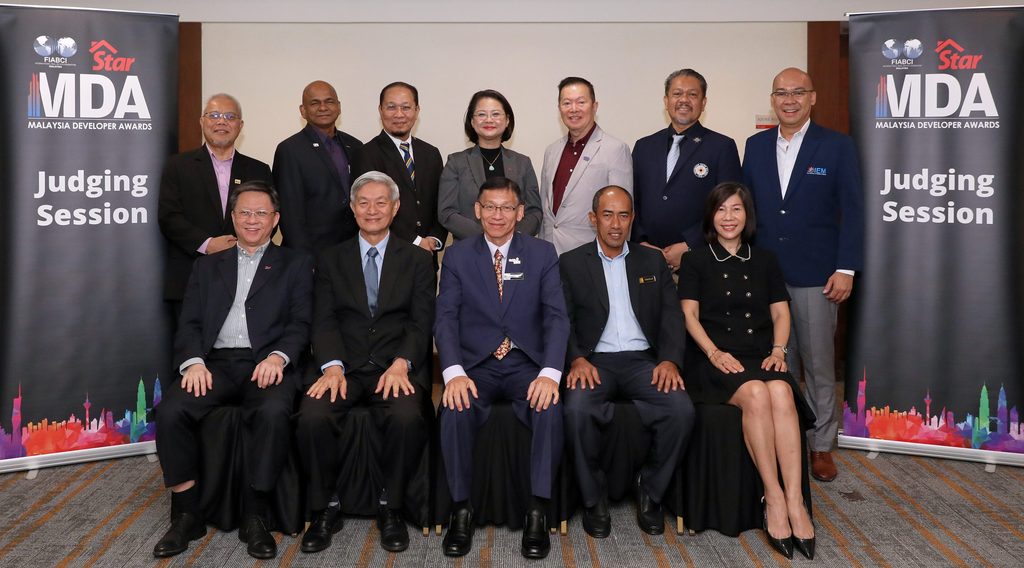
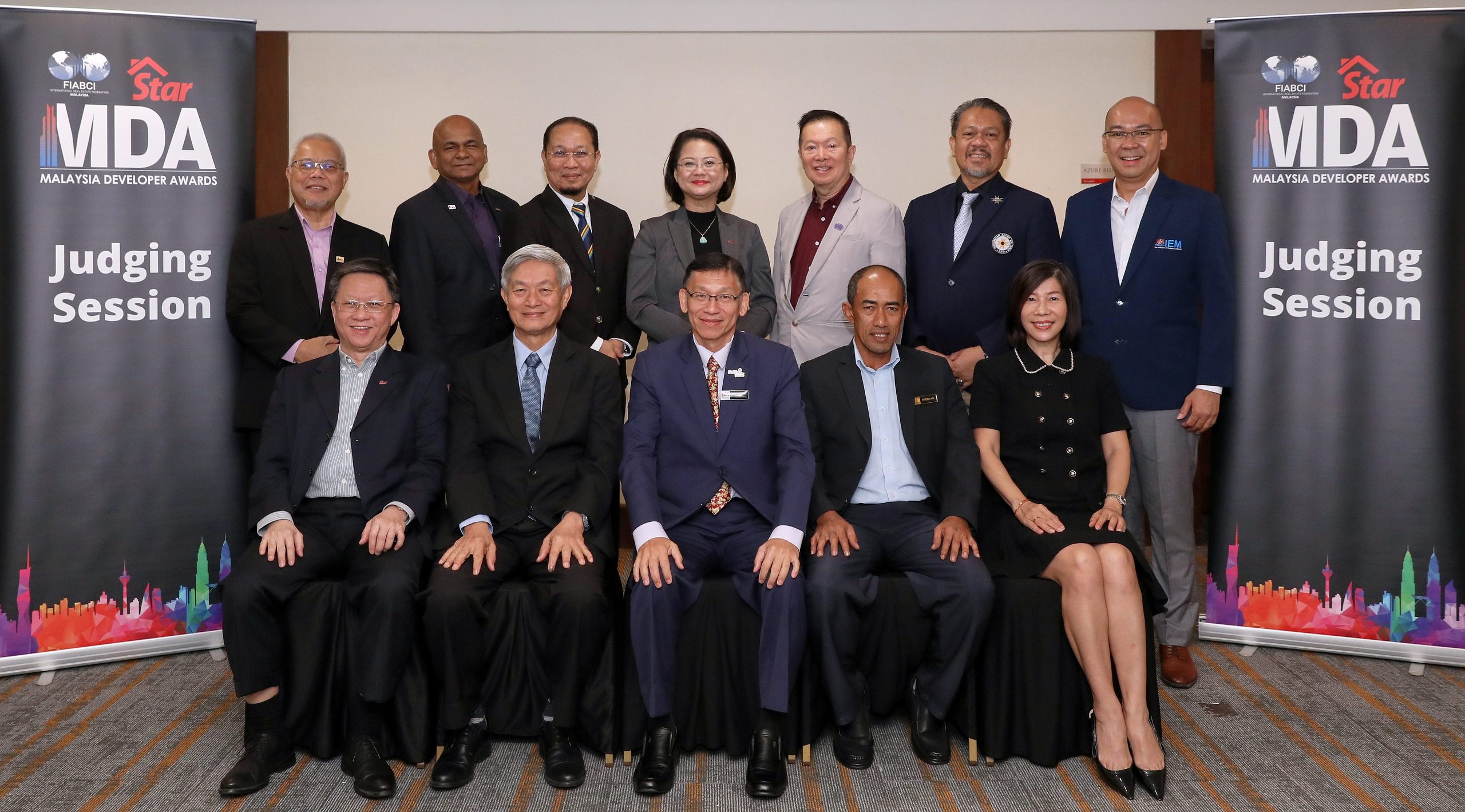
Inside the minds of the MDA 2026 judges
While past cycles celebrated rapid launches, soaring gross development values (GDV) and short-term profit spikes, the Malaysia Developer Awards 2026 (MDA 2026) has established an uncompromising standard.
By restructuring its appraisal methodology to audit three years of audited financial trends alongside qualitative Environmental, Social and Governance (ESG) criteria (now weighted at 30%), the MDA judging panel conducted a deep, forensic analysis of the nation’s top developers.
Leading the charge this year were chief judges National Housing Department Secretary-General Dr Tan Awang Besar,
Petaling Jaya City Council's (MBPJ) development planning department deputy director Norhisham Hussain and Prof Yeah Kim Leng, director of the Jeffrey Cheah Institute on Southeast Asia Economic Studies Programme at Sunway University.
Supported by senior industry experts across valuation, facility management and architecture, the panel’s collective verdict signals an urgent turning point for the nation's built environment: genuine resilience requires humanising housing, proving ESG claims with audited data and designing functional communities that outlast the initial sales cycle.
From the regulatory perspective of the federal government, the vetting of property developers has moved far beyond reviewing glossy sales brochures or audited corporate revenues. For chief judge Tan, safeguarding homebuyer equity and aligning private sector execution with national housing targets are top priorities.
He affirmed that the rigour of the vetting system relies on institutional cross-checks to filter candidates and verify full regulatory compliance before developers are considered for national honours.
"Overall, the vetting system is fine. The developers’ yearly reports and financial reports are very important. All developers are checked through our Housing Information Management System (HIMS) to ensure they are completely free from problematic or sick projects. All short-listed developers have shown solid project capabilities and concepts that align directly with our National Housing Policy (NHP) 2026–2035."
Tan stressed that corporate performance cannot be separated from national social obligations. As Malaysia confronts urban affordability challenges, rising living costs and demographic shifts, housing delivery must prioritise human well-being. "Future housing development must embed the spirit and aspirations of the NHP 2026–2035. In short, humanising housing is very crucial," he said.
For public authorities, humanising housing represents a clear departure from treating real estate purely as a speculative asset class. It challenges developers to design living environments that offer practical functionality, long-term spatial dignity and accessible infrastructure for owner-occupiers across all income brackets.

Sustainable growth, public realities and meaningful places
As an urban planning authority on the front lines of municipal governance, MBPJ's Norhisham examined submissions through the lens of local impact, planning compliance and community longevity.
Evaluating three-year financial performance gave the panel the necessary depth to separate fleeting windfalls from structural corporate strength: "The three-year financial assessment provided a more comprehensive perspective on developers’ performance, allowing us to distinguish sustainable growth from short-term gains," he observed. "Combined with ESG criteria, it highlighted the importance of financial stability, responsible governance and long-term value creation. True resilience is not just about profitability but about building quality developments that benefit communities and remain relevant over time."
Addressing the divide between large conglomerates and mid-tier players, Norhisham observed that mid-market firms are often forced to be more inventive:
"What stood out was the agility and creativity of mid-tier developers in managing rising construction costs and changing buyer expectations. They need to be more strategic in cost management, design efficiency and understanding market needs. While larger developers benefit from economies of scale and greater resources, success ultimately depends on how well developers adapt, deliver quality and provide value without compromising sustainability or residents’ quality of life."
However, Norhisham voiced a candid critique of modern marketing jargon, pointing out that placemaking must translate into authentic social environments rather than decorative aesthetics.
"A key gap is the need to move beyond building attractive properties toward creating meaningful places and communities. Placemaking should go beyond landscaping and cosmetic public spaces to foster social interaction, accessibility and a true sense of belonging. Innovation should also deliver practical benefits beyond marketing, particularly in building management, sustainability and community engagement. Moving forward, developers must focus on human-centred design and measurable long-term impacts," he said.
As an economist, Yeah brought quantitative rigour to the qualitative deliberations, ensuring that corporate claims were backed by hard empirical evidence rather than aspirational public relations.
A more forensic audit of evidence
Yeah noted that the three-year financial evaluation served as an essential truth-test against greenwashing. "The three-year financial trends alongside qualitative ESG criteria provide the clearest marker of durable strength as to whether a developer could evidence its commitments with sustained, measurable progress rather than one-off initiatives or aspirational language. The top-ranked companies in both categories stood out because their ESG and placemaking claims were backed by quantified targets, multi-year track records and embedded governance that were directly reflected in their financial performance," he said.
When comparing tiers, Yeah highlighted a distinct capability gap in reporting maturity, adding that: "The most noticeable difference was in the maturity and depth of reporting. RM1 billion and above submissions were consistently more detailed and quantified, reflecting larger sustainability teams and more established disclosure practices. However, several below-RM1 billion developers still scored very competitively, suggesting that a well-focused mid-tier player can match the giants on substance even without their scale. The wider spread in the below-RM1 billion category points to uneven capability; some mid-tier firms are adapting quickly while others have yet to build the internal processes to articulate and evidence what they do."
Institution of Engineers, Malaysia (IEM) executive committee member and fellow Tony Cheng agreed, adding that the three-year perspective highlighted that many mid-tier developers are adapting through cost-conscious designs, greater flexibility and a stronger focus on the changing needs of buyers.
“Larger developers may have greater resources but mid-tier players can respond more quickly to market changes,” he said.
Meanwhile, Yeah identified a specific, recurring flaw across multiple submissions. "The most consistent gap across both categories was verifiable, third-party-recognised ESG performance. Many developers claimed alignment with the FTSE4Good Bursa Malaysia framework rather than confirming actual index inclusion which made that line item a common weak spot. A second gap was evidence quality. The strongest submissions tied placemaking and digitalisation initiatives to measurable outcomes while weaker ones described intentions or features without showing results and a few submissions suffered from integrity problems such as recycled content," he noted.
He emphasised that industry leaders now treat ESG, placemaking and digital transformation as a single unified operational strategy. "To raise the benchmark, developers must pursue independent verification and index inclusion, report outcomes with hard data and present original, well-structured evidence that reviewers can readily assess," Yeah said.

Operational risk and universal design
Malaysian Institute of Property and Facility Managers (MIPFM) president Ishak Ismail evaluated entries from the perspective of full asset lifecycles, post-handover property management and operational risk mitigation.
"Evaluating developers through a three-year financial horizon paired with qualitative ESG criteria revealed a clear distinction between transient outperformance and structural resilience. Short-term spikes in revenue or operating margins often reflect aggressive inventory clearance or favourable launch timing. However, tracking performance across a multi-year window highlighted developers capable of preserving balance sheet health, maintaining consistent unbilled sales and managing gearing ratios through economic and supply chain shifts," he said.
When assessing mid-tier adaptations, Ishak observed how leaner developers counter material cost volatility by embracing modern construction methods and functional interior layouts:
"Lacking the massive buying power of market leaders, mid-tier players adapted by embracing modular design, Industrialised Building Systems (IBS) and targeted material sourcing earlier in the planning phase to control site overheads and shorten build cycles. They responded faster to younger first-time buyers and multi-generational households by prioritising flexible, compact layouts featuring dedicated work-from-home nooks, dual-key units and lower maintenance fee structures," he noted.
From a property management standpoint, Ishak called out three critical industry blind spots, namely cosmetic greens vs active biodiversity, fragmented proptech and overlooking the ageing population.
"True benchmark-setting developers are moving toward microclimate management, native biodiversity preservation and urban heat island mitigation, designing outdoor environments that naturally manage rainwater runoff and reduce ambient temperatures, he said, adding that benchmark developments must also integrate facilities management, energy tracking and security into cohesive, user-centric ecosystems rather than relying on stand-alone smart gadgets.
“Developers have an opportunity to look beyond attractive buildings and create places that are sustainable, accessible and connected to their communities. Innovation should also focus on practical solutions that improve affordability, building performance and long-term value,” Cheng said in agreement.
On the greying population, Ishak said future-ready developments must incorporate universal design principles, accessible public spaces and adaptive social hubs that naturally support ageing-in-place.

Durability, lifecycle costing and enduring value
Echoing the necessity for multi-year scrutiny, Royal Institution of Surveyors Malaysia (RISM) president Prof Mohd Khairudin Abd Halim approached the submissions from a different standpoint.
He noted: "From a valuation and business sustainability perspective, examining financial performance over three years provides a more meaningful understanding of a developer's underlying strength than relying on a single year's results. A developer may achieve impressive financial performance in a particular year but genuine resilience is demonstrated through its ability to sustain performance, manage financial commitments, adapt to changing market conditions and maintain stakeholder confidence over time."
Khairudin added: "As a property professional, I strongly believe that the true quality of a development should not be judged only on the day it is completed or handed over but on how well it continues to perform, function and retain its value over the next 10, 20 or even 30 years. Developers should therefore place greater emphasis on lifecycle costs, durability of building materials, maintainability, energy efficiency and the financial sustainability of common facilities, particularly in strata developments."
He also cautioned that digital innovation must deliver measurable operational savings, even as Malaysian Institute of Architects' (PAM) Datuk Zulkhairi Md Zain reminded developers that buildings have a profound psychological and social impact on their occupants.
Zulkhairi noted: "The three-year financial perspective provides a more meaningful basis for understanding performance. Property development is a cyclical business influenced by material costs, financing conditions and buyer sentiment. A strong performance in one year does not prove resilience. Financial strength remains fundamental but resilience should also be understood in terms of how responsibly that financial capacity is deployed. Environmental, social and governance considerations should not be supplementary features added to enhance marketability; they must be embedded in how a company makes decisions and accounts for its long-term impacts."
He outlined three clear strategic imperatives for developers aiming to lead the sector. Firstly, he said, move beyond a product-led approach. A development should not be judged solely by the appearance of its buildings or marketing imagery. The more fundamental question is whether it creates places where people genuinely want to live, work, interact and spend time.
Secondly, whether the subject is ESG, placemaking or digital innovation, developers must demonstrate what has been achieved, who benefits and whether the results can be sustained over time, he said.
Lastly, recognise that responsible development extends beyond the project boundary, he said, adding that a successful development should contribute positively to its surrounding neighbourhood, infrastructure and public realm, rather than functioning as an isolated commercial enclave.

The final verdict
Rounding out the panel's deliberations, Association of Valuers, Property Managers, Estate Agents and Property Consultants in the Private Sector, Malaysia (PEPS) president Subramaniam Arumugam reinforced the message that operational pragmatism beats corporate scale.
He highlighted how mid-tier developers often outmanoeuvre industry giants by avoiding unnecessary overheads and focusing on core buyer needs: "Looking beyond annual financial performance gives us a better understanding of a developer’s true resilience. Consistent financial performance, supported by sound management and a clear commitment to ESG, is a stronger indication of sustainability than short-term gains alone. Mid-tier developers face identical challenges to larger players but their ability to remain focused, respond quickly to market needs and adopt practical development strategies is a distinct advantage. The key is offering well-designed, reasonably priced products that meet genuine demand, rather than trying to compete purely on scale," he said.
On the topic of placemaking, Subramaniam urged developers to return to foundational community needs. "Developers need to look beyond building houses and focus on creating sustainable, liveable communities. Good placemaking involves thoughtful planning, accessibility, connectivity, green spaces and amenities that enhance residents’ quality of life. Innovation must go beyond tech gimmicks and translate into practical solutions that improve the everyday living experience," he explained.
The collective consensus of the MDA 2026 judging panel provides an unmistakable roadmap for the future of the nation's real estate sector.
As Malaysia steps into the implementation of the National Housing Policy 2026–2035, the developers that will lead the industry into the future are those that embrace transparency, secure independent verification for their environmental commitments and honour their fundamental social duty to humanise housing for generations to come.
Stay ahead of the crowd and enjoy fresh insights on real estate, property development and lifestyle trends when you subscribe to our newsletter and follow us on social media.