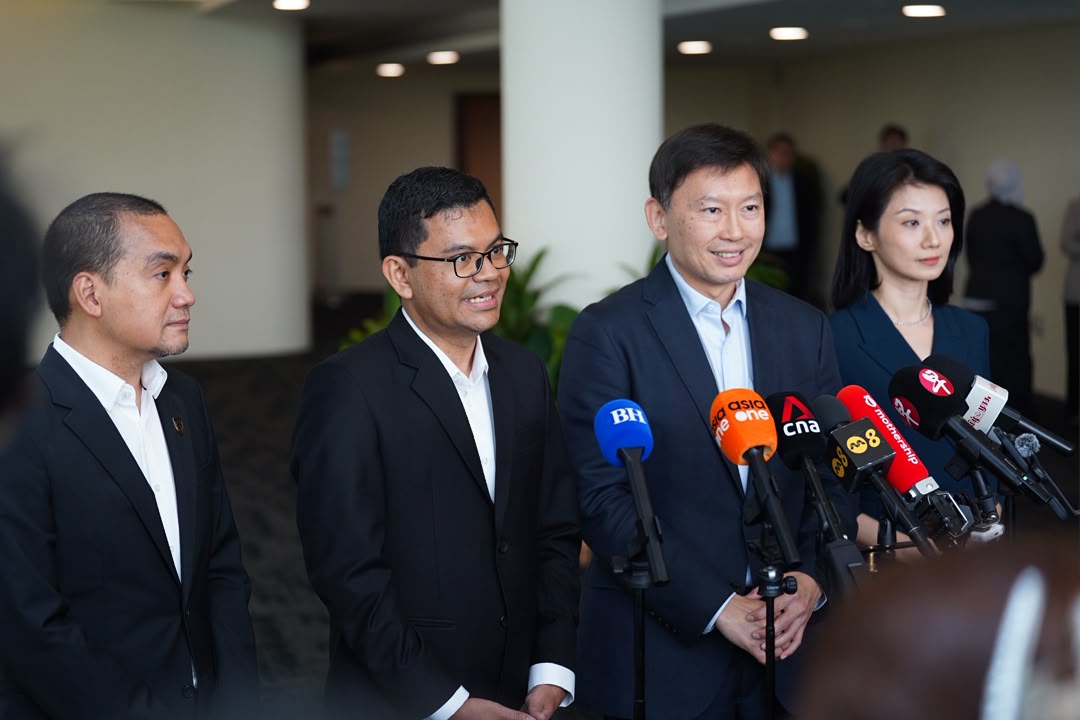
Inaugural Malaysia-Singapore ministerial committee meeting moves to deepen bilateral collaboration
By: Yip Wai Fong
The Johor-Singapore Special Economic Zone (JS-SEZ), with its masterplan scheduled for announcement in December, received an early endorsement from the governments of Malaysia and Singapore with the convening of the inaugural Johor–Singapore Cooperation Ministerial Committee (JSCMC) in Singapore earlier this month. The formation of the JSCMC, replacing its predecessor JMCIM—a committee for Iskandar Malaysia—signals the broadening of bilateral cooperation and the deepening of both nations’ commitments to the JS-SEZ.
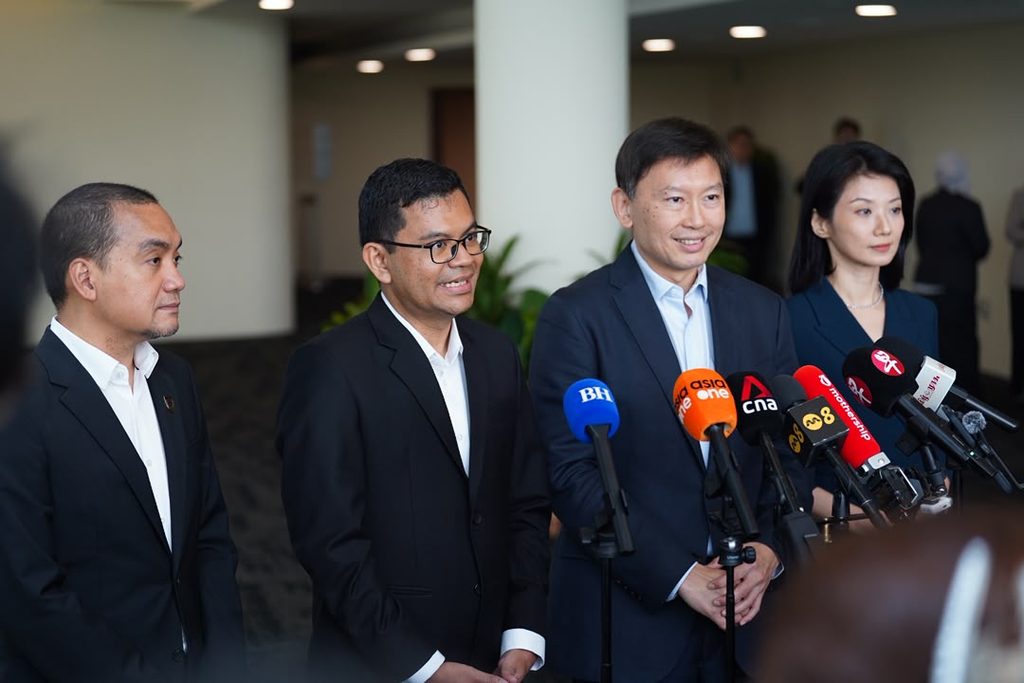
The meeting was co-chaired by Singapore’s National Development Minister Chee Hong Tat and Malaysia’s Economy Minister Akmal Nasrullah Mohd Nasir. Also present were Johor Mentri Besar Datuk Onn Hafiz Ghazi and Singapore’s National Development and Transport Senior Minister of State Sun Xueling. Senior officials from both countries were also in attendance.
Covering an area of over 3,500 sq km, JS-SEZ comprises nine flagship zones and aims to roll out 100 high-impact projects over 10 years across 11 economic sectors, including AI, quantum computing, advanced manufacturing, global services and clean energy. It seeks to attract investments by leveraging the combination of Malaysia’s land and labour resources with Singapore’s financial and investment capabilities and the improvement of the flow of goods and people between Johor and Singapore.
According to a joint statement issued by both countries, the JSCMC will serve as an enhanced ministerial platform to provide strategic direction, strengthen bilateral coordination and oversee the implementation of priority initiatives under the JS-SEZ. The committee comprises ministers from Malaysia across three portfolios: the Economy Minister as the co-chair, the Investment, Trade and Industry Minister and the Johor Mentri Besar. From Singapore’s side, the National Development Minister will also co-chair, joined by the Energy, Trade and Industry Minister and the Transport Minister.
Quoting figures from the Malaysian Investment Development Authority (MIDA), the statement welcomed the progress attributed to JS-SEZ, noting that it recorded RM88.8bil in approved investments between January 2025 and June 2026, of which RM40.3bil or approximately 45% had been implemented. The approved projects were associated with 28,755 potential employment opportunities, including 12,796 jobs associated with implemented projects.
Speaking at the press conference after the meeting, Chee said: “We are very heartened to see the investment projects that have been approved and the jobs that were created. This is really the beginning of many more to come. We can only achieve this because we’ve been working together closely as partners, reinforcing the whole business environment that JS-SEZ is able to offer.
“I am glad to know that many of the investors are from Singapore and there are also many from around the world. I think the continued strong interest from the business community is the result of the strong partnership that we have forged between Singapore and Malaysia. We would certainly want to continue the partnership (and) work even more closely together, to see how we can take this collaboration forward for the benefit of the community.”
Both Chee and Akmal also reaffirmed that the JS-SEZ masterplan or blueprint will be launched in December during the Leaders’ Retreat by the Prime Ministers of both countries. Representing a medium- to long-term vision for JS-SEZ, Chee said it illuminates the areas of coordination and collaboration.
“To realise this vision, a lot of hard work needs to be put in between the various agencies to iron out some of the specific initiatives on talent development, on facilitating the movement of people and goods, trade and investment, and looking at transportation and connectivity. I think all these are important supporting elements to make the blueprint come to life and to realise the benefit of a win-win cooperation,” he said, adding later that when it comes to transportation, the two countries are in discussions regarding the enhancement of cross-border taxi services between Singapore and Johor, the RTS and the cross-border ferry services.
Akmal said he believes 2027 will see an even greater momentum for JS-SEZ, saying: “As we try to operationalise and ensure its smooth delivery, our cooperation will transcend beyond the blueprint. We expect the momentum in 2027 will be hopefully higher in terms of commitment from the two countries. We have already seen the amount of investment coming in before the launch. I can see there is a better prospect for JS-SEZ in 2027.”
Committed outcomes
The meeting produced an affirmation of continuing bilateral commitments. The statement noted that both sides are committed to ensuring that the institutional, regulatory and operational frameworks needed for the JS-SEZ are effectively put in place. It also noted and welcomed ongoing efforts to support businesses exploring investment opportunities through Singapore’s JS-SEZ Project Office and Malaysia’s Invest Malaysia Facilitation Centre – Johor.
“Both sides noted Malaysia's ongoing initiatives under Budget 2027 to support the JS-SEZ, including the development of Nexus Sedenak, improved infrastructure and transport connectivity, facilitation of strategic investments and the strengthening of financial services in Forest City. These initiatives complement bilateral efforts to enhance the JS-SEZ's competitiveness.
“The Committee took note of the progress and forward plans presented by the JS-SEZ Joint Working Committee (JWC), covering infrastructure and utilities development that is adequately planned, coordinated and aligned with the overall development plans and anticipated investment needs.
“The JWC also reported good progress on effective implementation, including targeted investment missions and engagements, investment realisation, cross-border connectivity and talent development collaborations between both countries for JS-SEZ,” the statement added.
A significant step forward
Independent analyst Nasser Ismail told StarProperty the key to the JSCMC is its broader ministerial composition as it brings economic policy, investment, energy and industry, transport and Johor’s state leadership into the same framework.
“These issues all affect a business’s decision about whether to invest, which location to choose and when to get started,” he said. Nasser, who founded the JS-SEZ Monitor Substack and is a former senior vice president at Iskandar Regional Development Authority (IRDA), welcomes the stronger coordination and hopes that it will eventually translate into greater ease for investors in locating suitable premises, utility connections, regulatory clearances, workforce availability and reliable logistics.
“The reference to aligning infrastructure and utilities with anticipated investment needs is therefore particularly relevant. If translated into delivery, it could give investors greater confidence about when they can commence operations,” he added. Despite the JSCMC not spelling out any concrete measures or plans, Nasser said it remains a significant institutional step forward.
“That (absence of specifics) is understandable for an inaugural meeting bringing a broader cooperation framework into place. Establishing who participates and how decisions will be coordinated matters, particularly when projects depend on multiple agencies. However, the statement gives limited detail on what businesses can expect to change or when. For example, businesses need to know when power and water will be available, which transport improvements will proceed and who will resolve delays affecting their projects,” he noted.
An outlook on the property market
Nasser opined that the JSCMC will have implications for the Johor property sector, particularly in its reference to aligning infrastructure and utilities.
“For the property market, this could strengthen demand for industrial premises with confirmed utilities and reliable access, including suitable older properties that allow businesses to begin operating sooner. As investment translates into employment, demand could also grow for housing, retail and services near employment centres. The benefits are likely to vary by location, depending on infrastructure readiness and the pace at which businesses become operational.
“A location may look attractive because it falls within the JS-SEZ but its commercial prospects depend on whether businesses can operate there and attract workers and customers. Confirmed infrastructure delivery and tenant commitments would provide a firmer basis for assessing demand,” he said.
But he also warned against getting ahead of prudence and actual demand, saying: “There is also a risk that expectations and asking prices could move faster than implementation. Developers, buyers and occupiers should assess each location against confirmed infrastructure plans and actual demand. More detailed announcements would help distinguish locations where growth can materialise soon from those where it remains a longer-term prospect, allowing investment and development to proceed at a sustainable pace.”

Stay ahead of the crowd and enjoy fresh insights on real estate, property development, and lifestyle trends when you subscribe to our newsletter and follow us on social media.