

By Joseph Wong
The real estate sector in Malaysia has undergone a significant transformation over the past decade, with Real Estate Investment Trusts (M-REITs) standing out as a cornerstone of institutional and retail property investment. Against a backdrop of shifting macroeconomic conditions, supply chain realignments and post-pandemic structural shifts in space utilisation, M-REITs continue to demonstrate notable resilience and growth.
Driven by strong underlying macroeconomic fundamentals, including steady gross domestic product (GDP) expansion and a stable Overnight Policy Rate (OPR) kept at 2.75%, the Malaysian property ecosystem has maintained healthy momentum. In the first half of 2026 alone, Malaysia recorded over 187,000 property transactions valued at RM105.12bil. The national House Price Index recorded a measured annual growth rate of 0.9% to 234.7 points, with average house prices standing at RM506,317 per unit.
The overall market capitalisation of listed M-REITs on Bursa Malaysia hovers around RM20bil to RM22bil, with average distribution yields remaining attractive between 5.0% and 7.0%. Within this dynamic market, M-REITs have solidified their role as an effective vehicle for accessing high-quality real estate assets, providing defensive income, capital growth and operational diversification.
Drivers and sector fundamentals
M-REITs operate within a broader real estate environment that balances supply-demand recalibrations with steady investor appetite. While global markets contend with persistent inflationary pressures, shifting trade dynamics and volatile interest rate environments, Malaysia's domestic market stability has created a supportive backdrop for commercial real estate.
Key underlying metrics highlighting the health of the property market include:
- Transaction volume and value
- Pricing dynamics
- Capital market performance
These strong fundamentals provide M-REIT managers with the stability needed to execute active asset management strategies, pursue yield-accretive acquisitions and undertake asset enhancement initiatives (AEIs).
Shifts across asset classes
However, it must be noted that the performance of M-REITs varies significantly across asset classes, reflecting structural changes in how businesses, consumers and logistics networks utilise physical space.
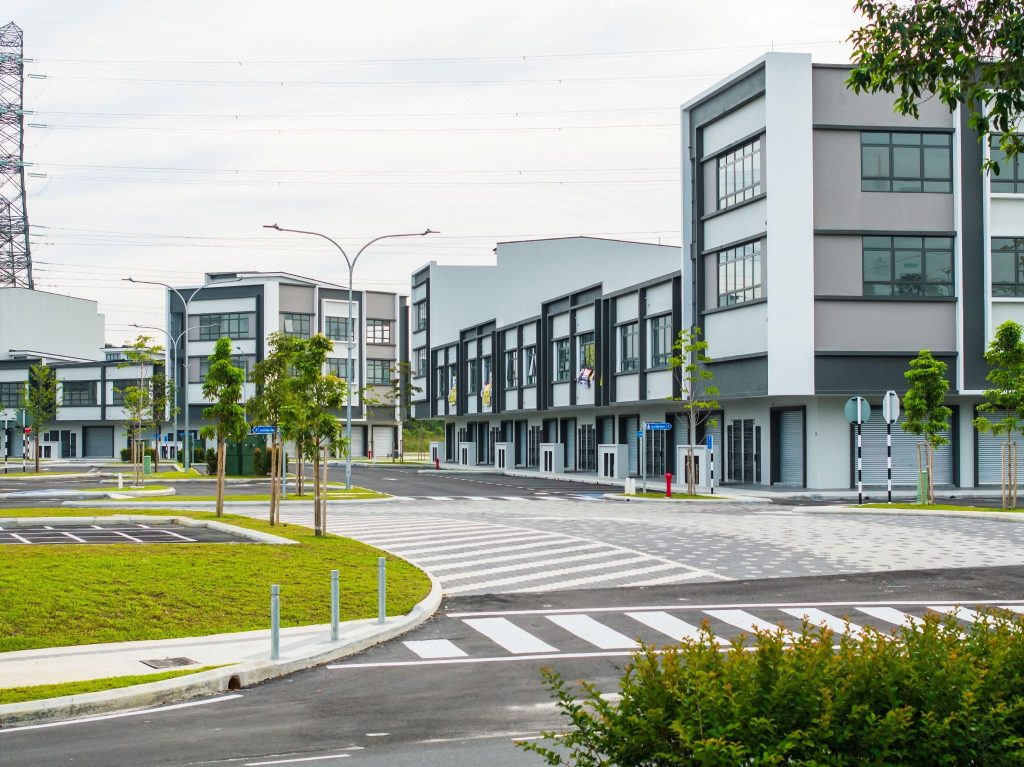
Industrial real estate continues to be the fastest-growing sub-sector within the M-REIT landscape. Driven by e-commerce penetration, regional supply chain diversification and increased manufacturing investment, industrial and logistics properties enjoy high occupancy and positive rental reversions.
In 1H 2026, the industrial property market expanded by 3.8% year-on-year, recording 3,932 transactions. M-REITs with dedicated industrial portfolios, such as Axis REIT and Atrium REIT, have capitalised on this momentum by acquiring modern distribution centres, cold-chain facilities and manufacturing plants. Industrial REITs yield between 6.0% and 7.0%, backed by long-term master leases and creditworthy corporate tenants.
Retail REITs represent the largest asset component of the M-REIT market by total asset value, led by flagship trusts such as IGB REIT, Pavilion REIT, Sunway REIT and CapitaLand Malaysia Trust.
While nationwide shopping complex occupancy stabilised at 77.9% in 1H 2026 (compared to 78.7% in 1H 2025), a clear divergence remains between prime, tier-one destination malls and secondary suburban retail spaces. Prime retail assets located in major urban centres enjoy near-full occupancy and strong tenant sales, aided by recovering international tourism and resilient domestic retail spending. To maintain competitiveness, retail REIT managers are aggressively executing AEIs, re-tenanting toward experiential concepts and integrating digital omnichannel retail strategies.
The office market in Malaysia continues to navigate structural supply overhang, particularly within the Klang Valley. Despite these headwinds, overall occupancy rates for purpose-built private and government offices rose marginally to 78.5% in 1H 2026 (up from 77.8% in 1H 2025).
The sector is defined by a clear flight to quality. Corporate tenants are increasingly migrating away from ageing secondary office buildings toward modern, transit-oriented and MSC-status Grade A towers equipped with modern ESG certifications. REITs holding prime commercial assets near transit hubs continue to record stable performance whereas older assets face downward pressure on rental yields and occupancy.
Specialised REITs provide unique defensive and cyclical opportunities:
- Healthcare: Structures such as Al-Aqar Healthcare REIT benefit from long-term triple-net lease structures with major healthcare operators, delivering resilient yields (approximately 7.0%) uncoupled from broader economic volatility.
- Hospitality: Hotel and resort properties such as YTL Hospitality REIT have benefited from the sustained recovery in regional travel, business events (MICE) and international tourist arrivals.
Comparative overview of M-REIT sub-sectors
While M-REITs remain an attractive income-generating asset class offering net distribution yields superior to traditional residential direct property investments (which average 1% to 3% net after accounting for maintenance, taxes and vacancy costs), growth relies on navigating dynamic market conditions:
- Managing supply dynamics: While demand for quality industrial and prime retail space remains solid, total unsold completed residential properties rose by 8.6% to 33,094 units (worth RM17.78bil) in 1H 2026. M-REIT managers must remain prudent to prevent over-leveraging when acquiring new development pipelines.
- Regulatory and policy alignment: Regulatory initiatives, such as the Ministry of Housing and Local Government’s Madani Housing Reform agenda (targeting zero sick housing projects by 2030), continue to elevate overall delivery standards, transparency and governance across the broader property market.
- ESG integration: Institutional investors are enforcing strict Environmental, Social and Governance (ESG) criteria. M-REITs are accelerating solar panel installations, retrofitting facilities for energy efficiency and acquiring green-building certifications to retain multinational corporate tenants and lower operating expenditures.
On the whole, the Malaysian REIT market has matured into a sophisticated, highly diversified sector. While macroeconomic challenges and real estate overhang in specific segments demand active management, the sector's fundamental strengths, underpinned by steady domestic growth, resilient transaction volumes and evolving asset quality, position M-REITs as an essential building block for sustainable, long-term investment portfolios in Southeast Asia.
This article was first published in StarBiz 7.
Stay ahead of the crowd and enjoy fresh insights on real estate, property development and lifestyle trends when you subscribe to our newsletter.