By Joseph Wong
For the Bahasa Malaysia version, click here.
For the Chinese version, click here.
KUALA LUMPUR: The search for a dream rental home in the city’s urban core is exciting but it also provides fertile ground for sophisticated fraudsters. A recent incident has sent shockwaves through the local rental market after a scammer, posing as a legitimate Real Estate Negotiator (REN), successfully tricked a prospective tenant into paying a RM3,000 deposit using an expired REN registration number.
This cautionary tale serves as a stark reminder that a professional-looking business card or a confident sales pitch is not proof of legitimacy. In this particular case, the scammer utilised an online property portal to list an attractive unit at a competitive price. To gain the victim's trust, the fraudster provided a REN number which is a unique identification issued by the Board of Valuers, Appraisers, Estate Agents and Property Managers (BOVAEP).
However, the victim later discovered that while the number was real, it had expired and was no longer active. By the time the realisation set in, the scammer had vanished with the RM3,000 deposit.
How to verify a real estate professional
In Malaysia, every legitimate negotiator must carry a physical REN tag with photo and registration number by the Board of Valuers, Appraisers, Estate Agents and Property Managers Malaysia (BOVAEP). Here is how to spot a fake:
- The new tags: Negotiators (REN) wear purple tags while Estate Agents (REA) wear blue tags.
Sample of ID for Real Estate Negotiator (REN), Registered Estate Agent (REA) and Probationary Estate Agent (PEA)
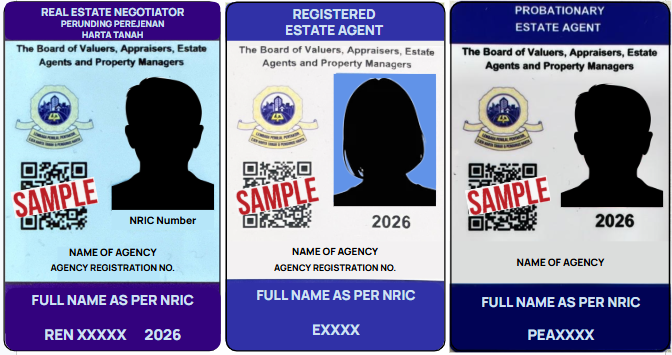
- The QR code: All legitimate REN tags feature a QR code. Scan and it should lead you directly to the official BOVAEP database showing the negotiator's registered identity and agency details.
- The LPPEH website: Before handing over a single sen, search the REN number at https://lpeph.gov.my/search-listing. If the status is not ACTIVE, walk away.
- Ultimately, search the negotiator online including other property listing platforms, social media and search engines to check their profile, activity history and whether they are consistently involved in genuine and active real estate transactions.
Red flags you must know
Property scams are no longer limited to fake listings alone. They have evolved in stages, becoming more convincing and harder to detect. In earlier cases, scams often involved duplicated listings with unrealistic prices or stolen photos. Today, scammers go further by posing as legitimate agents using fake or stolen REN details and creating pressure through urgency and high-demand tactics. Be cautious if someone refuses to show proper identification, avoids face-to-face meetings or pressures you into making quick decisions by claiming high demand. A common local scam tactic is requesting a booking fee or deposit before any viewing or formal documentation is provided. This is not standard practice and can result in victims losing money with no way to get it back.
Scammers now use:
- AI-generated images
- Stolen photos from other listings
- Fake IDs (stolen, photoshopped or expired)
- Fake documents and contracts
With property fraud on the rise, here is a clear and up-to-date scam alert guide for anyone looking to rent or buy property so you can avoid becoming a victim.
- Suspiciously low pricing - rent/sale price way below market (20% to 60% cheaper), especially for those located in the city centre, with close proximity to major landmarks or transport hubs.
What you should do: Do not rush into any decision. Take time to research and compare rental or sale prices of similar properties in the same area including nearby units and listings from different agents, considering the differences in size, layout and condition to gauge the realistic market range.
- Duplicated listings - the same property is advertised across different platforms using the same photos with different contact details. Be cautious if the property has also been repeatedly listed over a long period without being taken down or rented/sold.
What you should do: Check for consistency in the listing details such as price, photos, address and contact information. Be alert for vague descriptions, grammar errors or overly exaggerated claims. Cross-check the property across multiple platforms and verify with different sources or agents.
- Limited communication channel - be cautious if the agent or landlord only communicates via WhatsApp or messaging apps, avoids phone calls or refuses to speak directly. Scammers often prefer text-only communication to avoid being traced or questioned. In contrast, legitimate agents are usually reachable through multiple channels including phone calls, official agency contacts and in-person meetings when necessary.
What you should do: Verify the agent’s identity through official channels and confirm registration status with BOVAEP and the affiliated agency, cross-check listings across multiple platforms, use multiple communication methods including phone calls and avoid anyone who refuses proper verification.
- Refuses physical viewing without payment - Scammers often pressure victims into paying before seeing the property, using terms like deposit before viewing, booking fee to secure unit, full payment before contract signing, first-come-first-served payment basis or claiming the owner requires payment before key handover. These are strong red flags for potential scams.
What you should do: DO NOT proceed or make any payment and stop all communication with this suspected scammer immediately. Also, do not share any of your personal information. Keep screenshots as evidence if something feels off.
What to do when scammed
If you realise you have been targeted by a property scam, time is of the essence. Do not let embarrassment stop you from taking these four critical steps:
1. Lodge a police report
Visit the nearest police station to file a formal report. This is a mandatory requirement for any further legal or banking action. Ensure you provide all evidence, including screenshots of chats, the bank account number used for the transfer, and the fake REN details.
2. Contact the National Scam Response Centre
If you have just made the transfer within the last 24 hours, dial 997 immediately. The NSRC is a dedicated hotline that coordinates with banks to attempt to freeze the mule account used by the scammer before the funds are withdrawn.
3. Report to BOVAEP
Even if the scammer used a fake or expired number, you should report the incident to the Board of Valuers, Appraisers, Estate Agents and Property Managers (email: info@lpeph.gov.my or call: +603-2288 8815/16/17 ). They maintain records of misconduct and can assist the authorities in identifying if a former registered member is involved in fraudulent activity.
4. Alert the hosting platform
If you found the listing on a public property portal or social media group, report the account to the platform administrators. This prevents the scammer from using the same profile to trap the next victim.
The golden rule of deposits
Never pay a deposit to a personal bank account. Legitimate real estate transactions should always involve a payment to the agency’s client account. This ensures the funds are held in escrow and are subject to professional indemnity insurance and strict auditing.
Remember, if the deal feels too rushed or the verification feels off, it probably is. Protect your hard-earned money by verifying before you vanish your savings.
Final Takeway
If you remember only 5 things:
- Don’t pay before viewing or signing proper documentation
- Avoid “too cheap” deals
- Verify agent identity
- Watch for pressure tactics
- Double-check listings (duplicates/photos)
Most scams rely on urgency + emotion + lack of verification.
Stay ahead of the crowd and enjoy fresh insights on real estate, property development and lifestyle trends when you subscribe to our newsletter and follow us on social media.