In industrial real estate, what the site offers is now as crucial as where it stands.
Malaysia continues to attract industrial and data centre investment but the definition of a competitive industrial location is changing. Land, logistics and connectivity now sit alongside power, water, automation and infrastructure capacity.
Industrial property has traditionally been a location business. Access to highways, ports, labour and established manufacturing clusters could determine whether one industrial address performed better than another.
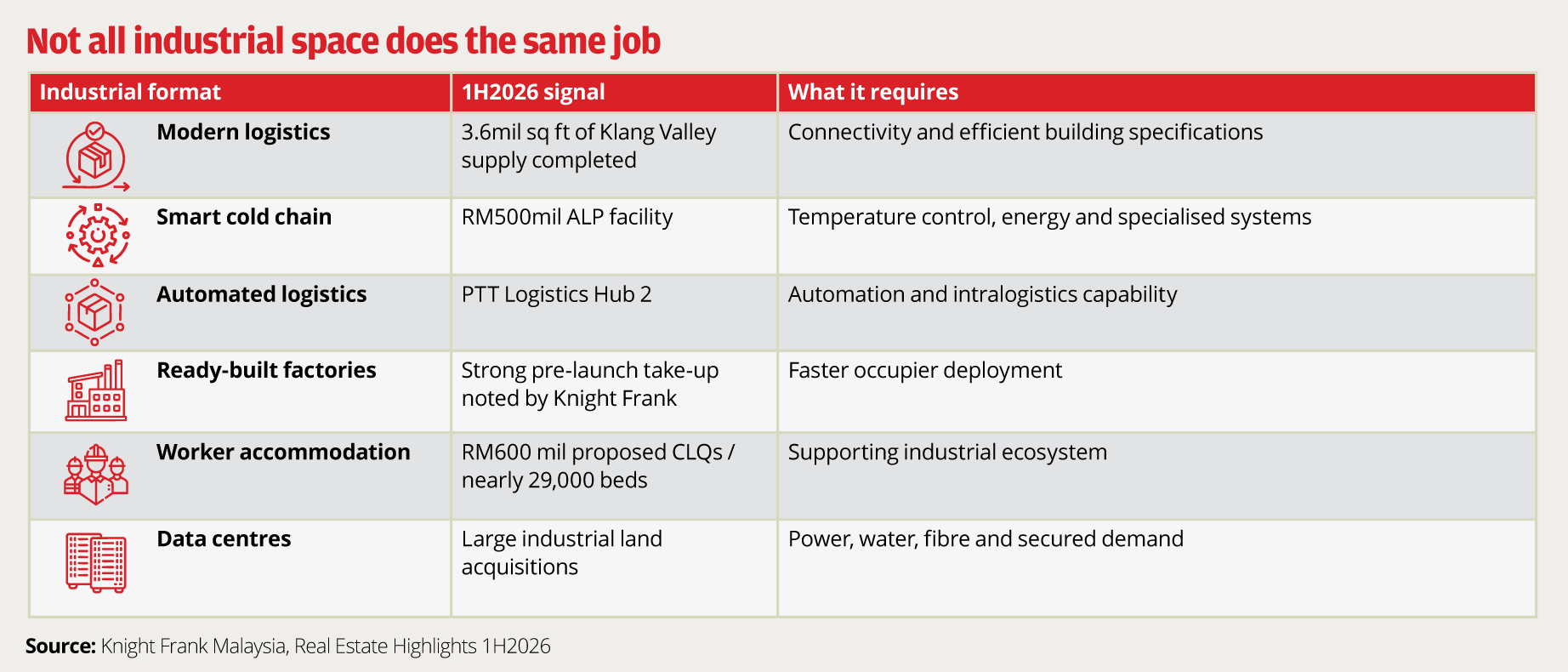
Those fundamentals have not disappeared. But the requirements being placed on industrial land are becoming more demanding. A factory, automated logistics hub, cold chain facility and hyperscale data centre may all occupy industrial land but they do not ask the same things of it.
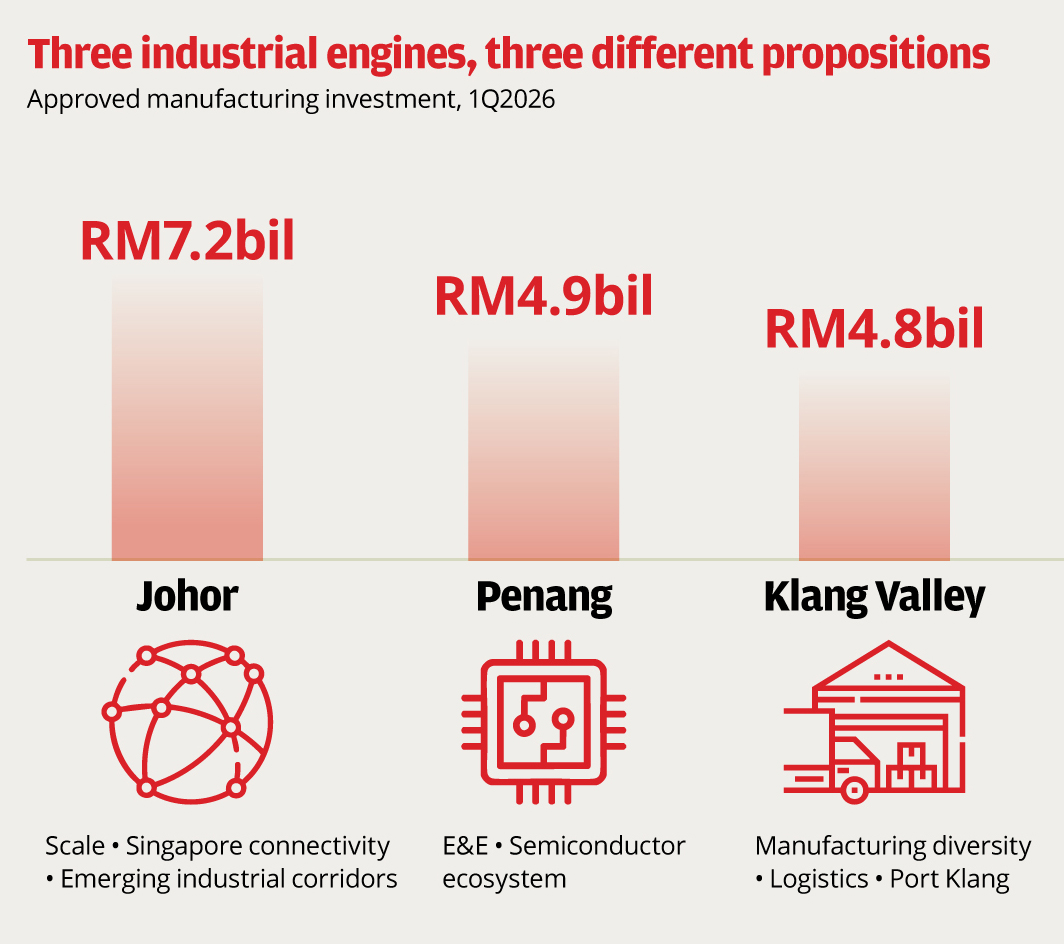
Key indicators, 1Q2026 / 1H2026
| 138.7 Industrial Production Index, 1Q2026 | 50.7 PMI, June 2026 | 3.71 mil TEUs Port Klang throughput, 1Q2026 (+5.2% y-o-y) | 3.6 mil sq ft Warehouse space completed in Klang Valley 1H2026 |
More space does not mean equal space
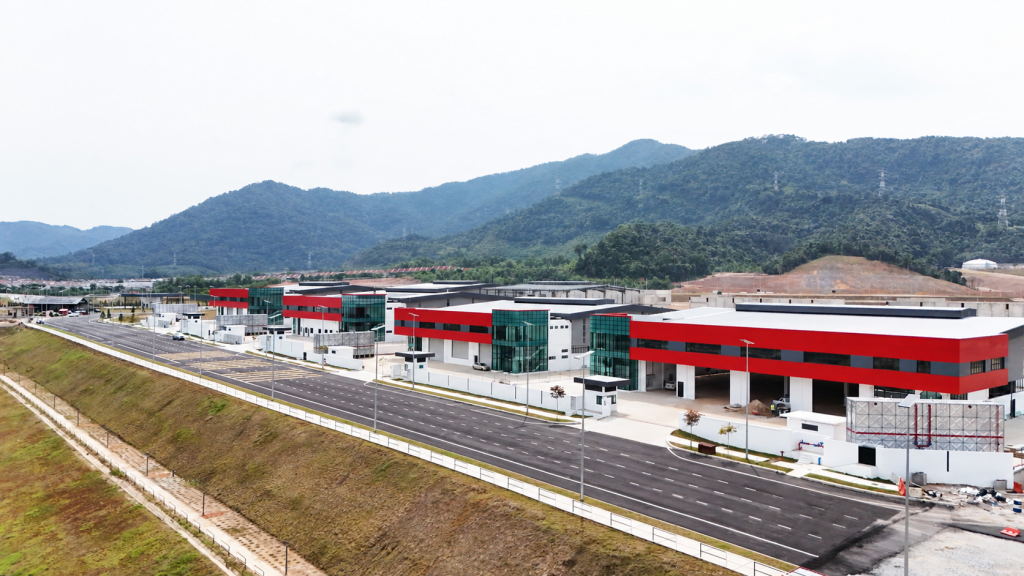
Approximately 3.6 million sq ft of warehouse space was completed in Klang Valley in 1H2026, with Shah Alam International Logistics Hub accounting for nearly 80% of new supply.
More stock gives occupiers more choice. It also means industrial property is no longer a one-size-fits-all asset class. Modern specifications, automation readiness and operational efficiency are increasingly influencing leasing and investment decisions while older or less functional stock faces a harder argument.
Converting industrial acres into digital powerhouses

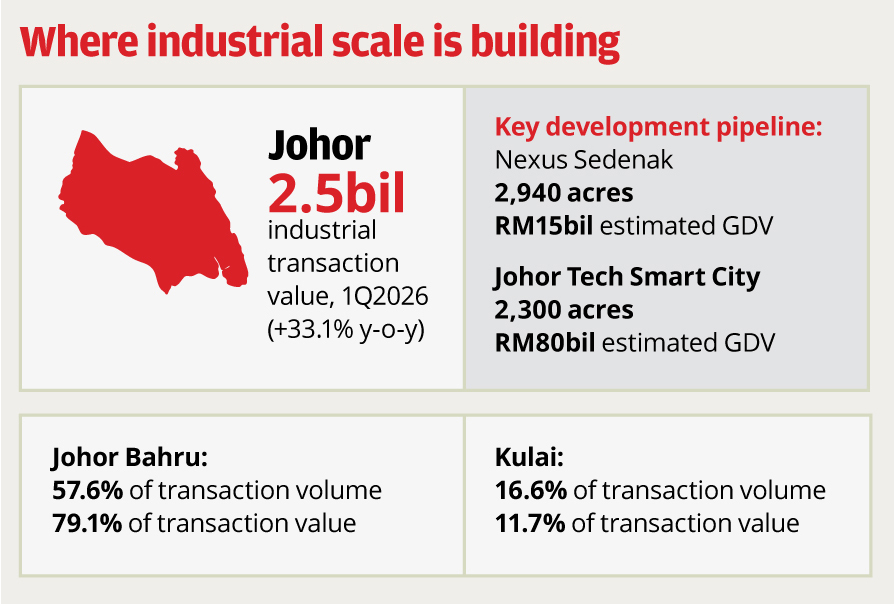
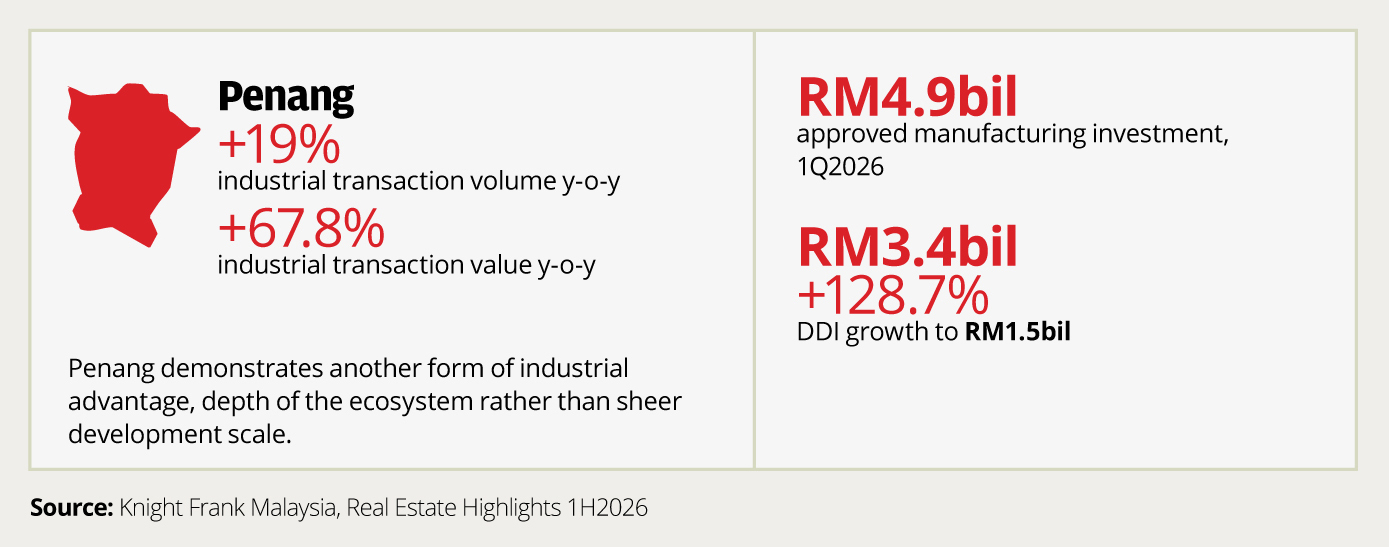
Look at where some of the biggest industrial land transactions are occurring and the changing land equation becomes visible.
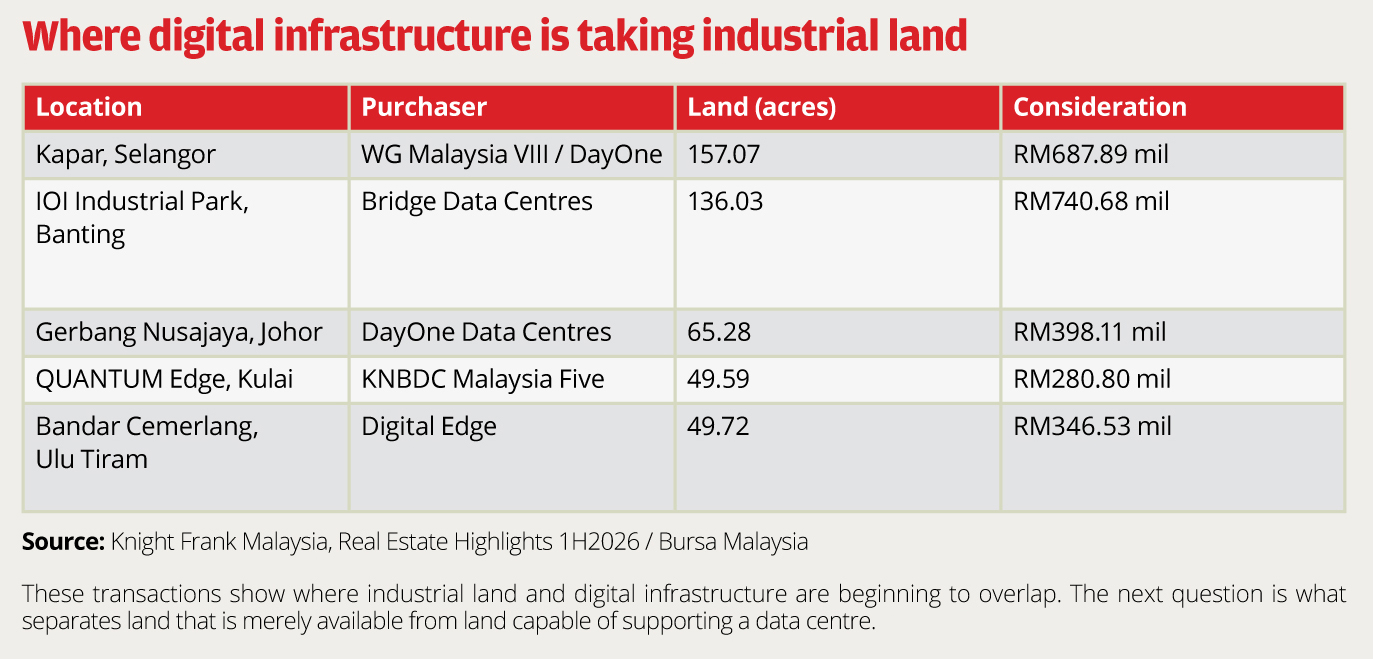
In 1H2026, disclosed data centre-related land transactions in Banting and Kapar alone involved approximately RM1.4bil across 293 acres. Johor also recorded sizeable data centre-related land deals in Ulu Tiram, Kulai and Gerbang Nusajaya.
These transactions show where industrial land and digital infrastructure are beginning to overlap. The next question is what separates land that is merely available from land capable of supporting a data centre.
The megawatt number only tells part of the story
Malaysia’s data centre market has attracted significant investment commitments in recent years. But the more useful measure now is how many of these projects are moving from paper to reality.
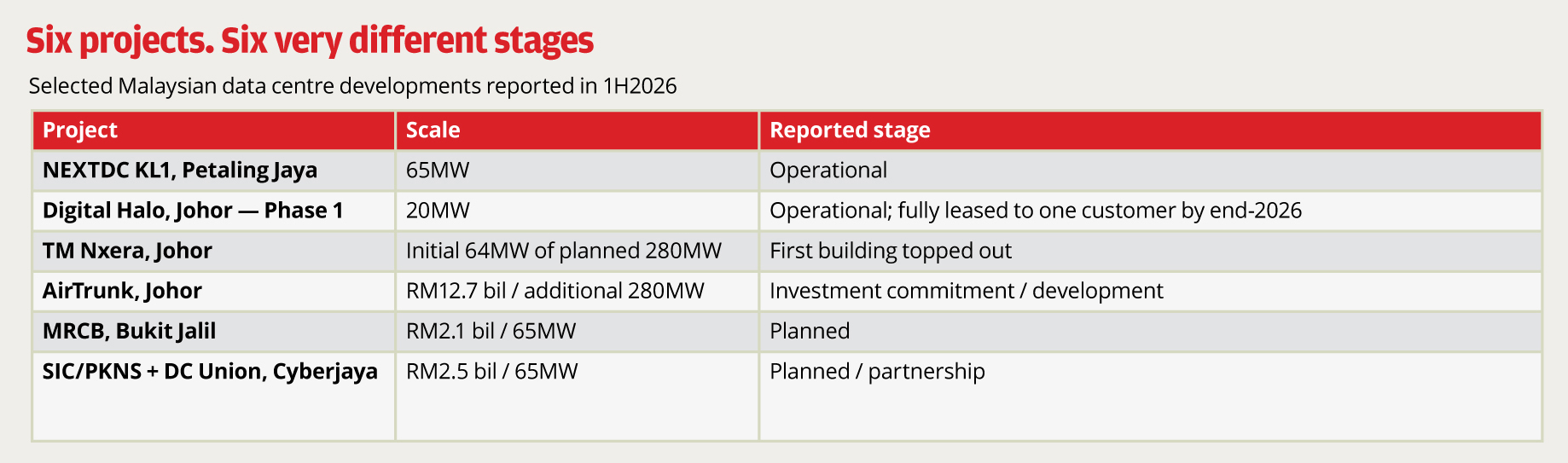
Announced, planned, under development, topped out, operational and fully leased capacity should not be treated as the same thing.
Six projects. Six very different stages.
Selected Malaysian data centre developments reported in 1H2026.
What 280MW cannot tell you
Data centre headlines often focus on megawatts. But capacity depends on a much wider infrastructure system.
| 1.8 Johor WUE benchmark | 889 km Selangor dark fibre network under Digital Future Action Plan 2026–2030 | 30% Minimum local content participation for new Selangor data centre developments | >1GW Renewable energy capacity secured by DayOne in Malaysia | 4.3GW Installed renewable energy capacity announced by TNB |
The infrastructure gatekeepers
Johor has established a Special Technical Committee to evaluate data centre developments based on water requirements, electricity demand, utility infrastructure and site suitability.
The state’s Water Usage Efficiency benchmark is 1.8. Developers are encouraged to adopt alternative water sources such as treated recycled water and industrial water to reduce pressure on potable supplies.
At federal level, the data centre approval framework has been strengthened, with investors required to demonstrate secured demand and financial commitment while electricity supply is aligned with actual operational requirements rather than maximum capacity requests. Approval is increasingly becoming part of site competitiveness.
From development asset to investment asset
The financing model is evolving alongside the physical market.
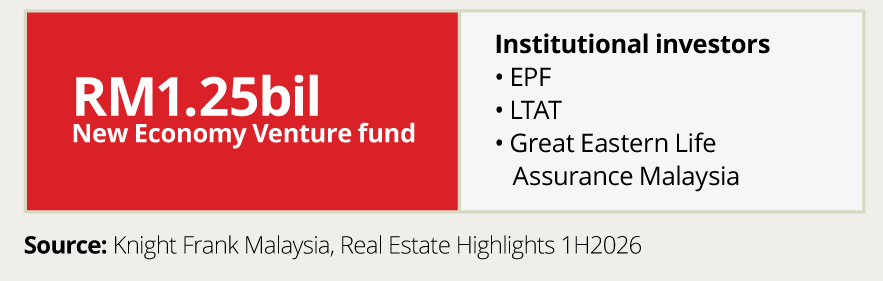
Sime Darby Property’s RM1.25bil New Economy Venture fund is focused on build-to-suit-to-lease data centres, industrial and logistics developments and has secured full capital commitment from institutional investors including EPF, LTAT and Great Eastern Life Assurance Malaysia.
Knight Frank notes that recurring income streams could potentially support future REIT listings and broader institutional investment.
The new value of industrial land
For decades, industrial land value was closely associated with location, transport infrastructure and proximity to economic activity. Those factors remain important. But Malaysia’s latest industrial cycle is adding another layer — what the land can support.
Power availability can determine whether a data centre proceeds. Fibre can open new digital corridors. Automation can differentiate one logistics facility from another. Water availability can influence approval. Existing manufacturing ecosystems can make one industrial corridor considerably harder to replicate elsewhere.
The important question is no longer simply where Malaysia has industrial land. It is what that land can support.
Stay ahead of the crowd and enjoy fresh insights on real estate, property development and lifestyle trends when you subscribe to our newsletter and follow us on social media.