

Human infrastructure solidifying as the core of sustainable master planning
By Joseph Wong
Malaysia’s positioning as a primary regional manufacturing and foreign direct investment (FDI) hub is undergoing constant fundamental transformation. As global investors prioritise environmental, social and governance (ESG) compliance, the benchmark for a modern industrial estate now extends beyond logistics connectivity and power grids. Today, sustainable industrial estates are defined by the human infrastructure that powers them, placing Centralised Labour Quarters (CLQs) and Purpose-Built Worker Accommodations (PBWAs) at the core of green, resilient industrial master planning.
Long viewed as temporary operational costs, PBWAs have matured into a recognised institutional living-sector asset class. As developers and real estate investment trusts (REITs) integrate worker housing directly into industrial parks, these facilities are proving that social sustainability and high-yield real estate investments go hand in hand.
"Driven by sustained foreign-labour demand, increasing emphasis on ESG standards and worker welfare and stricter compliance requirements, CLQ and PBWA facilities are becoming integral to Malaysia’s industrial ecosystem," explained Knight Frank Malaysia’s land and industrial solutions senior executive director Allan Sim. "These facilities will enhance the attractiveness of Malaysia as a preferred destination for long-term investment, supply chain diversification and manufacturing expansion. With consistent demand and growing interest from developers, operators and capital providers, the sector will continue to institutionalise and support its long-term development.”

But as Malaysia pushes forward as a premier regional FDI hub, it has to address four key areas:
1. Social sustainability as an investment magnet
In the competition for high-value foreign direct investment, particularly across advanced electronics, semiconductors and digital infrastructure, multinational corporations (MNCs) operate under strict global supply chain audits. Human rights, fair labour practices and worker welfare are now non-negotiable prerequisites for corporate location decisions.
Malaysia’s ranking as the top emerging nation in the Milken Institute’s Global Opportunity Index highlights its strong institutional framework. However, maintaining this competitive edge requires upgrading worker living standards across key manufacturing and logistics corridors.
“We’re seeing a shift in the space, from fragmented employer-managed housing towards purpose-built compliant accommodation. More master-planned industrial parks and logistics corridors are incorporating CLQs and PBWAs in their development frameworks amid tightening regulations and consistent foreign labour demand in Malaysia, reflecting a broader shift towards more sustainable and investment-grade industrial ecosystems,” said Knight Frank Malaysia group managing director Keith Ooi.
2. Decarbonisation and integrated master planning
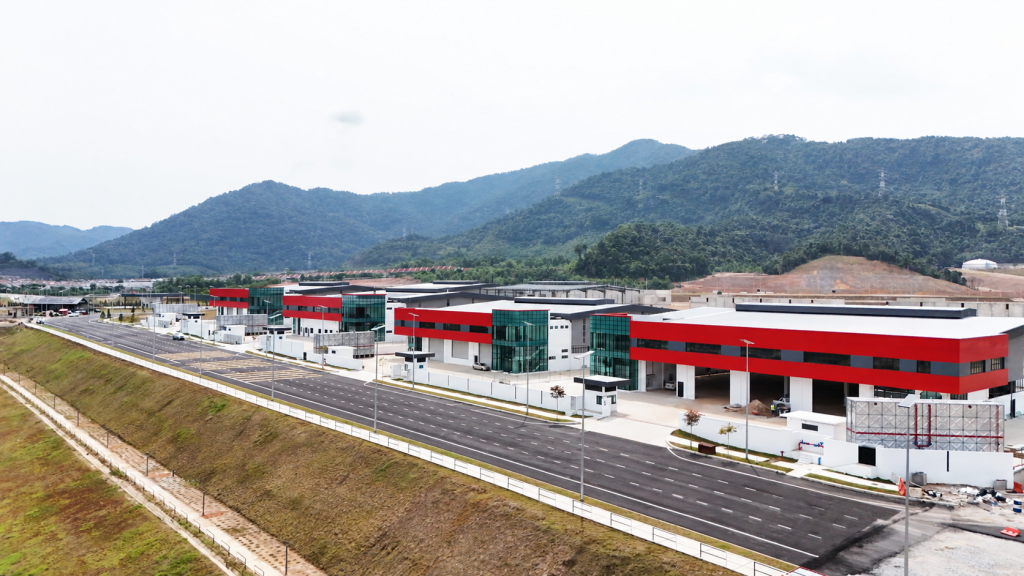
Beyond social governance, embedding PBWAs directly within industrial parks offers significant environmental advantages. Traditional, fragmented housing models rely on daily long-distance bus transport to shuttle workers between suburban housing estates and industrial zones, contributing to urban traffic congestion and elevated vehicle emissions.
By integrating purpose-built accommodation into the master plan of an industrial estate, developers create walkable, self-contained communities.
This integrated approach yields three major operational and environmental benefits:
- Reduced Scope 3 emissions: Minimises daily vehicular transportation across supply chain operations (Scope 3 emissions are all indirect greenhouse gas emissions in a company's value chain, both upstream and downstream, that do not come from sources the company owns or controls).
- Efficient land use: Replaces scattered, low-density residential rentals with high-density, purpose-built facilities equipped with centralised utility management.
- Community integration: Reduces social friction in surrounding residential neighbourhoods by providing self-sufficient, well-managed living environments with built-in retail, recreational and healthcare amenities.
3. Regulatory enforcement driving institutional demand
The transition toward sustainable worker housing is supported by a robust regulatory framework. Worker accommodation in Malaysia is governed by The Employees’ Minimum Standards of Housing, Accommodations and Amenities Act 1990 (Act 446) which sets guidelines for safety, hygiene, space allocation and overall governance.
With foreign worker numbers rising to 2.12 million under the Temporary Visiting Work Permit programme surpassing pre-pandemic levels, the Malaysian government has tightened oversight. Frameworks under the 13th Malaysia Plan, alongside strict approvals through the Foreign Workers Centralised Management System (FWCMS), mean that non-compliant, ad-hoc housing is no longer viable for industrial tenants.
Purpose-built facilities are engineered to exceed Act 446 mandates, offering institutional tenants turnkey compliance that shields them from regulatory penalties and audit failures.
4. Maturing asset class and institutional capital flows
As sustainable industrial estates gain momentum, capital markets are responding. Financial institutions, private equity firms and listed real estate investment trusts (REITs) increasingly view CLQs and PBWAs as stable, long-term, income-generating assets backed by strong occupancy rates.
Recent market transactions highlight this institutionalisation:
- Cross-border capital deployment: In September 2025, a Singapore-based operator acquired six PBWA assets in Johor comprising 7,200 beds for RM110.8mil, reflecting strong investor confidence in Southern Corridor industrial expansion.
- REIT portfolio integration: AME REIT became the first Malaysian REIT to incorporate industrial-linked worker accommodations into its portfolio, establishing PBWAs as a mainstream real estate asset class.
Building the future of sustainable industry
The evolution of Malaysia’s manufacturing sector requires a corresponding evolution in its industrial infrastructure. Industrial parks can no longer rely solely on physical location and tax incentives; they must demonstrate holistic sustainability across all operational facets.
By embedding purpose-built, Act 446-compliant worker accommodations within master-planned estates, developers are building a resilient industrial framework. This strategic integration meets international ESG expectations, supports worker well-being and provides global investors with a compliant foundation for long-term growth.
The latest Knight Frank Asia-Pacific Horizon report titled From Niche to Core: Why Asia-Pacific Living Sectors are Entering the Mainstream can be downloaded from https://kf-my.com/APACLR2026.
Stay ahead of the crowd and enjoy fresh insights on real estate, property development and lifestyle trends when you subscribe to our newsletter and follow us on social media.