
By Brig Gen Datuk Goh Seng Toh
Before pushing sweeping urban redevelopment laws, the government must first prove it can deliver on the basics — starting with Malaysia’s deeply faltering recycling programme.
The question is one of institutional credibility. If a government agency cannot effectively deliver on basic, fundamental responsibilities, how can it be trusted with massive, complex and socially sensitive interventions?
This query is directed squarely at the Ministry of Housing and Local Government (KPKT), which is aggressively pursuing the passage of a national Urban Renewal Act (URA). The ministry's ambition to modernise Malaysia’s cities is laudable but its current performance on a much simpler, decades-old mandate—managing solid waste and boosting recycling—raises serious doubts about its capacity for execution.
Despite legislative tools, policy emphasis and years of effort, the recycling programme remains underwhelming. This sustained underperformance on core municipal functions represents a governance litmus test that KPKT is currently struggling with.
Recycling: The test
Waste management is the bedrock of urban liveability. In Malaysia, this responsibility is primarily guided by the Solid Waste and Public Cleansing Management Act 2007 (Act 672), which came into effect for key states and territories in 2015. The legislation aims to mandate waste segregation at source and standardise collection.
Yet, nearly a decade later, the success is debatable. The National Recycling Rate (NRR) reached approximately 35.38% in 2023. While an improvement from previous years, this trajectory means Malaysia is poised to fall short of the 40 % target by 2025 set under the 12th Malaysia Plan.
Simultaneously, the volume of solid waste is escalating. With projections indicating waste generation will surpass 17 million tonnes annually by 2035, the slow pace of recycling progress is a critical structural flaw in urban governance.
The failure to meet targets stems from deeply embedded systemic weaknesses that compromise the entire supply chain of waste management, suggesting a deficit in KPKT's managerial and enforcement capacity.
Structural weaknesses in waste management
The structural problems hindering the recycling effort are not technical but rather related to consistency, logistics and enforcement.
- Poor enforcement and compliance: Mandatory segregation at the source remains critically weak. Despite penalties being written into law, consistent and widespread enforcement against non-compliant households is rare. Without the political will to issue fines and ensure adherence, the policy remains aspirational rather than regulatory. In densely populated urban zones, evidence suggests true household compliance is minimal.
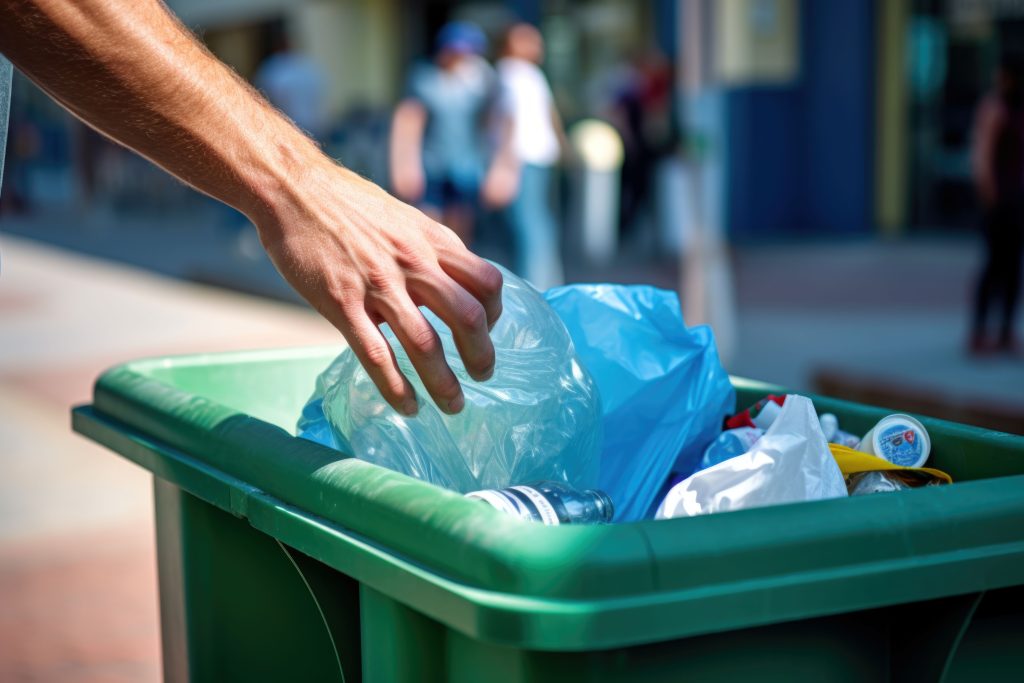
- Infrastructure and logistical gaps: Effective recycling requires convenient access. Many areas still lack functional, accessible and well-signposted recycling bins and drop-off points. Furthermore, the reliability of the collection mechanism—the crucial link between household effort and the recycling centre—is inconsistent, leading to citizen fatigue and default behaviour of mixing waste.
- Weak economic markets: The sustainability of a recycling programme relies on a strong circular economy. If collected materials cannot be economically processed or reintegrated domestically due to insufficient capacity or market demand, the entire effort becomes logistically and financially unsustainable, regardless of how much is collected at the curb.
- Data credibility and public trust: The veracity of official NRR figures is frequently challenged by environmental NGOs and industry observers. When data transparency is questioned, it weakens public trust. This credibility deficit has a direct impact on citizen buy-in for any future, larger-scale governmental initiative.
The URA leap
Despite these foundational struggles, KPKT is pushing forward with the URA, a law intended to spearhead the comprehensive revitalisation and redevelopment of ageing urban areas. KPKT has identified over 534 potential urban renewal sites nationwide, covering hundreds of hectares and promising massive financial returns through replacement units and new infrastructure.
The most critical—and contentious—element of the draft URA is the proposal to significantly lower the required owner consent threshold from the current 100% to between 75% and 80% (and potentially 51% for abandoned buildings).
The leap from fixing broken bins to forcing the sale of private property is enormous, demanding a far higher level of institutional competence than KPKT has yet demonstrated.
The inherent risks
The failure to manage basic services effectively creates three critical areas of risk when approaching complex urban renewal:
1. Governance and operational risk: Urban renewal is a multi-layered undertaking. It requires complex negotiation of land rights, the handling of strata laws, coordination across federal and state lines, transparent management of developer-led financing and the logistical planning of temporary and permanent relocation for communities. A ministry that cannot coordinate simple waste enforcement cannot be logically assumed to possess the deep institutional machinery and attention to detail required to manage these high-stakes complexities without errors or ethical breaches.
2. Social and trust deficit risk: When citizens observe failures in basic, low-stakes infrastructure—like inconsistent rubbish collection—their trust in the ministry to handle high-stakes issues like land acquisition and displacement plummets. This trust deficit is critical. Successful urban renewal demands robust oversight, absolute financial safeguarding and genuine community consent to overcome inevitable opposition from affected landowners.
3. Political and equity risk: The URA requires political muscle to override entrenched interests, including the opposition from states concerned about federal land overreach. More importantly, it risks becoming an engine for social inequality if not governed with absolute fairness. Forcing property owners to comply with a lower consent threshold must be balanced by iron-clad, transparent guarantees of fair market value compensation and equivalent replacement housing. A ministry struggling with basic transparency will face immense pushback and accusations of serving developer interests over community welfare.
A path to credibility
The URA represents a vital ambition for modernising Malaysia’s cities. However, ambition without demonstrated execution capacity is dangerously premature. KPKT needs to implement a strategic sequence of reforms.
The immediate priority should be to structurally and transparently raise the recycling rate, thereby building public confidence in the ministry’s managerial ability. Success in a simple, measurable domain like waste management is the best precursor for legitimacy in high-stakes projects. Areas that need immediate attention include:
- Enforce Act 672 robustly: Implement consistent, visible and fair enforcement of waste segregation laws across all applicable areas to achieve the NRR target without delay.
- Bolster infrastructure: Ensure every urban neighbourhood has reliable, convenient and functional recycling infrastructure, closing the logistical loop that currently frustrates compliance.
- Pilot governance capacity: Before a nationwide URA rollout, KPKT must execute smaller, non-controversial, highly visible pilot projects (like clearing abandoned buildings) under the proposed URA rules, showcasing absolute transparency in compensation and governance.
- Integrate sequencing: Treat improvements to waste systems and general neighbourhood quality as essential prerequisites for urban renewal, demonstrating that the ministry is focused on all aspects of liveability, not just high-value property development.
The URA is a necessary vision but the road to its success must first be paved with the demonstrable competence of managing a clean, functioning city—starting with the trash.

This article was first published in StarBiz 7.
Stay ahead of the crowd and enjoy fresh insights on real estate, property development and lifestyle trends when you subscribe to our newsletter and follow us on social media.