
By: Yip Wai Fong
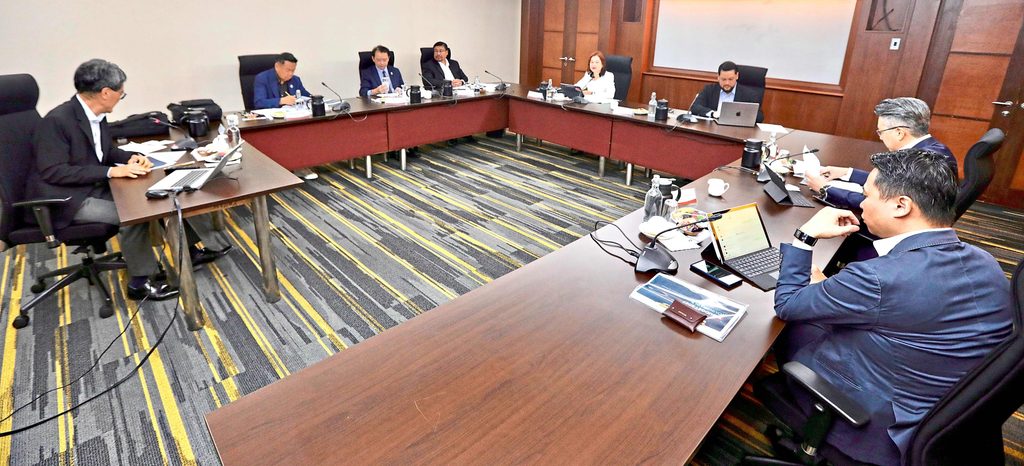
KUALA LUMPUR: In the last two quarters, Malaysia’s property subsectors headed towards different directions amidst continuing geopolitical uncertainty, according to JLL Malaysia at a recent press conference.
The residential sector saw a mild volume recovery following a sharp correction in Q1 2026, with mortgage activity reflecting tighter credit conditions and cautious consumer sentiment.
The commercial office sector is defined by a clear flight to quality where ESG-compliant offices command rental premiums and lower vacancies, with further expansion expected under the Global Services Hub incentive framework.
Meanwhile, the industrial and logistics market is experiencing robust structural growth, sustained by high-tech manufacturing, cross-border trade integration within the Johor-Singapore economic corridor and institutional capital deployment by local REITs targeting high-quality logistics facilities.
Slow recovery in residential markets
In Kuala Lumpur, transaction volume in Q2 2026 expanded by 7.9% quarter-on-quarter to 3,435 units while total transaction value remained relatively unchanged.
Selangor's residential market mirrored the broader national trend, rebounding to 11,719 transacted units worth RM6.89bil after recording its lowest quarterly volume in four years during the first quarter.
Market consolidation in Penang continued, with transaction volume of 3,535 units and total value of RM1.59bil holding near five-year lows. Conversely, Johor maintained its leading position, registering 9,141 transactions valued at RM4.62bil, despite growth momentum moderating after several quarters of rapid expansion.
Tightening credits and modest price gains
Price movements across key submarkets in Q3 2026 revealed varying degrees of stabilisation.
In the Klang Valley, apartments and condominiums spearheaded price recovery with a 3.4% quarterly increase while serviced apartments rose by 1.2% and landed two-storey terrace homes registered a modest 0.5% gain.
In Georgetown, Penang, stratified properties rebounded, led by serviced apartments with a 4.6% quarterly price expansion, while two-storey terrace houses experienced a moderating price contraction of 2.7%.
Bandar Johor Bahru demonstrated broad resilience, with landed terrace homes rising by 4.4% and condominiums expanding by 2.0%, contrasting with serviced apartments which contracted by 2.7%, signalling a cooling off after the sharp growth phase in 2025.
The consolidation across key markets is mirrored by a lower mortgage approval rate. The approval rate dropped to 38.36% year-to-date in September 2026. On an annualised basis, overall mortgage activity is projected to end below 2025 levels.
Managing director Jamie Tan foresees the residential market gradually improving. “Based on past performance, we expect to see further recovery towards the end of 2026, although at a slower pace compared to previous years,” he said.
Green premium takes hold in office market
Greater KL's Q3 2026 office market was dominated by a shift toward top-tier, sustainable spaces, highlighted by a widening rental premium for sustainability-focused developments.
Green-certified office space commands an average monthly rent of RM6.93 per sq ft (psf) with a lower vacancy rate of 12.2%, compared to non-green buildings averaging RM5.83 psf with an 18.8% vacancy rate. Premium Grade A office assets achieve an average rental rate of RM10.96 psf.
“Looking ahead, supply constraints in green certified offices are expected to accelerate the rental outlook. Landlords of top assets are offering fewer rental incentives,” said leasing advisory head Quiny Lee.
Industrial subsector continues to lead
Malaysia's industrial and logistics property sector remains the standout performer, driven by supply-chain realignments, the global China Plus One diversification strategy and rapid growth in digital infrastructure and e-commerce.
In Greater KL, prime logistics stock expanded to 41 million sq ft, with average achievable rent standing at RM 2.20 psf/month. Johor, Penang and Selangor remain key hotspots, supported by FDI inflows, E&E ecosystems and data centre developments.
Penang's prime industrial inventory stands at 9.6 million sq ft and asking monthly rents are between RM3.50 and RM4.10 psf. In Johor's Iskandar Malaysia corridor, prime industrial stock has reached approximately 15 million sq ft and monthly asking rents of RM2.30 to RM3.00 psf.
“For 2026, rental growth across the sector is expected to remain modest as substantial new supply shifts negotiating power towards tenants while local institutions and Malaysia REITs remain dominant investors, targeting high-quality assets in strategic locations,” said industrial and logistics director Derek Yap.
Meanwhile, research and advisory head Yulia Nikulicheva said the expansionary 2027 Budget of RM510bil establishes a supportive foundation for the property sector. According to Nikulicheva, targeted fiscal initiatives such as expanded stamp duty exemptions for first-time home buyers, special corporate tax rates for Global Services Hubs and infrastructure investments across key economic corridors are positively shaping property demand across residential, commercial and industrial markets.
Also present were chief growth officer Christophe Vicic, Southeast Asia research and advisory head Chua Yang Liang, executive director and retail valuations head Jeannie Tan and capital markets and data centres senior director Keith Eng.
Stay ahead of the crowd and enjoy fresh insights on real estate, property development and lifestyle trends when you subscribe to our newsletter and follow us on social media.