By Joseph Wong
The health of commercial real estate, particularly retail shopping malls, has always been explicitly tied to the transactional velocity occurring inside its shop lots. When consumers spend, developers build, asset values appreciate and real estate investment trusts (REITs) thrive. However, the latest data released by Retail Group Malaysia (RGM) reveals a complex, uneven landscape that forces mall landlords and property strategists to reconsider their tenant mixes and spatial layouts.
In the first three months of the year, Malaysia's retail sales grew by 3.7% compared to the same period in 2025. While positive on the surface, this performance fell short of market expectations. Members of the Malaysia Retailers Association (MRA) and the Malaysian Retail Chain Association (MRCA) had previously forecast a stronger 4.4% growth rate heading into the tail-end of the quarter.
What makes this missed target particularly notable for property analysts is that the first quarter contained the country's two largest, high-volume festive periods, namely Chinese New Year in February and Hari Raya Aidilfitri in March. For shopping malls, underperforming during a double-festive quarter indicates underlying structural shifts in consumer spending.
Government injection and the tourism lifeline
The retail real estate market was shielded from harsher corrections by significant fiscal injections and international arrivals. To keep consumer spending stable, the government deployed RM4.6bil in cash handouts during the quarter. This included:
- Sumbangan Tunai Rahmah (STR): RM2.4bil distributed under Phases 1 and 2, directly boosting the liquidity of approximately five million eligible Malaysians.
- Sumbangan Asas Rahmah (SARA): A one-off RM100 payment totaling RM2.2bil that reached 22 million individuals.
For neighbourhood malls and suburban commercial strips, this cash infusion acted as an immediate buffer, sustaining footfall and basic grocery or apparel purchases.
Simultaneously, prime urban shopping centres such as those in the Bukit Bintang enclave or downtown Johor Bahru benefited from robust cross-border traffic. Despite global geopolitical headwind and Middle East tensions, Malaysia successfully attracted 10.65 million foreign tourists in the first quarter. This achievement secured its position as Southeast Asia's most visited country for the second consecutive year, supplying shopping malls with essential tourist dollars.
Reconfiguring the mall floorplan
The most actionable takeaways for property developers and mall operators are found in the wildly mixed sales performances across individual retail sub-sectors. Traditional anchor tenants are losing traction while experiential and home-related segments are expanding rapidly.
For decades, mall developers designed structures around a predictable blueprint. Secure a massive, multi-level department store which may include a supermarket component to anchor either end of the property, then fill the interstitial corridors with specialty inline tenants. The current performance figures indicate that this layout model is structurally outdated.
Despite the boost of Chinese New Year and Hari Raya Aidilfitri, the department store cum supermarket sub-sector recorded a negative growth rate of 1.0%. Standalone department stores posted a near-zero growth rate of 0.3% while supermarkets and hypermarkets managed a marginal uptick of only 1.4%.
When multi-floor anchor formats shrink or go stagnant, mall landlords face net-lettable-area (NLA) vulnerabilities and falling rental yields. Modern property managers are actively breaking down massive department store spaces into smaller, agile lifestyle units, replacing sluggish department brands with high-growth lifestyle components.
Rise of the domestic and personal care anchors
Conversely, sectors related to domestic enhancement and lifestyle well-being are stepping into the spotlight. The furniture and furnishing, home improvement and electrical and electronics (E&E) sub-sectors enjoyed an uplifting performance, expanding by 9.3% in sales which is the highest growth rate achieved among all retail categories during the quarter.
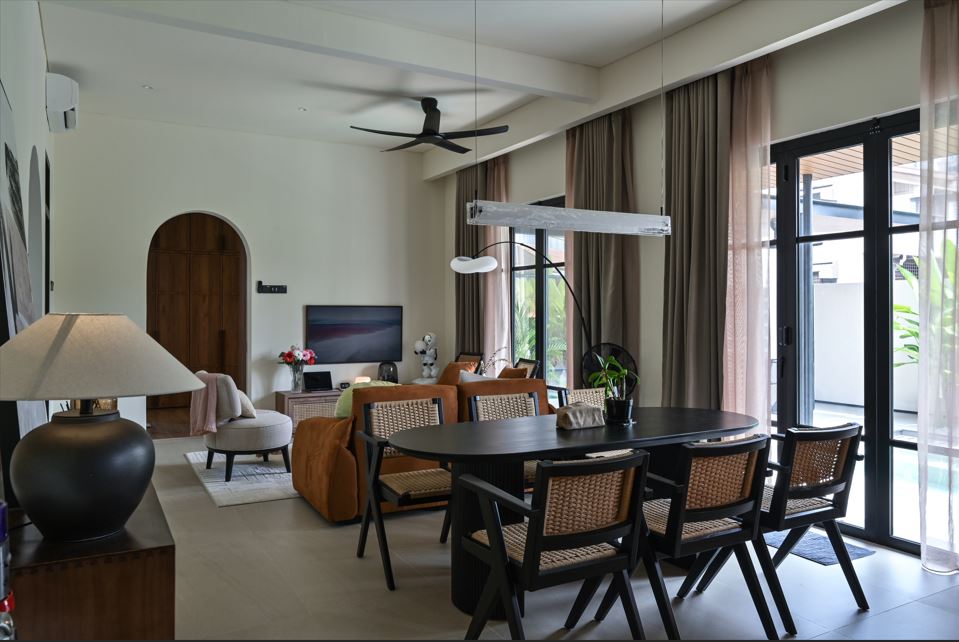
This surge tells property developers that consumers are prioritising spending on their living spaces. Consequently, progressive shopping malls are dedicating entire wings to home lifestyle concept stores, turning interior design galleries and electronics hubs into alternative crowd-pullers.
Similarly, fashion and fashion accessories (+4.2%) and pharmacies (+4.2%) registered solid, reliable gains. These figures show that consumers are highly responsive to personal care, well-being and visually appealing lifestyle apparel. Malls that lease space to modern, aesthetically designed wellness pharmacies, boutique athleisure brands and accessible fashion chains are capturing higher traffic and conversion rates than those relying on legacy formats.
At the far end of the performance spectrum, the other specialty stores category suffered a steep 16.5% drop in sales, making it the weakest-performing retail segment. For property managers, this is a warning sign. These specialty tenants have lower cash-flow buffers, rendering them highly vulnerable to rental defaults. Mall landlords must proactively assist these tenants or prepare to re-lease these spaces to more resilient categories.
Navigating the base effect
Acknowledging these mixed results and the potential negative impact on Malaysian consumer purchasing power since the outbreak of geopolitical tensions in the Middle East, RGM has trimmed its annual retail growth projection for 2026 from 4.0% down to 3.8%.
However, the near-term outlook for shopping malls remains stable. Retailers are projecting an average growth rate of 4.8% in the second quarter of 2026, primarily due to a favourable low base effect. This anticipated acceleration follows a 3.0% decline in Malaysia's retail industry during the same period in 2025.
The modern relationship between retail sales and retail real estate is defined by agility over absolute square footage. With full-year forecasts adjusted downward to 3.8%, mall landlords can no longer afford to build large spaces and wait for tenants to fill them.
The clear winners in the commercial property sector will be developers who read the sub-sector data accurately. By pivoting away from underperforming department formats and actively curating spaces for home improvement, lifestyle fashion and wellness concepts, shopping malls can transform from static transactional boxes into resilient, future-ready lifestyle destinations.
This article was first published in StarBiz 7.
Stay ahead of the crowd and enjoy fresh insights on real estate, property development and lifestyle trends when you subscribe to our newsletter and follow us on social media.