
Nga outlines bold, forward-looking roadmap to address vulnerabilities head-on
The Malaysian property development sector is currently standing at a critical juncture, although economic fundamentals remain firm and homeownership rates are hovering at an impressive 77%, according to Minister of Housing and Local Government Nga Kor Ming.
Malaysia, he said, has surpassed advanced economies such as Germany and the United States but the sector faces persistent structural challenges. This is because a rising overhang of completed yet unsold residential properties, coupled with the lingering threat of abandoned developments, continues to weigh on market efficiency.
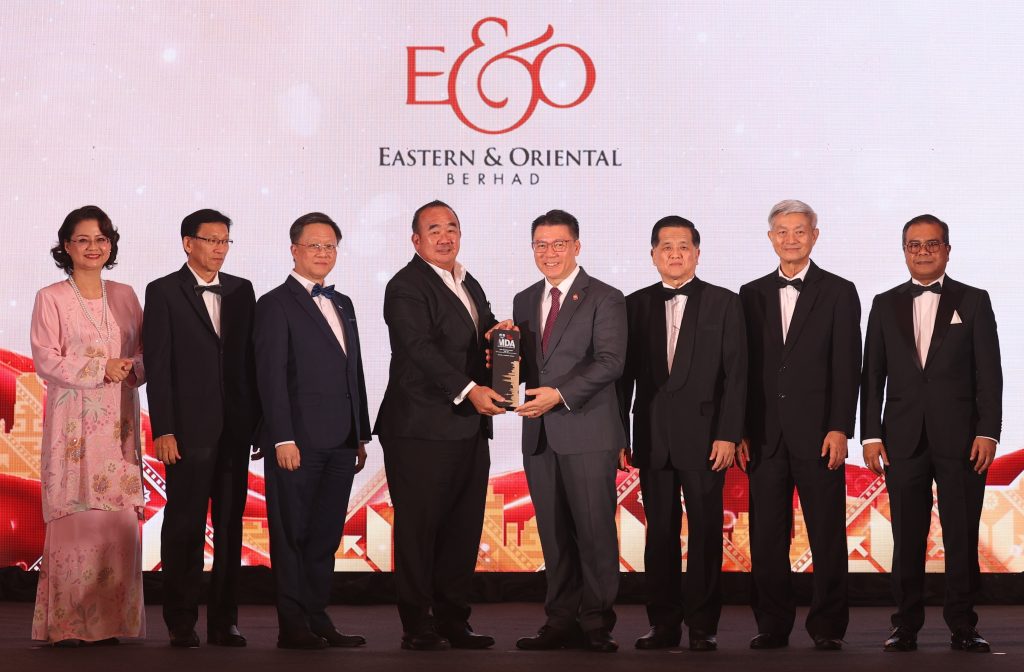
Speaking at the 5th edition of the Malaysia Developer Awards (MDA) 2026, Nga outlined a bold, forward-looking roadmap to address these vulnerabilities head-on. Driven by the overarching principles of the National Housing Policy 2026–2035 and backed by strategic allocations in Budget 2027, the ministry is deploying major policy tools such as Big Data Analytics to resolve long-standing housing supply mismatches and a proposed Option to Purchase (OTP) mechanism to protect both buyers and developers from project failure.
Dismantling the housing mismatch
A central theme of Nga’s address was the transition away from rigid, one-size-fits-all approaches to housing delivery. While the government has set an ambitious target of delivering one million affordable homes over the next decade under its Humanising Housing framework, the minister acknowledged industry concerns regarding fixed pricing benchmarks across vastly different geographic markets. A blanket price tag, such as RM300,000, often fails to reflect high land and construction costs in prime urban centres like Kuala Lumpur or George Town while simultaneously remaining well beyond the reach of rural buyers in smaller towns.
This misalignment between supply, location and true local purchasing power has directly contributed to inventory stagnation. In the first half of 2026, Malaysia recorded over 187,000 property transactions valued at RM105 billion; however, during the same period, the volume of completed but unsold residential units grew by 8.6%.
To break this cycle, the Ministry secured an expanded allocation under Budget 2027 to deploy comprehensive Big Data Analytics across national housing planning. By analysing localised demographic trends, household income distributions, lifestyle preferences and financing capacities, the government aims to equip developers with actionable market intelligence before capital is committed to the ground.
"Let me assure you that our intention is not simply to build more houses for the sake of meeting a target. We want to build the right homes, at the right prices, in the right locations," Nga emphasised. "By better understanding local purchasing power, demographic trends and housing demand, we can help the industry make better investment decisions while reducing the risk of oversupply. We want to create a win-win situation for all."
Preventing project failure before they occur
While data analytics aims to ensure that new projects match market demand, regulatory reform is required to insulate the development cycle from market volatility and speculative booking practices. To prevent projects from becoming sick or abandoned in the first place, the ministry is actively studying the formal introduction of an Option to Purchase (OTP) mechanism.
Under current industry practices, developers frequently gauge market interest and secure prospective buyers by collecting informal booking fees prior to executing the formal Sale and Purchase Agreement (SPA). Nga highlighted three fundamental flaws inherent in this widespread practice:
Inability to Filter Serious Buyers: Developers struggle to distinguish genuine, qualified buyers from speculative "joy buyers" who lack the financial capacity or genuine intent to complete the transaction.
Regulatory and Legal Risk: Collecting booking fees prior to SPA execution is explicitly prohibited under existing housing regulations, exposing developers to regulatory penalties and legal liabilities.
Consumer Vulnerability: Prospective homebuyers risk being locked into property purchases at prices different from those initially advertised or face the unfair forfeiture of their initial booking deposits.
The proposed OTP framework introduces a structured, legal pre-SPA marketing window. Under this system, developers would be granted a defined period to market a development and assess verified demand before officially committing to construction. During the option period, prospective buyers would pay a standardised deposit of up to 5% of the proposed purchase price while submitting their financial documentation for preliminary bank loan assessments.
If the developer determines that genuine market demand is insufficient to make the project commercially viable, the developer can elect not to proceed with the development. Crucially, in such an event, buyers are legally protected through a mandatory, full refund of their deposit alongside accrued interest.
"Under the proposed OTP mechanism, developers would be given a specified period to market their projects and assess buyer interest before deciding whether to proceed," Nga explained. "For developers, this means greater certainty over genuine market demand. For homebuyers, it means greater transparency before making a major financial commitment. Through this reform, we want to ensure that buyers will never have to pay for houses that they will never get."
Accelerating revivals
The introduction of the OTP framework works in tandem with aggressive state-led efforts to resolve historical project failures. The ministry remains firmly committed to achieving a national target of zero sick or abandoned housing projects by 2030.
Substantial progress has already been recorded. As of late August 2026, government interventions alongside private-sector collaboration have successfully revived 1,726 sick and abandoned housing developments, restoring projects valued at over RM185 billion and bringing relief to thousands of affected families.
To sustain this momentum and encourage stronger participation from established, well-capitalised developers, Budget 2027 introduces dedicated fiscal relief for white knight rescue developers. The government has proposed full stamp duty exemptions on qualifying loan agreements and property transfer instruments for both rescue developers and the original stranded homebuyers.
"To further accelerate the revival of abandoned housing projects, Budget 2027 has proposed full stamp duty exemptions on qualifying loan agreements and property transfer instruments involving rescue developers, also known as white knights and original homebuyers," Nga noted, directly calling on the premier developers gathered at the MDA 2026. "I encourage the likes of you here today to take on the challenge and help revive these abandoned projects."
A shared responsibility
The policy initiatives unveiled at the Malaysia Developer Awards 2026 reflect a broader philosophy anchored in structural resilience, consumer protection and fiscal discipline. By deploying data-driven insights to curb market overhang, introducing legal safeguards via the OTP framework to eliminate speculative defaults and providing financial incentives to rehabilitate abandoned sites, the government is building a more sustainable foundation for Malaysian real estate.
Closing his address with a resonant traditional reflection, Minister Nga reminded industry leaders of the profound social responsibility embedded within urban master planning:
"As the famous Chinese saying goes, ‘a family is the smallest unit of a nation and a nation is made up of millions of families’. Every home we build is part of the foundation for a stronger and more prosperous Malaysia. The MADANI Government will remain firmly committed to providing a supportive policy environment for homebuyers and developers alike. Bring in your ideas, contribute your expertise and show me your innovation. Let us build not just more homes but better communities."
Stay ahead of the crowd and enjoy fresh insights on real estate, property development and lifestyle trends when you subscribe to our newsletter and follow us on social media.