

From project planning to everyday property services, digital tools offer developers new ways to improve efficiency and customer experience
Bringing a property project to completion involves countless processes. Architects revise drawings, consultants check specifications and contractors coordinate work on site while sales teams help buyers navigate their commitments. Keeping everyone informed may sound straightforward but when one change affects several parts of a project, the system has to be ready to keep up.
For property developers, these practical demands give digitalisation a clear purpose. Technology can help teams manage the many decisions involved in delivering a development while giving buyers and residents easier access to information and services. The challenge is to make the investment worthwhile. Introducing new software requires expenditure, training and changes to familiar routines. Its value becomes clearer when employees spend less time repeating tasks and project teams work with consistent information.
Putting technology to work
Industry responses gathered ahead of the StarProperty Budget 2027 Roundtable included calls to accelerate the adoption of artificial intelligence (AI), Building Information Modelling (BIM) and digital construction solutions across the property sector. The proposals linked these tools with better resource management, less repetitive work and shorter development timelines. These are practical priorities for companies managing costs while coordinating numerous consultants, contractors and suppliers.
The benefit depends on the people contributing to the process. Models need accurate information, changes need to be recorded and teams need to understand which version they should be using. Even a sophisticated system will struggle to deliver its intended results if information is incomplete or outdated.
This makes staff capability an important part of digitalisation. Employees need time to learn unfamiliar tools and understand how these fit into their responsibilities. Contractors and consultants also need workable arrangements for sharing information, particularly when several organisations are involved in the same project.
For management, the task includes deciding which problems deserve priority. A process that causes a lot of delays may demand immediate attention before a less pressing task, even if the latter offers a more eye-catching use of technology. Identifying these needs gives companies a clearer basis for selecting tools and assessing their performance.
Tracking performance at the project level is a useful starting point. Industry stakeholders propose measuring construction duration, labour hours, material waste reduction and defect rates to help establish the returns from adopting construction technologies. Such records could help developers determine whether a new approach is delivering the expected improvements. They could also reveal where further training or adjustments are needed before a system is introduced across more projects.
This is particularly relevant when adopting AI. Its potential applications may attract interest but each use still needs a defined purpose and appropriate oversight. Information produced with its assistance must be checked before it informs decisions affecting construction, costs or customers.
Digitalisation also depends on coordination beyond the developer’s own operations. Approvals and property transactions involve local authorities, land offices, utility providers, solicitors and banks, each with its own procedures. Among the proposals submitted ahead of the roundtable was a National Housing Single Window connecting these parties through an integrated digital platform. It envisaged standardised documentation and real-time tracking to reduce duplication and improve transparency.
Making tools easy to navigate
For buyers and residents, the usefulness of digital services often comes down to how easily they can complete a task. Accessing documents, booking an appointment or reporting a defect should involve clear instructions and straightforward steps. A resident submitting a maintenance request, for example, needs a simple way to describe the problem, attach photographs and follow its progress. The team receiving it needs to assign the work, provide updates and record its completion. The convenience of submitting a request matters, but so does the response that follows.
People also have different levels of confidence with digital services and some will need assistance. Clear instructions and an available human contact can help ensure that a new platform makes the process easier for a wider range of users.
As developers introduce more digital tools, suitable training, reliable information and clear responsibilities will influence whether these systems become useful parts of daily operations. For creative digitalisation, ingenuity lies in recognising where technology can make a meaningful difference and carrying that idea through to implementation. The results are felt in the work itself, like a problem identified earlier, a task completed with fewer complications or a resident receiving a timely response.
The creative digitalisation criterion
Creative Digitalisation, as recognised within the Malaysia Developer Awards (MDA), brings attention to how developers apply technology across their operations. The assessment described in the previous edition covered three broad areas, providing a perspective on the relationship between innovation, implementation and results.
The first concerned digital initiatives that improve design, project management and services after completion. These span the development process, from coordinating plans and construction work to supporting homeowners after vacant possession.
The second examined leadership in digital transformation and how developers addressed challenges through technology. This places emphasis on the application of an idea, including how digital tools can improve communication and help teams respond to operational difficulties.
The third considered the impact on stakeholders, including communities, residents, employees and industry partners. The benefits may take different forms, from clearer information and more convenient services to better coordination between the teams delivering a project.
Together, these areas place attention on what developers achieve with the technology they adopt. An initiative becomes more meaningful when its benefits can be demonstrated through the work of the company and the experiences of those it serves.
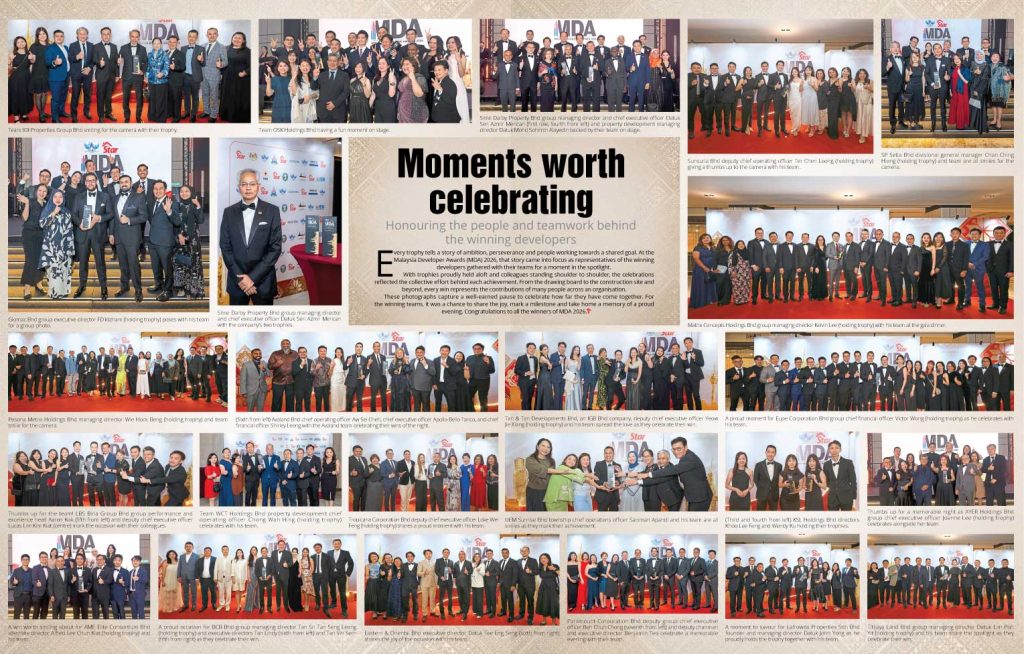
At this year’s MDA award presentation, Sime Darby Property Bhd topped the Creative Digitalisation rankings in the RM1bil and Above tier while LBS Bina Group Bhd won the Below RM1bil tier. Their recognition highlights the importance of applying technology creatively to improve development processes and the experience of those who rely on them.
RANKING BY CREATIVE DIGITALISATION
| (RM1bil & Above Tier) |
|---|
| Sime Darby Property Bhd |
| UEM Sunrise Bhd |
| SP Setia Bhd |
| IOI Properties Group Bhd |
| Tropicana Corporation Bhd |
| MRCB |
| OSK Holdings Bhd |
| Eastern & Oriental Bhd |
| IGB Bhd |
| Matrix Concepts Holdings Bhd |
| (Below RM1bil Category) |
|---|
| LBS Bina Group Bhd |
| Avaland Bhd |
| AME Elite Consortium Bhd |
| Eupe Corporation Bhd |
| Sunsuria Bhd |
| WCT Holdings Bhd |
| Paramount Corporation Bhd |
| AYER Holdings Bhd |
| Glomac Bhd |
| Land and General Bhd |
Stay ahead of the crowd and enjoy fresh insights on real estate, property development and lifestyle trends when you subscribe to our newsletter and follow us on social media.