By Joseph Wong
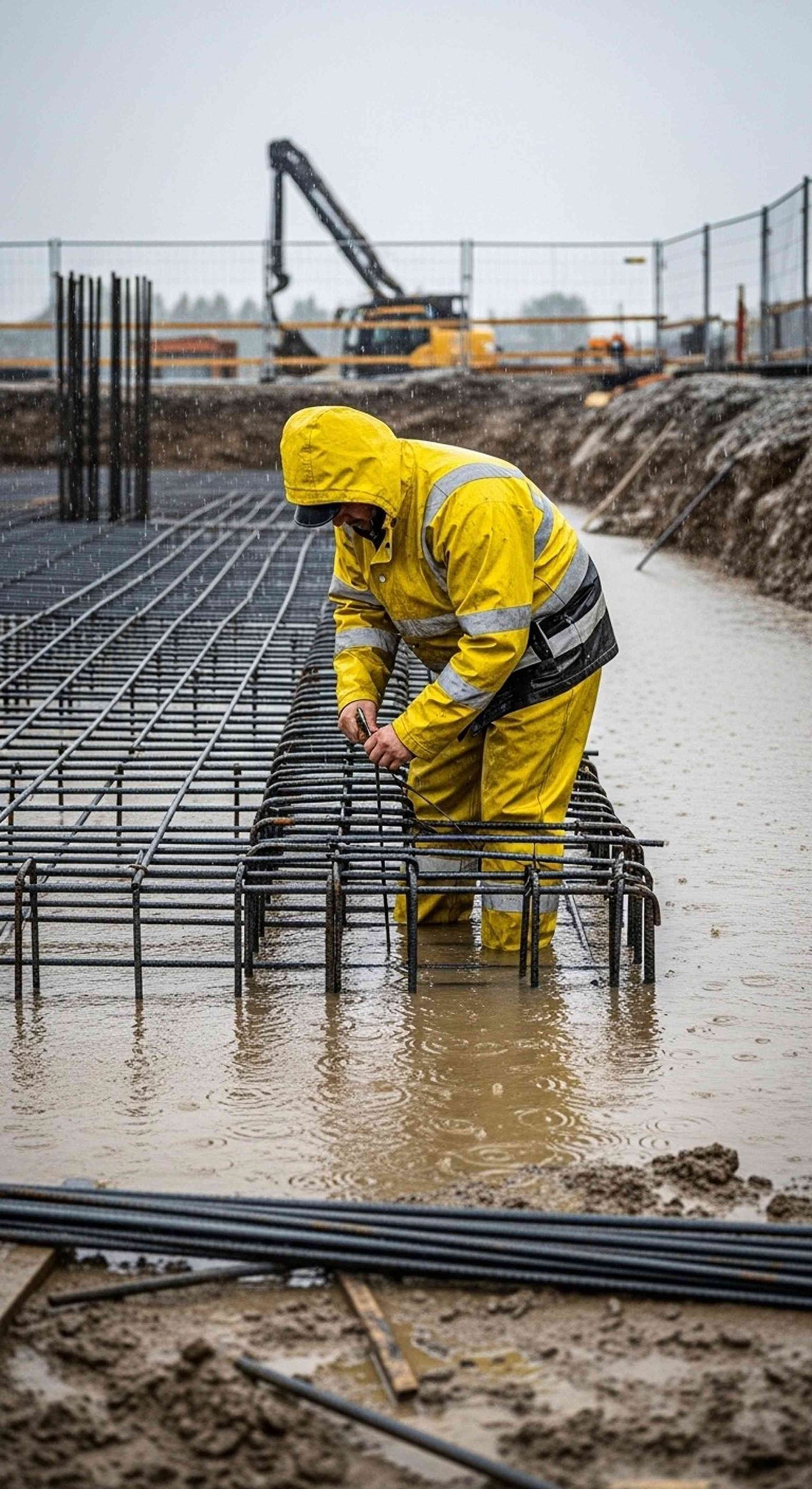
In tropical climates like Malaysia, sudden downpours and monsoon seasons are a regular part of life. On development sites across the country, it is not unusual to see construction crews working through light drizzles. While sites immediately shut down outdoor operations during thunderstorms, flash floods or torrential downpours, work often carries on as usual during mild rain.
This raises an important question for developers, site managers and prospective homeowners: Is construction during rain actually safe?
The short answer is yes, provided that site managers balance strict safety protocols, material protection and adjusted scheduling. Rain presents real hazards to both worker safety and structural integrity, meaning that managing wet-weather construction requires clear boundaries between what can proceed and what must stop immediately.
Construction firms and property developers have to ensure the general safety as well as the wellbeing of workers must be safeguard against the hazards associated with construction work that may carried out in a safe manner relatively safe method of work being adopted at building construction workplace. This best practice applies to all place of work in building operation and work of engineering construction activity in Malaysia covered by the Occupational Safety and Health Act 1994 (Act 514), the Factories and Machinery Act 1967 (Act 139) and all its regulations made under the Acts.
What works in the rain?
Rain does not have to bring an entire construction site to a complete standstill. Certain structural and interior tasks can continue safely without compromising build quality or worker welfare:
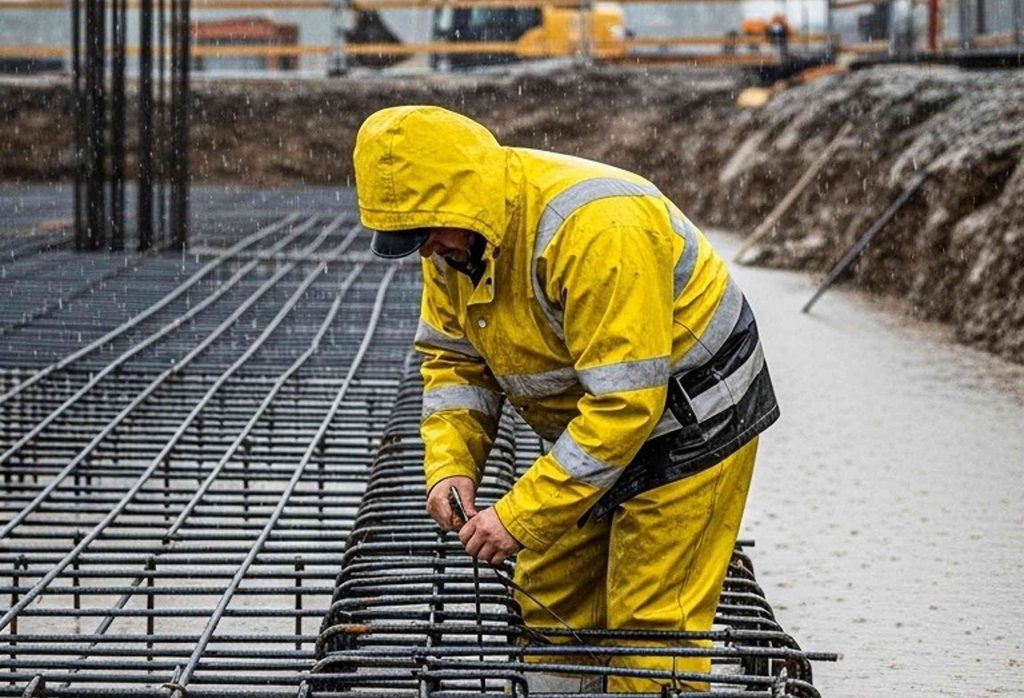
1. Light framing and structural works: Crews can continue working through mild drizzles if framing lumber and oriented strand board (OSB) are not overly soaked. Engineered wood products and structural timber used in modern framing handle temporary surface water well without rotting, provided the structure is allowed to dry naturally before being enclosed. Workers can also still shape straight steel rods into precise angles and configurations such as L-shapes, U-shapes or stirrups to reinforce concrete structures.
2. Indoor trades: Once a building achieves the dried-in stage, meaning the roof, exterior walls, windows and external doors are fully installed, interior works can proceed safely regardless of weather conditions. Trades such as electrical wiring, internal plumbing, drywall fitting and interior painting can continue without delay.
3. Natural leak and waterproofing testing: Unexpected rain during early construction can serve a practical purpose. It acts as a natural pressure test. A sudden drizzle allows site supervisors to spot early gaps in roof flashing, window seals or exterior waterproofing membranes before interior finishes are applied.
When to stop
While drizzles are manageable, certain core construction activities must cease during active rainfall to avoid structural failure or safety violations.
1. Concrete pouring: Pouring concrete in the rain is one of the highest risks on a job site. Heavy rain washes away cement paste and alters the precise water-to-cement ratio required for proper curing. Excess water weakens the final concrete matrix, creating structural cracks, honeycombing and reduced load-bearing strength.
2. Masonry, bricklaying and plastering: Laying bricks or applying exterior stucco and rendering during a downpour prevents mortar from bonding effectively. Excess water washes away cementitious bonding agents, resulting in weak mortar joints that risk crumbling over time.
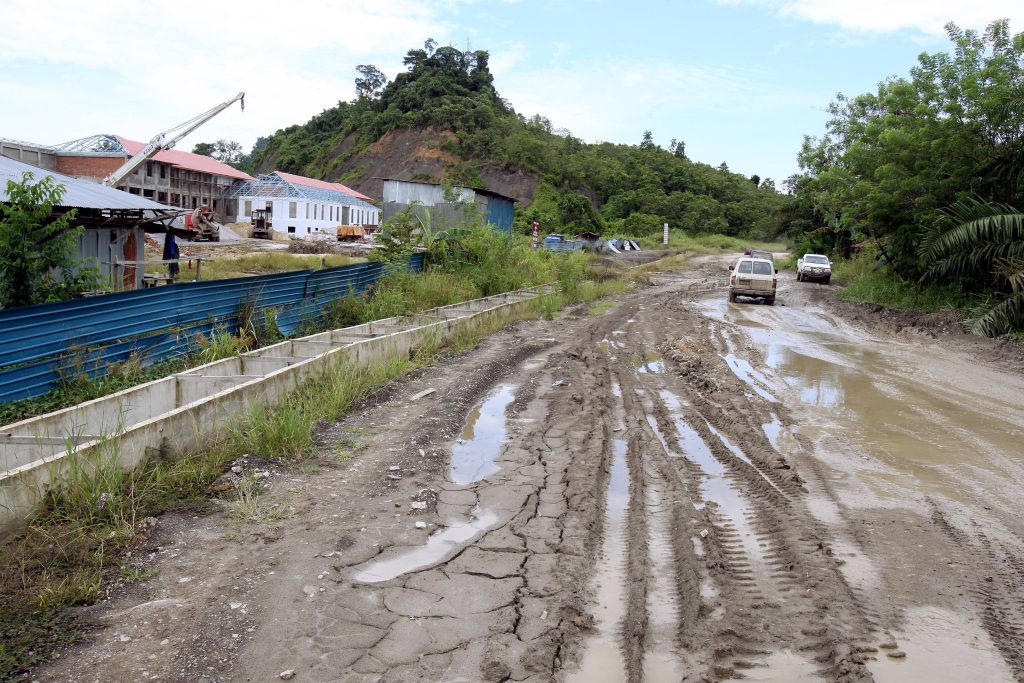
3. High-risk physical hazards: Wet metal scaffolding, slippery roof decking and muddy footings increase fall risks significantly. Environmental safety standards require stopping high-altitude, roofing or steep-slope work the moment rain makes surfaces slick.
Essential site safety protocols
Protecting human life remains the primary objective during inclement weather. Site managers must implement strict safety protocols whenever rain is present:
- Eliminate electrical hazards: Water conducts electricity due to dissolved mineral impurities. Power tools, extension cords and temporary site distribution boards must never be operated in standing water or during rain. All temporary outdoor circuits must be protected by Ground Fault Circuit Interrupters (GFCIs).
- Protect against lightning strikes: Tropical rainstorms are frequently accompanied by lightning. Outdoor crews must immediately seek cover in enclosed, hard-topped structures or metal-cab vehicles. A strict 30-minute rule must be enforced. Outdoor work cannot resume until 30 minutes have passed since the last thunderclap.
- Prevent slips and visibility incidents: Reduced visibility during heavy rain increases the risk of accidents with heavy machinery. Workers must be equipped with high-visibility waterproof raincoats, anti-slip boots with deep treads and textured-grip gloves to maintain control of hand tools.
Protecting materials and build quality
Beyond worker safety, building in wet weather demands proactive material management to avoid costly material degradation and project delays.
Moisture-sensitive building materials such as bagged cement, gypsum drywall boards, timber floorboards and insulation batts must be stored off the ground on raised timber pallets. These stacks must be wrapped in heavy-duty waterproof tarpaulins to prevent water absorption and mould growth.
Tasks like exterior painting, sealant application and waterproofing membranes require dry surfaces for proper chemical adhesion. Applying these compounds over damp substrates traps moisture behind sealant layers, leading to peeling, blistering and structural water damage down the line.
Rainfall can quickly turn excavated earth into mudslides or collapse trench walls. Contractors must construct temporary site drainage, silt traps and diversion channels to route rainwater away from open foundation footings. Trench walls must be properly shored to prevent cave-ins caused by water-saturated soil.
Building safely during rain comes down to effective risk management. While mild drizzles do not need to halt project timelines, site managers must draw a clear line when weather threatens safety or structural integrity.
By enforcing strict electrical safety, postponing concrete and masonry works and securing moisture-sensitive materials under protective tarps, construction crews can maintain project momentum without sacrificing quality or worker welfare.
This article was first published in StarBiz 7.
Stay ahead of the crowd and enjoy fresh insights on real estate, property development and lifestyle trends when you subscribe to our newsletter.