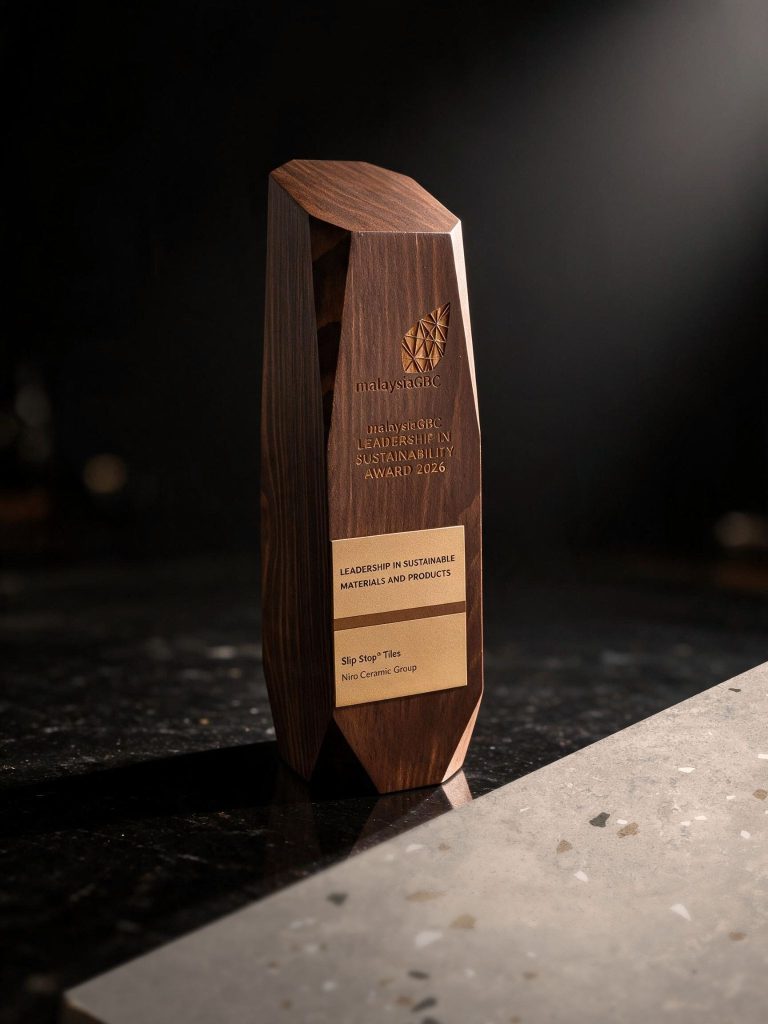
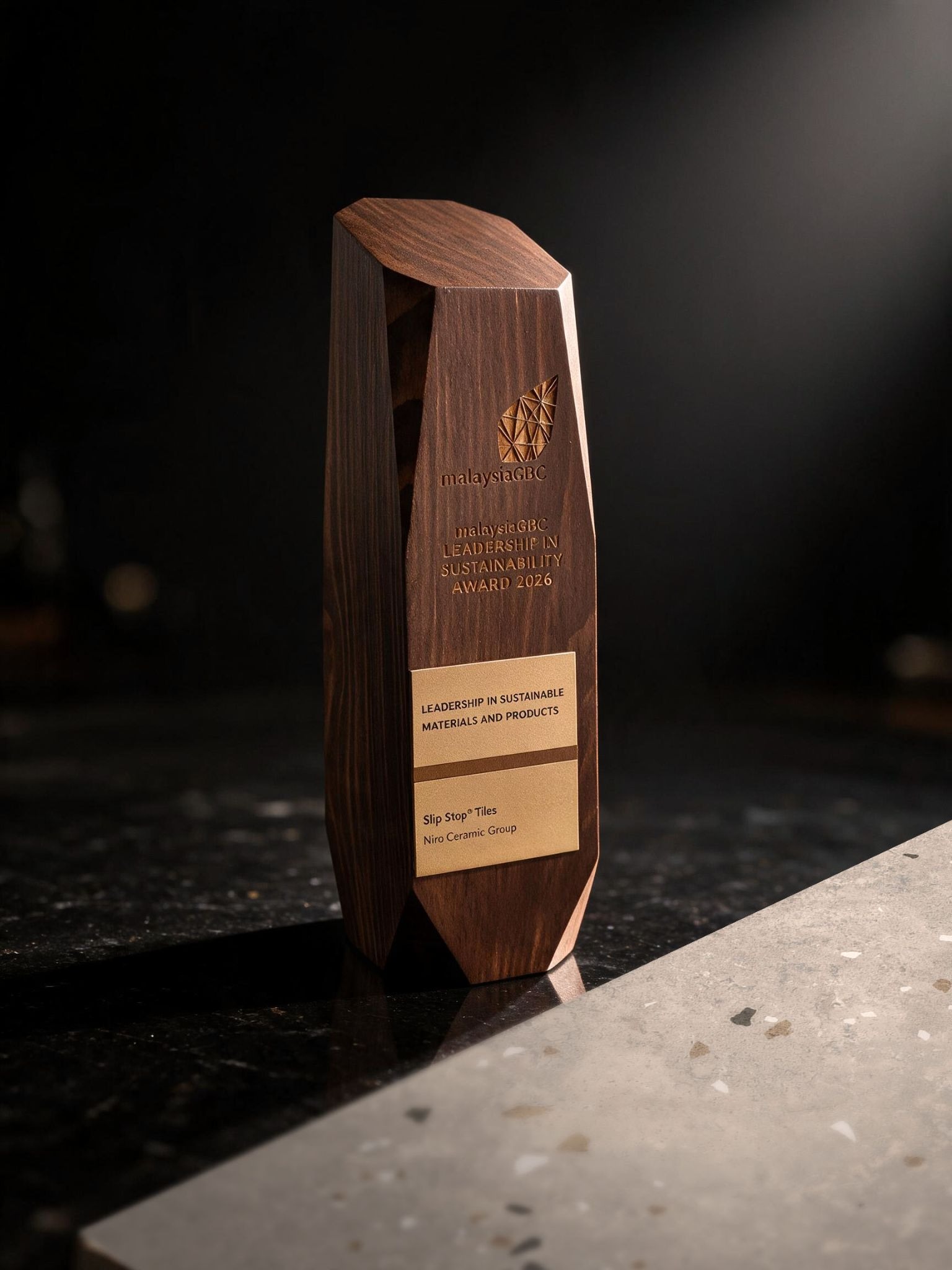
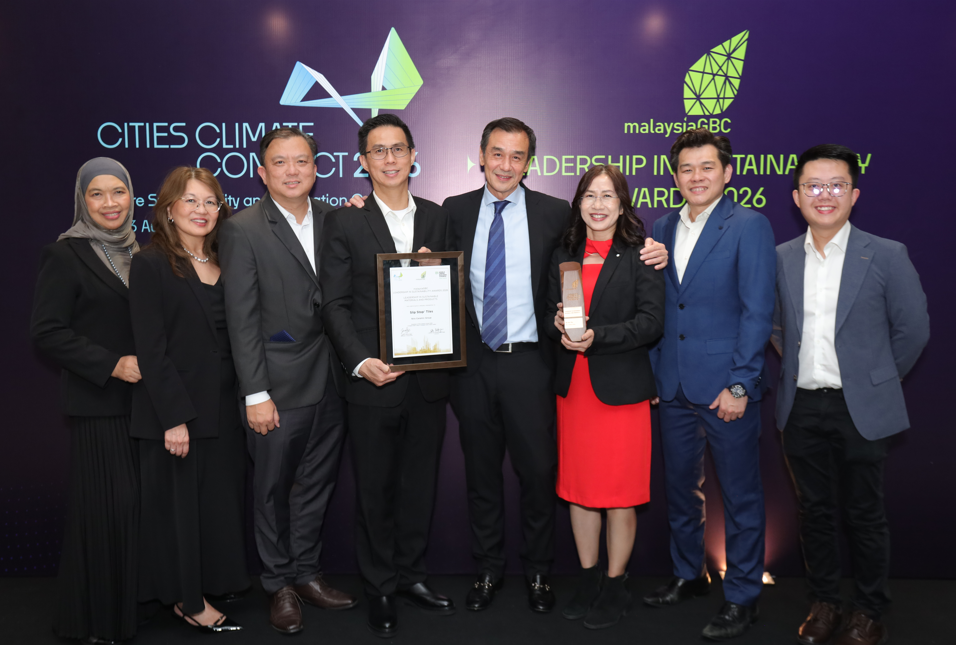
Niro Ceramic Group’s Slip Stop® tiles bring slip resistance, design flexibility and easier upkeep into homes and shared spaces.
When it comes to choosing floor tiles, the journey often begins with appearances. Some homeowners prefer the cool stone-inspired finishes while others favour marble veining or a clean cement look. Comparing and combining colours, patterns and sizes until the right combination comes together can be time-consuming.
Yet a floor has to do more than look good. It must accommodate everyday movement, withstand regular cleaning and remain comfortable while walking. In bathrooms, sheltered walkways and spaces exposed to rain, how it performs when wet becomes another important point to take note of.
Balancing these needs was the challenge Niro Ceramic Group sought to address through Slip Stop®, its pioneering tile technology developed to combine slip resistance with a smoother finish.
According to marketing and product development senior general manager Michelle Johnson, the development began with a familiar design compromise. “The development of Slip Stop® was inspired by a long-standing architectural trade-off: choosing between safe, high-grip tiles that felt rough, looked dull and trapped dirt, or smooth, beautiful tiles that posed severe slip-and-fall hazards when wet,” she said.
The company’s research and development effort focused on bringing these qualities together, allowing designers and property owners to consider both appearance and function when specifying flooring.
Built into the surface
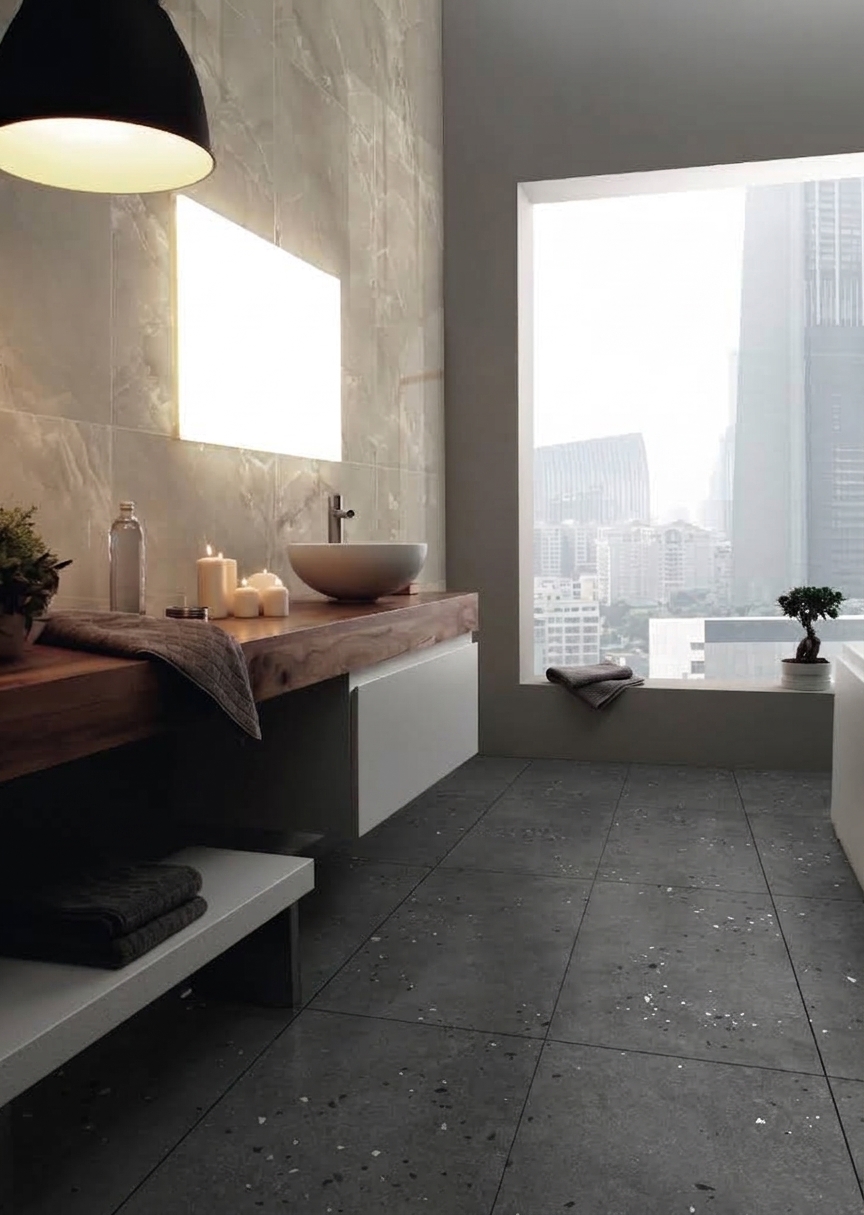
Slip Stop®’s technology is incorporated during manufacturing rather than applied as a separate treatment after installation. Johnson explained that a specialised anti-slip mineral glaze is applied after the tile design has been printed using high-definition inkjet technology. The tile then undergoes high-temperature firing which fuses the glaze into its surface.
What comes out of the oven is a finish that feels smooth when dry while providing increased grip in wet conditions. It also allows the printed design to stay visible without relying on tiles with heavily abrasive textures.
“Today, it provides designers and property owners with a single tile specification suitable for seamless transitions across both wet and dry spaces,” said Johnson. This design continuity is particularly relevant in adjoining areas that serve different purposes. A consistent finish can help connect living spaces with areas that experience occasional moisture, subject to the suitability of the selected tile for each location.
Niro Ceramic reports that Slip Stop® achieved a P5 rating in wet pendulum testing. The company also cites wear-resistance ratings of PEI 3 and above and Class 4 stain resistance.
Beyond slip resistance, ease of cleaning is another key consideration, particularly in kitchens, dining areas and shared facilities where spills are part of daily use. Common spills such as coffee, cooking oil, sauces and wine can be cleaned with water and mild detergent, without aggressive scrubbing. This makes upkeep a stronger part of the product’s appeal, alongside its smoother feel underfoot.
Dining spaces and highway stops
Two projects show how Slip Stop® has been used in shared spaces. At APW Bangsar, which houses dining and event spaces in a former printing factory, the tiles had to cope with daily foot traffic, rain and regular cleaning. According to Niro Ceramic, Slip Stop® met these needs by building slip resistance into the tile during manufacturing, removing the need for a separate anti-slip spray.
The use of the tiles also extended beyond flooring. Leftover pieces were turned into benches and outdoor planters at APW, putting surplus materials to use elsewhere on the premises.
At the Seremban southbound rest and service area, the emphasis shifts towards facilities used by travellers with different needs. Washrooms and surau areas require particular attention to moisture, cleaning and comfort. Visitors may include elderly travellers, families with young children and people with disabilities, making flooring an important part of the overall user experience.
Niro Ceramic said Slip Stop® was selected for its wet grip and easy-clean surface. The company also noted that the rest area uses harvested rainwater for facility cleaning. But while flooring alone cannot determine the accessibility or safety of a building, it remains an important consideration when designing comfortable, usable public facilities.
Looking beyond installation
For developers and building managers, choosing a floor also means considering what happens after the project opens. Cleaning requirements, surface wear and the need for additional treatments can influence maintenance planning. These considerations become especially relevant in facilities that operate throughout the day and accommodate substantial foot traffic.
Johnson said Slip Stop®’s integrated glaze removes the need to periodically reapply a separate anti-slip coating, centring its maintenance proposition on the surface itself.
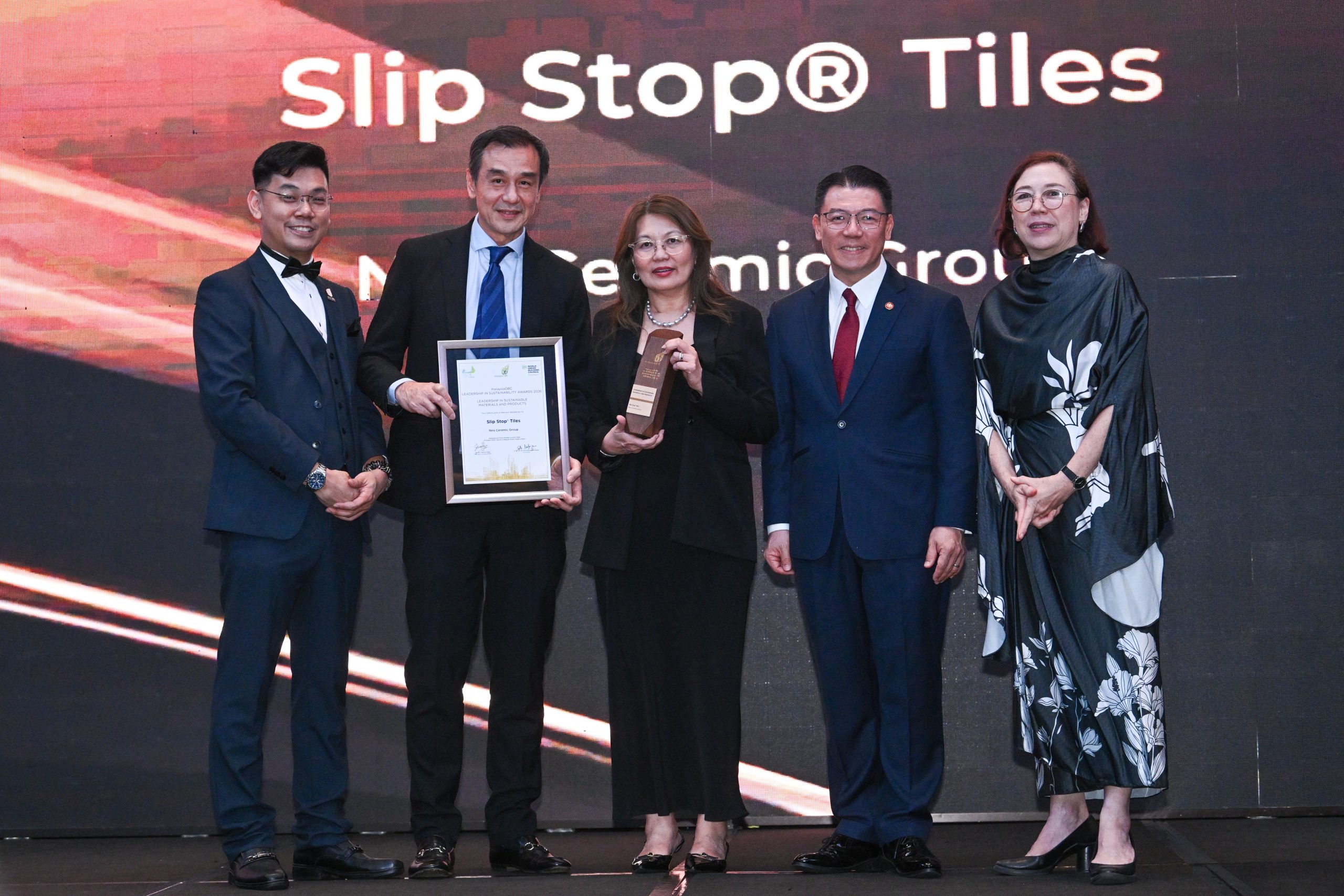
Niro Ceramic also points to a range of environmental credentials supporting its products and manufacturing operations. These include an Environmental Product Declaration (EPD) verified by SCS Global Services, the SIRIM Eco Label, Singapore Green Label Scheme (SGLS) and MyHijau Mark.
Its manufacturing certifications include quality management ISO 9001, environmental management ISO 14001 and energy management ISO 50001. Together, these give a clear picture of the company’s approach to production that goes beyond the finished tile’s appearance and performance.
Another feature highlighted was the recycled material used within its manufacturing processes, including unfired scraps and post-fired rejects, alongside recycled industrial wastewater. These measures provide a positive view of the product’s sustainability approach, covering both manufacturing inputs and its intended use over time.
Developing the next applications
Further refinement remains part of Niro Ceramic’s plans for Slip Stop®. According to Johnson, a technological improvement introduced in 2024 increased slip-resistance performance while delivering a smoother surface feel. The company is also looking to refine the design collection in line with developments showcased at international exhibitions.
Beyond its existing portfolio, Niro Ceramic is seeking wider adoption in Malaysia and South-East Asia, particularly within healthcare, senior living, hospitality and public infrastructure. These settings have different requirements, from barefoot comfort in hotel bathrooms to cleaning requirements in care facilities and heavy use in transport hubs.
For Niro Ceramic, the aim is to offer tiles that look good and meet everyday needs. Beyond appearance, a floor should be comfortable to walk on, easy to clean and suited to the space it serves.
Stay ahead of the crowd and enjoy fresh insights on real estate, property development and lifestyle trends when you subscribe to our newsletter and follow us on social media.